
Driving the Future of European Aviation Together
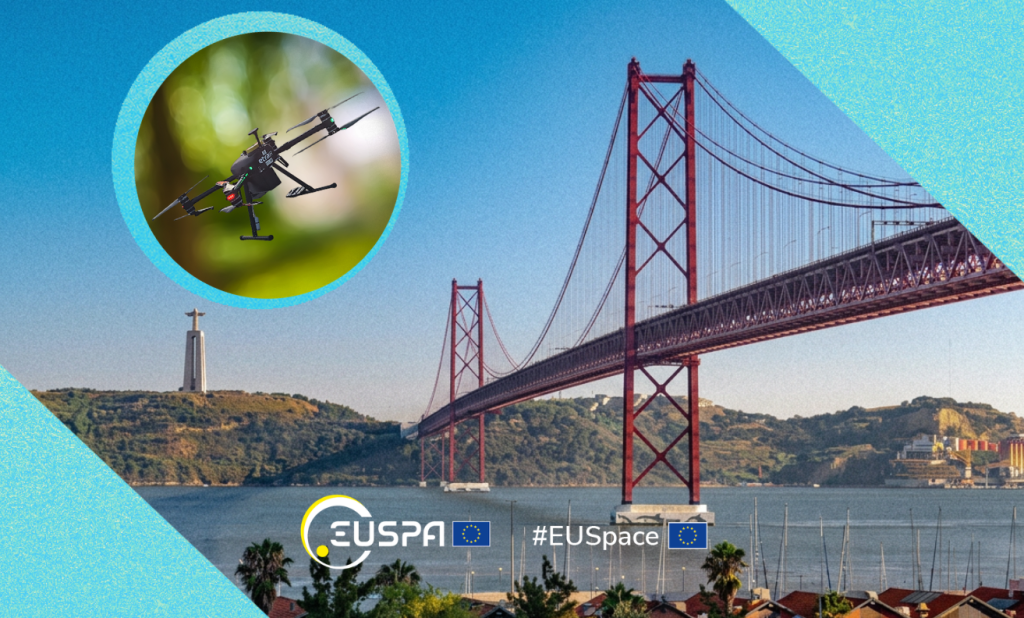
The Europe for Aviation pavilion at Airspace World 2026 in Lisbon brought together European aviation organisations, including EUSPA, to showcase how coordinated action across Europe is contributing to a safer, smarter and more sustainable airspace ecosystem.
Through its interactive flight simulator, EUSPA engaged visitors with a hands-on experience demonstrating how EU Space services and satellite-enabled navigation solutions are shaping the future of aviation, from air traffic management and drone operations to advanced air mobility.
Showcasing the Power of European Cooperation
Together, partners including the European Commission, EDA, EASA, EUROCONTROL, SESAR, EUROCAE and EUSPA presented a unified vision for a more connected, digital and sustainable European aviation ecosystem.
The event highlighted the increasing cooperation between European agencies in accelerating the deployment of innovative aviation and drone services. As an example, the Memorandum of Understanding (MoU) signed between EUSPA and the SESAR Joint Undertaking at the beginning of 2026 strengthens collaboration in areas of Aviation and drones such as U-space implementation, Advanced Air Mobility, Air Traffic Management and the operational adoption of EU Space services. The agreement reflects a shared commitment to ensuring that space-based capabilities are fully integrated into the future European aviation ecosystem and support the objectives of the Digital European Sky.
Also, EUSPA continues to strengthen its cooperation with key European aviation stakeholders to support the safe and efficient integration of GNSS-enabled drone operations across Europe. Together with EUROCONTROL and EASA, EUSPA is participating in a coordinated campaign by EUROCONTROL to collect real-world data on GNSS/PNT performance and e-conspicuity in operational environments across several EU Member States. Following the successful launch of the initiative and initial flight trials, experts from the three organisations recently met together with CAA representatives of these participating countries to review progress and prepare the next phase of testing. The campaign will provide valuable evidence to support future regulatory, operational and technological developments for UAS operations in Europe.
In parallel, EUSPA is actively contributing to EUROCAE standardisation activities related to the GNSS use in drone operations. The Agency has supported the development of the EUROCAE Guidelines for the use of Multi-GNSS solutions for UAS Specific category Medium Risk operations (SAIL III), which are expected to be published in the coming weeks. The guidelines establish recommendations for monitoring navigation performance, planning operations based on anticipated positioning accuracy, and implementing mitigation measures in the event of GNSS signal degradation. Building on this work, activities should now begin on guidance for higher-risk SAIL IV operations, further strengthening the framework for the safe and reliable use of satellite navigation in the European drone sector.
EUSPA also supports EASA initiatives through its contribution to the Innovative Air Mobility (IAM) Hub, including the inclusion of population density data and related guidance to support ground risk assessments for drone operations based on Copernicus data. In addition, EUSPA contributes to discussions on the revision of Commission Implementing Regulation (EU) 2018/1048 on Performance-Based Navigation (PBN), helping ensure that the capabilities of European GNSS services are appropriately reflected in the evolving regulatory framework.
Based on these examples of cooperation, the event also confirmed that space-enabled technologies are becoming an essential pillar of aviation modernisation with EUSPA reaffirming its commitment to keeping EU Space services at the heart of Europe’s future aviation and drone ecosystem.
As aviation continues to evolve, EUSPA remains committed to bridging space and aviation, enabling safe integration of new entrants and supporting a truly interoperable European sky.
Supporting End Users Across Europe
Beyond technology development and policy coordination, the Agency continues to support operational users and promote the adoption of EU Space services throughout Europe with a particular emphasis on drone operators.
To strengthen user awareness and operational readiness, EUSPA regularly organises EGNSS training across EU Member States to help drone operators and aviation stakeholders effectively use Galileo, EGNOS and other EU Space services, enhancing safety, efficiency and regulatory compliance.
For example, two EGNSS training for drone operators took place in the first half of this year – in the Czech Republic with UAV Alliance Czech Republic and 3L Robotics and in Denmark during the International Drone Show. Further training will follow in 2026, including one in October in Luxembourg at the EUROCONTROL Learning Centre and next ones are under discussion.
The training programme has become an important platform for knowledge exchange between EUSPA, national authorities and operational users, ensuring that the benefits of EU Space services are effectively transferred from policy and research into everyday operations.
Leading the Conversation on New Airspace Users
A high-level panel was organised together with EDA on “New Entrants“ – U-space, GNSS, civil-military interoperability, electronic conspicuity, HAO, Supersonic Aircraft and Space. The session brought together leading experts to discuss the rapid evolution of European airspace and the integration of new entrants.
The focus was on the practical challenges and opportunities associated with integrating new entrants into increasingly complex airspace environments.
Attention was given to:
- The deployment and scaling of U-space services across Europe;
- The role of eConspicuity in enhancing situational awareness and safety;
- The critical contribution of GNSS and EU Space services to navigation, surveillance and automation;
- Strengthening civil-military interoperability to ensure efficient and flexible airspace use;
- The integration of High-Altitude Operations (HAO) and other emerging airspace users.
Panellists highlighted that the successful integration of drones, high-altitude platforms and other new entrants will require close cooperation between regulators, service providers, defence stakeholders and industry. The discussion also underscored the importance of resilient and trusted GNSS-based services as a key enabler for high-risk and future airspace operations.
Through its participation in a wide range of sector events, EUSPA continues to engage with industry, research organisations, policymakers and end users to explore the opportunities offered by the evolving space economy. These exchanges highlight the growing potential of downstream applications and services in supporting innovation, competitiveness and the development of new solutions across different sectors. EUSPA remains committed to working with partners across Europe to unlock the full potential of EU Space services and bring their benefits closer to users.
Media note: This feature can be republished without charge provided the European Union Agency for the Space Programme (EUSPA) is acknowledged as the source at the top or the bottom of the story. You must request permission before you use any of the photographs on the site. If you republish, we would be grateful if you could link back to the EUSPA website.