

Copernicus for the environment and sustainability
-
Benefitting the environment and sustainability

-
Protecting ecosystems

-
Informing climate action and sustainable decisions

-
EUSPA’s role

-
Did you know?

Benefitting the environment and sustainability
Driven by a growing concern and awareness of the climate crisis, governments, businesses, financial institutions and individuals must take action to ensure a more sustainable economy.
Doing so requires ready access to climate and environmental data – such as that provided by Copernicus. By combining Sentinel satellite data, in situ observations and operational services, Copernicus helps users monitor environmental change and climate trends to support more sustainable decisions.
Explore this infographic to learn how Copernicus data and services are used to:

protect critical ecosystems

prevent biodiversity loss

help Europe become the world’s first climate neutral continent

inform climate risk assessment and air quality monitoring

enable the transition to renewable energy and its planning

provide evidence for environmental policy and sustainability action
Protecting ecosystems
Copernicus supports ecosystem protection and restoration by providing consistent, comparable information on land, forests, vegetation, water and marine conditions. The Copernicus Land Monitoring Service delivers information on land cover and land use change, vegetation state, the water cycle, and surface land temperature while the Copernicus Marine Service provides information on the state of the ocean. Together, these services help users to:
- monitor natural habitats
- track land cover change and habitat fragmentation
- support sustainable agriculture and forestry
- monitor coastal waters and marine ecosystem conditions
- analyse the effectiveness of EU policies and managing resources
- detect and monitor plastic pollution across the oceans
- assess the effective implementation of emission reduction projects and such carbon offset actions as trees planting
Informing climate action and sustainable decisions
Copernicus supports sustainability by helping users understand climate and air quality trends. The Copernicus Climate Change Service (C3S) provides authoritative information on past, present and future climate. The Copernicus Atmosphere Monitoring Service (CAMS) offers information on atmospheric composition, air quality and solar radiation.
Together, they support:
- forecasting the impact climate change will have on essential ecosystems
- climate risk assessment and resilience planning
- actionable data on precipitation patterns
- analysis of heat, drought and other climate-related pressures
- air quality monitoring
- renewable energy planning
By processing satellite and in situ data into value-added information, Copernicus supports the EU’s climate adaptation and mitigation policies.
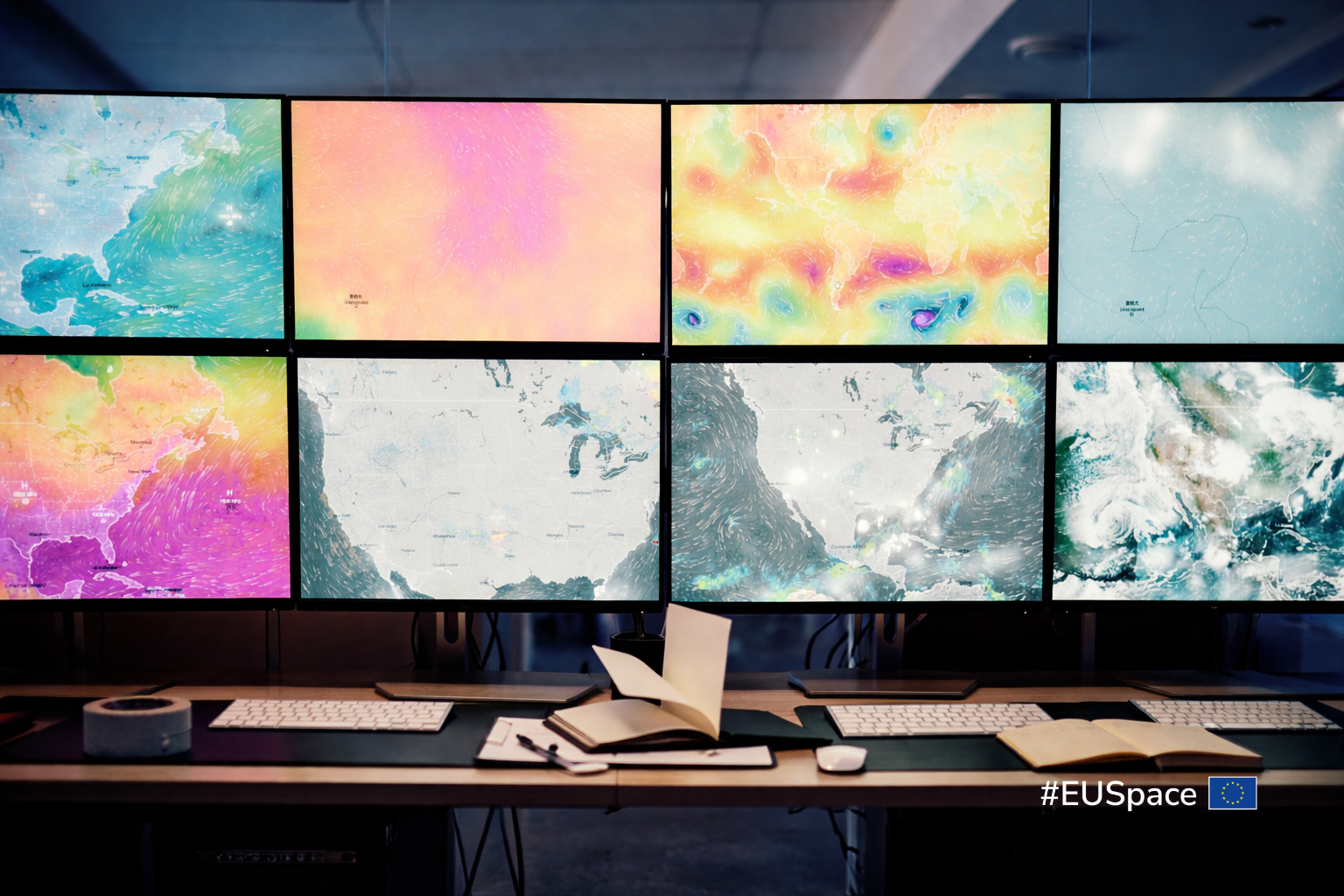
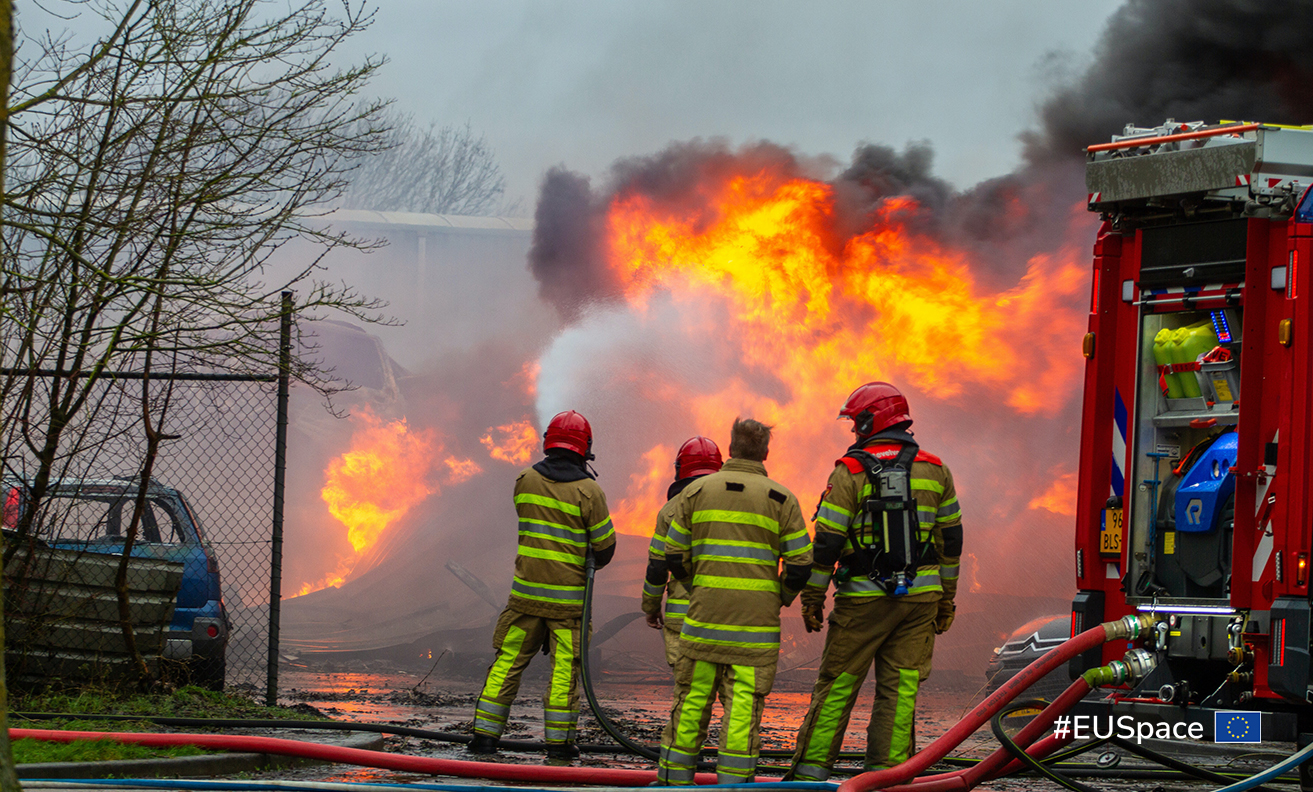
Authorities also use Copernicus data to monitor and forecast extreme weather events and prepare for the natural disasters that often follow.
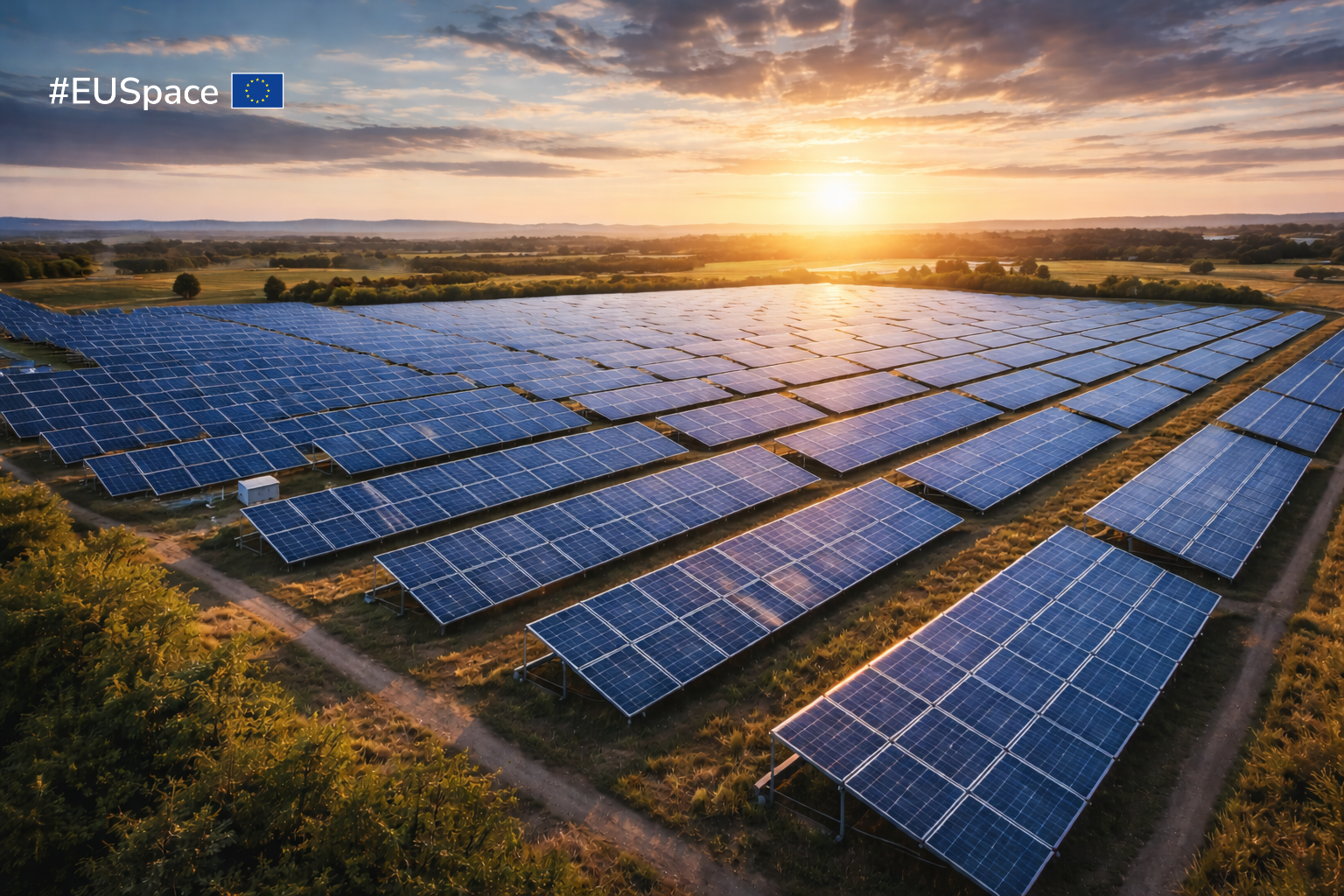
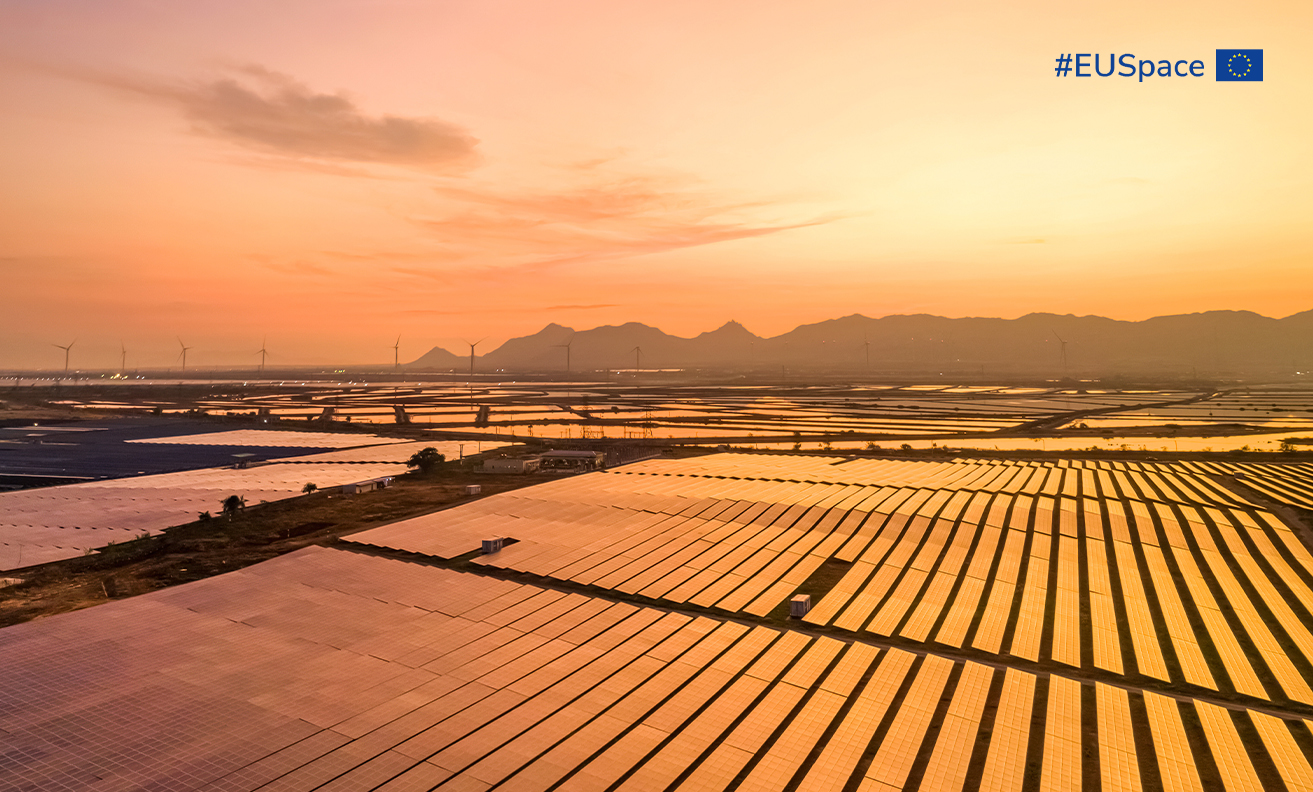
Using information gathered from Copernicus satellites and atmospheric models, CAMS produces global irradiation models that the renewable energy sector uses to make informed decisions on where to best place solar panels.
EUSPA’s role
EUSPA focuses on user uptake, innovation and market development, helping businesses, public authorities and researchers turn Copernicus data into operational services that support sustainability goals.
Key contributions include:

promoting the use of Copernicus data and services across sectors such as agriculture, forestry, energy, insurance and urban planning

supporting innovative downstream applications and start-ups that transform Earth observation data into solutions for climate monitoring, biodiversity protection and resource management

helping identify user needs so services remain relevant and operationally useful

strengthening synergies with other EU Space components, such as Galileo and EGNOS, enabling integrated solutions that combine Earth observation with precise positioning and navigation

engaging with users and stakeholders to support operational uptake to ensure Copernicus services meet real life needs

supporting downstream services that help governments and businesses monitor environmental change, assess risks and inform sustainability actions
Did you know?
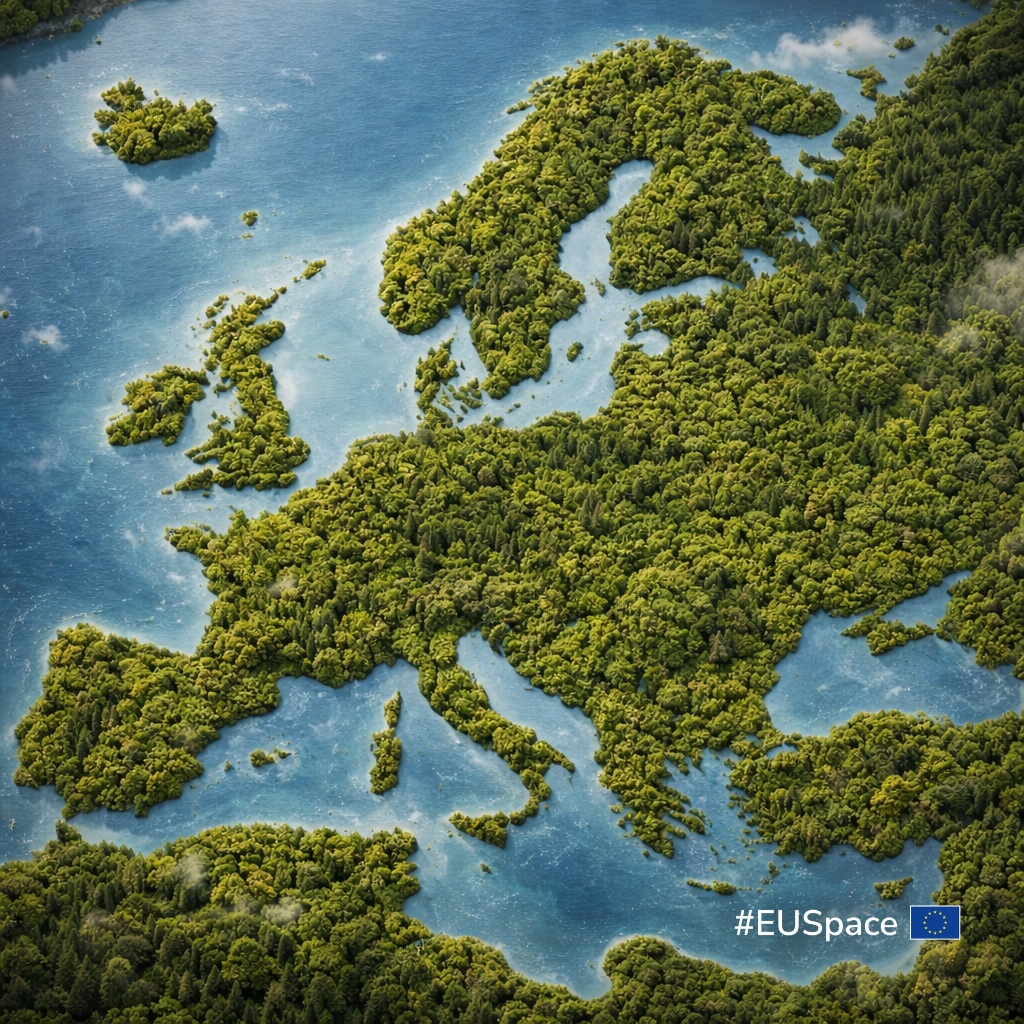
The EU has the ambitious goal of becoming the world’s first carbon-neutral continent by 2050. Doing so requires significantly lowering carbon emissions – which can be monitored from space. Over 50% of essential climate variables (ECV) are only measurable from space.
Here, Copernicus data can be used by policy makers to ensure compliance with regulations for abating carbon emissions.