
EU Space for health and wellbeing
-
How EU Space supports health and wellbeing

-
Copernicus at the forefront of a healthier EU

-
Galileo plays a role too

-
EUSPA’s role

-
Facts and figures

How EU Space supports health and wellbeing
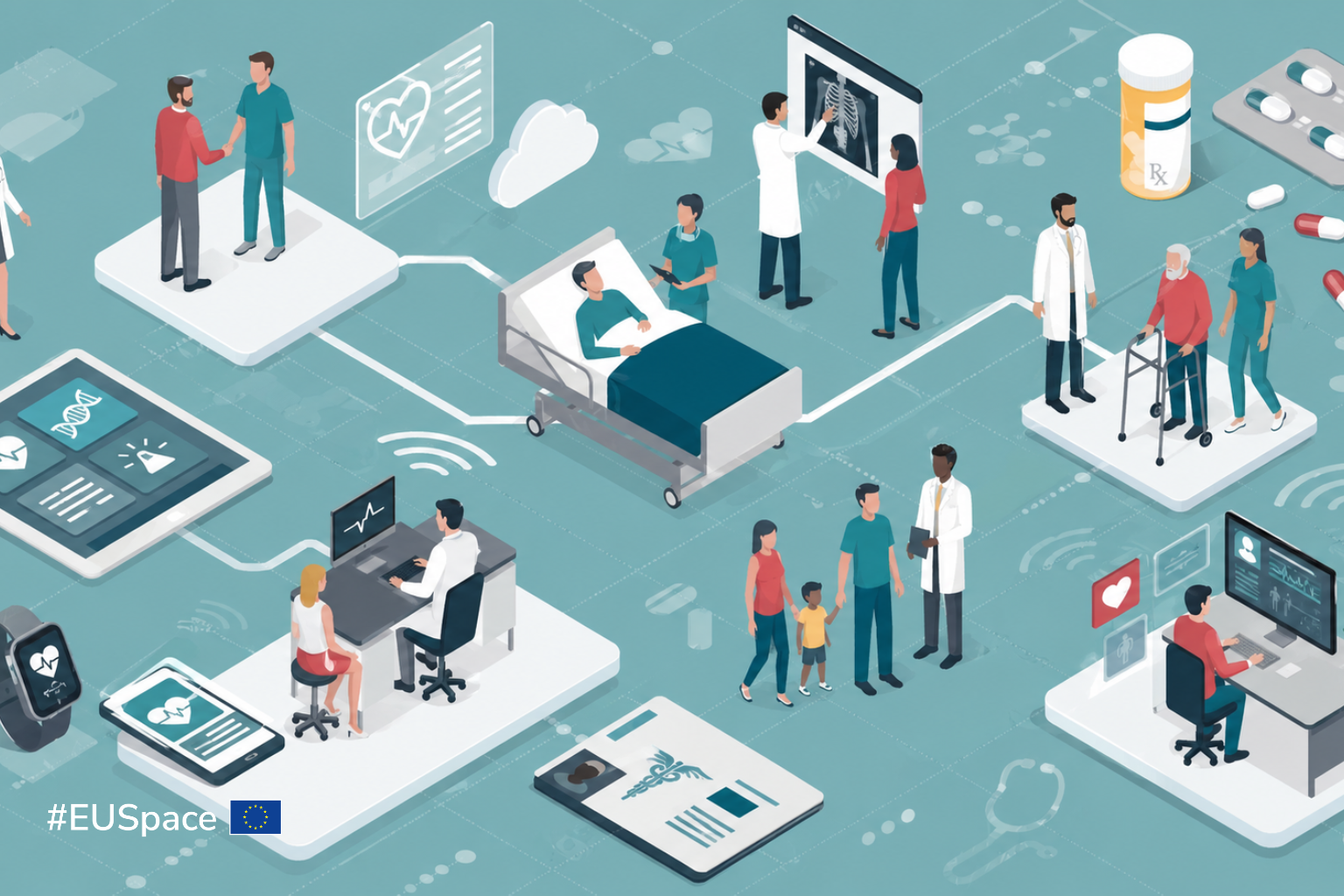
EU Space data and services are playing an increasingly important role in supporting our health and wellbeing. For example, by monitoring air quality, heatwaves, natural disasters and the spread of disease it helps public authorities respond more effectively. This data can also enhance emergency response systems and improve access to healthcare.
The net result: a healthier, more resilient Europe.
Copernicus at the forefront of a healthier EU
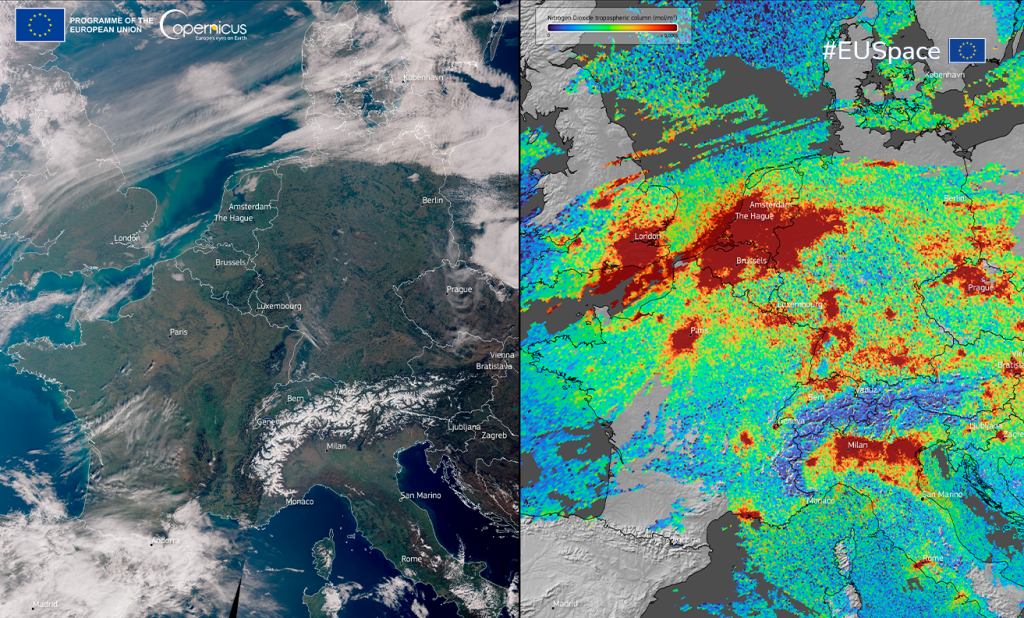
By measuring the levels of harmful substances and particles in the air, Copernicus data informs the air quality indexes that alert people to stay indoors or close their windows. Its UV exposure measurements for specific locations inform analytics about safe levels of exposure, while its analyses on the seasonal variations and geographic distribution of allergenic particles help allergy sufferers better manage their conditions.
Hospitals and healthcare providers use Copernicus data to support new patient triage models. By adding contextual health risk factors and environmental indicators, these models can determine which symptoms require a hospital visit versus when a telemedicine call or self-care could suffice.
Furthermore, with Copernicus data, healthcare stakeholders can develop personalised health recommendations. Different correlation analysis of patient data, socioeconomic indicators and EO data can give new insights to pharmaceutical companies. These analyses help to do long-term planning of new products and services that would serve the healthcare market.

Galileo plays a role too
It’s not just Copernicus that benefits the health and safety sector. Galileo plays a role too.

Galileo’s precise positioning enables a vast array of health applications, from patient monitoring to guidance systems for people with reduced mobility, the visually impaired and senior citizens.

When embedded into fitness applications and wearable devices, Galileo monitors our exercise and performance, providing real-time information on speed/pace, elevation, distance travelled and steps taken.
EUSPA’s role
Whether through funding, competitions, market intelligence, mentoring, training or skills development, EUSPA supports the development of space-based solutions for the health market.
EUSPA coordinates the Copernicus demonstrator for healthcare, an initiative that fosters collaboration between EO service providers and health companies to create innovative solutions that combine environmental and health data.
Facts and figures

Copernicus data, such as fine particulate matter (PM2.5) tracking, allows the EU to manage air quality, which can aid in reducing the 253,000+ deaths annually attributed to poor air quality.

Galileo OSNMA can help mitigate spoofing attacks by allowing users to confirm their data, ensuring health service and emergency service applications are not affected.

By monitoring air pollution – including smoke from wildfires – Copernicus helps provide some relief to people suffering asthma, which impacts the daily lives of 30 million Europeans and can be exacerbated by climate change.