

EU Space in smart mobility
-
EU Space drives smart mobility

-
Applications in smart mobility

-
Supporting intramodal transport

-
EUSPA’s role

-
Facts and figures

EU Space drives smart mobility
From improving safety, efficiency and sustainability to enabling real-time tracking, congestion reduction and automated logistics, EU space drives smart mobility.
Applications in smart mobility

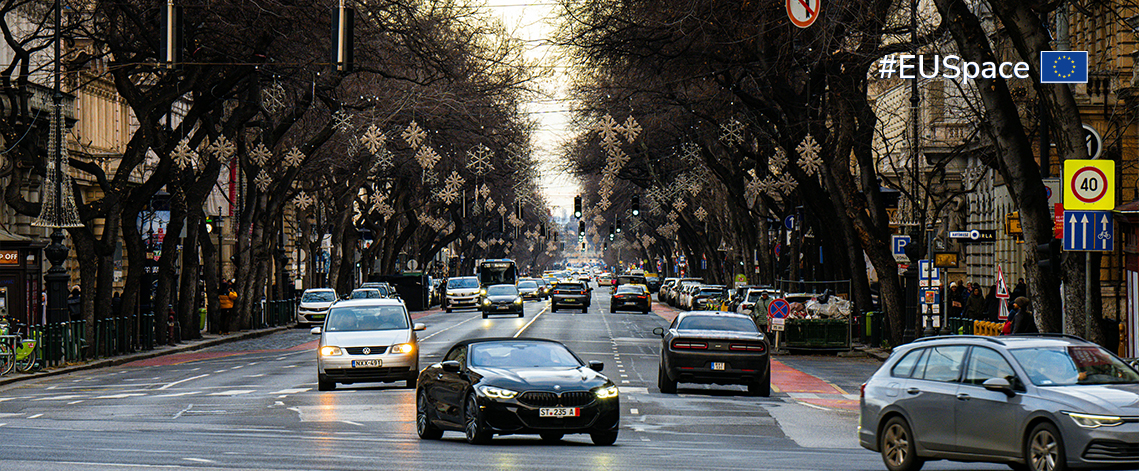
Galileo provides precise positioning for Automatic Vehicle Location (AVL) in cities like Barcelona and London, reducing traffic congestion.
Galileo enables the European eCall emergency service for vehicles, which is mandatory in new cars sold in the EU.
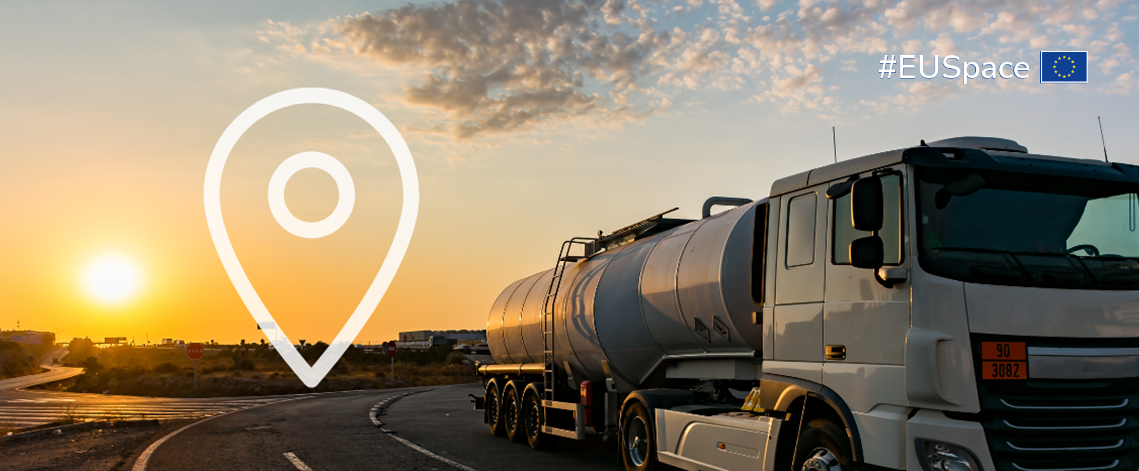
Satellite data can be used to track dangerous goods, manage shared mobility and assist in optimising routes to reduce emissions.
Copernicus data is used to monitor critical transportation infrastructure like bridges and tunnels.

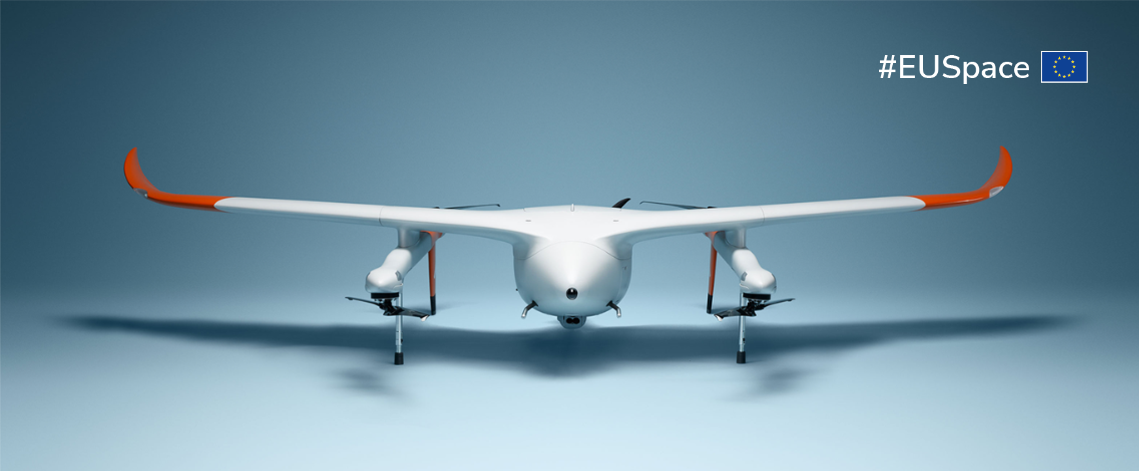
The positioning and navigation data and services that Galileo and EGNOS provide will help enable U-space, Europe’s UAS (drone) Traffic Management (UTM) system.
The EU Space Programme supports a common European mobility data space and fosters digital solutions to connect different modes of transport.
Supporting intramodal transport
EU Space will play a critical role in the creation of a streamlined, interconnected transport system.

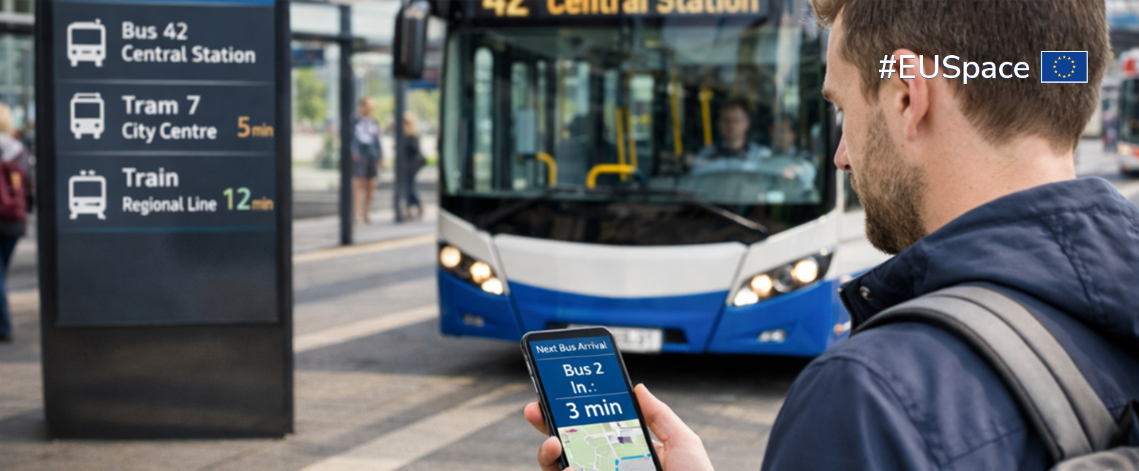
For example, by integrating Galileo into buses, trains, trams and micro-mobility applications, mobility operators will have access to the real-time tracking and precision navigation required to ensure smoother connections between different modes of transport.

These same GNSS-based solutions can be used to provide passengers with real-time updates, improving their travel experience by minimising waiting times and ensuring smoother transitions between connecting services.
EUSPA’s role
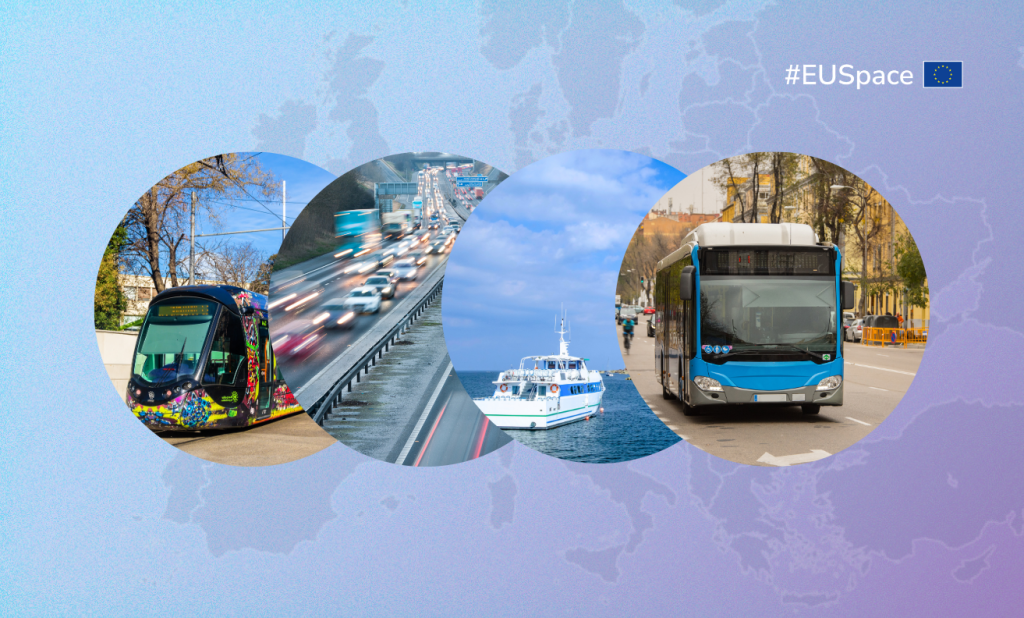
EUSPA acts as a bridge, aligning space technology with user needs in the transport sector to foster a safer and more efficient European transport network.
Facts and figures

With the help of space-based technologies, the EU aims to have at least 30 million zero-emission cars, 100 climate-neutral cities and widespread automated mobility by 2050.

Space data and services will also play a key role in Europe achieving its goal of a 90% reduction in transport emissions by mid-century.

eCall can in some cases halve emergency response times, reduce fatalities by 4% and severe injuries by 6–10%, while also helping lower congestion costs through improved accident management.