

Galileo Open Service (OS)
-
What is the Galileo Open Service?

-
What does it do?

-
How does it work?

-
EUSPA’s role

-
Facts and figures

What is the Galileo Open Service?
The Galileo Open Service (OS) provides free global positioning, navigation, and timing (PNT) information and data accessible to anyone with a Galileo-enabled receiver, such as a smartphone or in-vehicle navigation system.

Launch
The Galileo OS was launched in December 2016.

Sectors
Galileo OS supports the Mobility, Consumer solutions and Environment sectors.

Purpose
To provide EU autonomy in positioning services and enhance accuracy when combined with other GNSS.
What does it do?

Free of charge
Accessible to all users at no cost.
Mass-market applications
Suitable for widespread use in consumer devices.

Global coverage
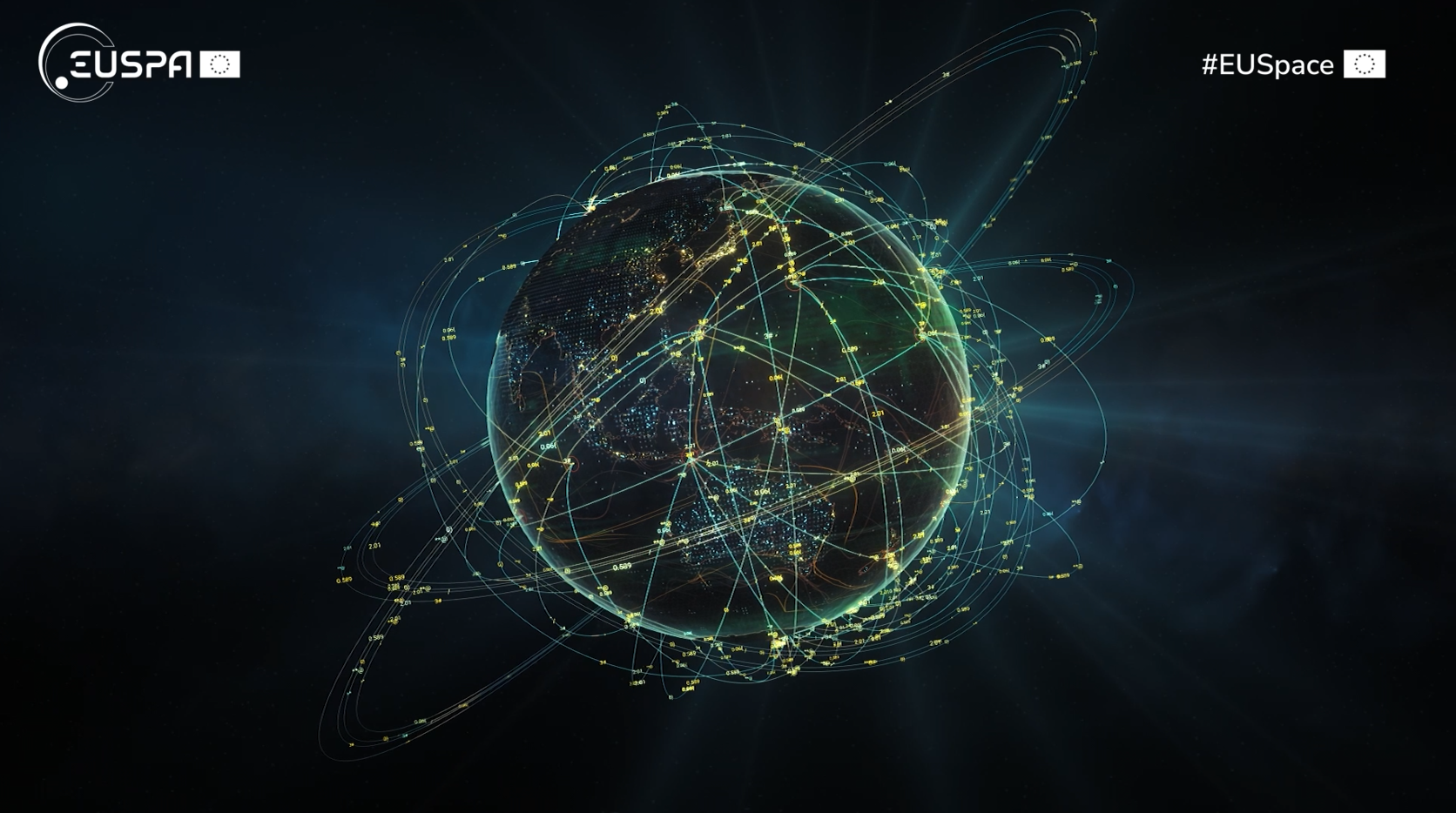
Provides worldwide positioning and timing.
Interoperability
It can be used together with other GNSS for improved accuracy.
How does it work?

Accessible to any user with a Galileo-enabled receiver, with no authorisation required.
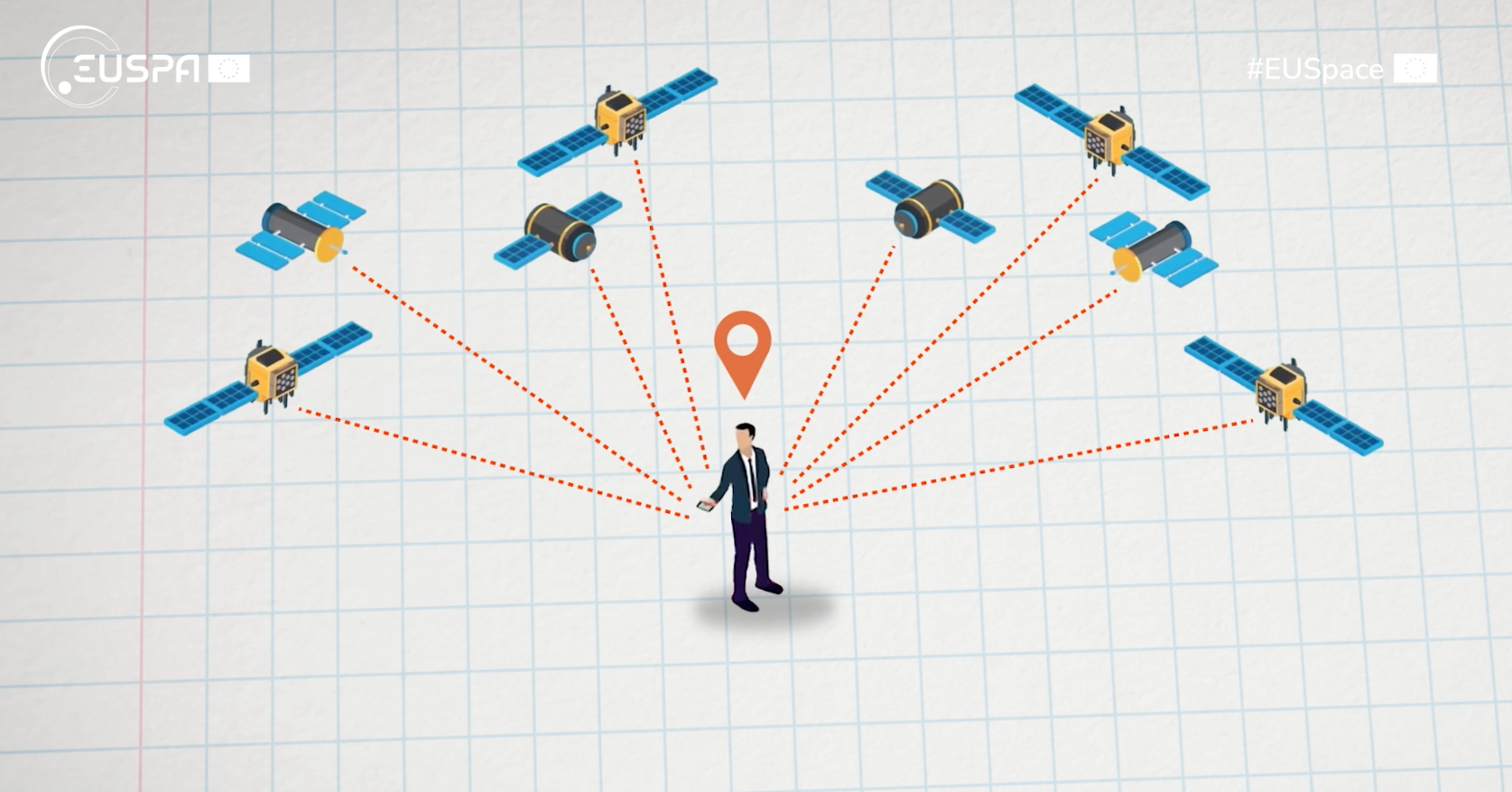
Receivers process satellite signals to determine location, velocity, and precise time.

Many devices combine Galileo with other GNSS signals for better performance, particularly in challenging environments like urban canyons.
EUSPA’s role
EUSPA serves as the link between the Galileo OS and end users by:
- Deploying and operating the system.
- Being the service provider.
- Operating service front desks available to users.
- Maintaining the Galileo system.
- Fostering the adoption of Galileo OS across the whole space downstream value chain.
- Monitoring the market and capturing the user needs.
Facts and figures
- There are more than 4.5 billion Galileo-enabled devices in use.
- All smartphones sold in the EU are now guaranteed Galileo-enabled.
- Unmatched positioning accuracy: The OS is committed to delivering 2 metre accuracy in horizontal positioning, but it is actually between 1 and 2 metres.
- Exceptional timing accuracy: contributing to more resilient synchronisation of banking and financial transactions, telecommunication and energy distribution networks.