2014 a Critical Year for GNSS
Disclaimer
This page has been archived and is provided for historical reference purposes only. The content and links are no longer maintained and may now be outdated.
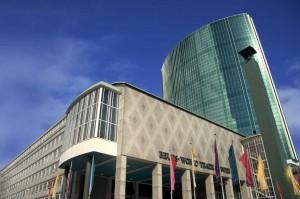
At the European Navigation Conference in Rotterdam, the message coming from the European Commission, the European GNSS Agency (GSA) and GPS world leaders was clear: 2014 is set to be a critical year for European GNSS technology.
The annual market for global navigation satellite products and services is currently valued at 124 billion Euros and is expected to grow over the next decade, leading to an estimated market size of €244 billion in 2020. With the Galileo system gearing up to deploy 22 satellites currently in production, many new applications will be developed in combination with other GNSS systems and Position, Navigation and Timing (PNT) sensors.
It is within this framework that the 2014 edition of the European Navigation Conference was opened.
Speaking at the Conference, Jean-Marc Piéplu, EGNOS Exploitation Program Manager at the GSA, declared that the future of EGNOS was today. “2014 is a turnkey year for EGNOS, with a new governance structure, firm funding for the next eight years, new satellites in orbit and a service provider fully empowered through 2021,” he said. “With EGNOS now fully operational, today we turn our focus to developing new system capacities and services.”
In terms of developing new services, Piéplu pointed to providing coverage to all EU member states – and perhaps further afield into neighboring states and Africa – as an example. Specific to aviation, this year the GSA aims to develop service capacity for LPV 200 and to do more in terms of delivering procedures for EGNOS-based landings. Other sectors mentioned as being ripe for service development include maritime and authentication.
On the capacity side, Piéplu noted the firm plans for dual frequency capability and to overlay with both GPS and Galileo.
Galileo Set for Major Step
Echoing the update on EGNOS, 2014 is also set to be a major year for Galileo. According to Pascale Flagel, Galileo System Implementation Team Leader at the European Commission, this momentum primarily stems from the new Commission regulation on Galileo. “Under the new regulation, we now have a stable, seven year perspective, a substantial budget, a sound governance structure and a scheme driven by exploitation,” she said.
On top of this, 2014 will also include the launch of the Horizon 2020 funding period and the first Galileo FOC satellite launch, expected this summer. “As a result of all these factors combined, Galileo is currently in a transition mode,” said Flagel. “We are now shifting to a providers and maintenance focus as we move towards Galileo Early Services.”
Protect, Toughen and Augment
Even with all these coming milestones, GPS still remains a vulnerable technology.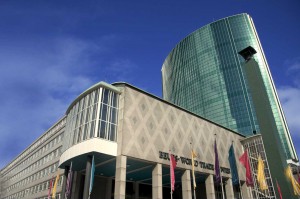
During his keynote address, Brad Parkinson, Professor at Stanford University and considered by many as the father of GPS, noted that the key challenge of today is to ensure that the users’ most essential need is met. “The over two billion GPS users on the planet today all expect availability,” said Parkinson. “They expect their GPS to provide both the required accuracy and the required integrity, without which the technology loses its value.”
According to Parkinson, the problem is that GPS as it exist today it too vulnerable in that it has a relatively weak signal and depends on line of site. “What we need is a solution to Protect, Toughen and Augment (PTA) the GPS signals to ensure that it meets user needs,” said Parkinson. “We need to protect the technology’s clear and truthful signal, toughen the user receivers and augment current Space-Based Positioning, Navigation, and Timing services.”
Jean-Marc Piéplu, EGNOS Exploitation Program Manager at the GSA
Media note: This feature can be republished without charge provided the European GNSS Agency (GSA) is acknowledged as the source at the top or the bottom of the story. You must request permission before you use any of the photographs on the site. If you republish, we would be grateful if you could link back to the GSA website (http://www.gsa.europa.eu).