
EGNOS gets precise at Agritechnica
Disclaimer
This page has been archived and is provided for historical reference purposes only. The content and links are no longer maintained and may now be outdated.
EGNOS was presented at the world’s largest agricultural trade fair – Agritechnica – in Hanover. Satellite navigation is a key enabler of innovation in precision and smart farming, and the European GNSS Agency (GSA) is ushering agriculture and promotes efficient management of resources whilst also protecting the environment.
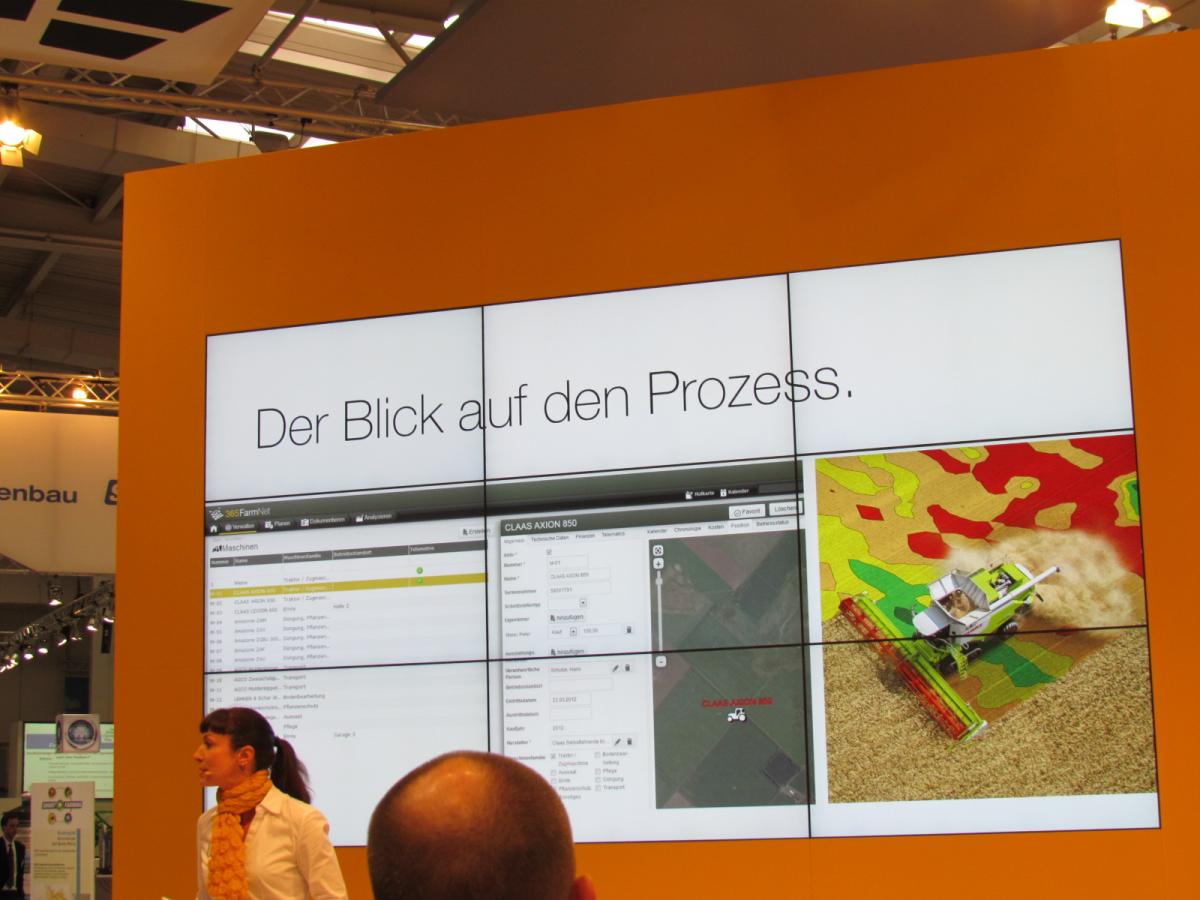 Agriculture is big business in Europe, and the Agritechnica show is the world’s largest trade fair for agricultural machinery and equipment. This exhibition, taking place in Hanover’s Messe exhibition complex from 12 to 16 November, welcomed around 450 000 visitors and hosted a total of 2 898 exhibitors from 47 countries.
The GSA represented EGNOS and upcoming Galileo in the exhibition together with 365FarmNet, an open alliance of manufacturers and service providers developing a new cloud-based integrated farm management system. The stand was part of a dedicated area for smart and precision farming expertise.
“Smart farming can help farmers make decisions to improve their production,” said Dr. Klaus Erdle, Head of Smart Farming at Agritechnica organisers DLG eV – the German Farming Organisation. “Software tools should support them by helping interpret soil maps or crop data offered by satellite technology or sensor data.”
With orders to analyse and machinery and animals to manage, the variety of office-based tasks on a farm is as diverse as the data tools required to process them. This is becoming an increasing problem with software applications using special data formats, every data collection method using different technologies and every navigation system operating under different guiding principles.
As the farm office will be the most important part of the farm of future operations, smart farming combines GNSS with geographic information systems and advanced agronomist technology. “The farm will be steered from the office, not from the combine or the tractor,” claims Klaus-Herbert Rolf, Head of Marketing and Sales for 365FarmNet.
For example, when planning optimum fertilizer application, with the touch of a button the farmer can visualise data on the growth stage of their crops and receive recommendations on the correct product selection, dosage and settings for the EGNOS-supported spreader machinery. This information can be used on PCs and a range of mobile devices like smartphones and tablet computers.
Precise spreading
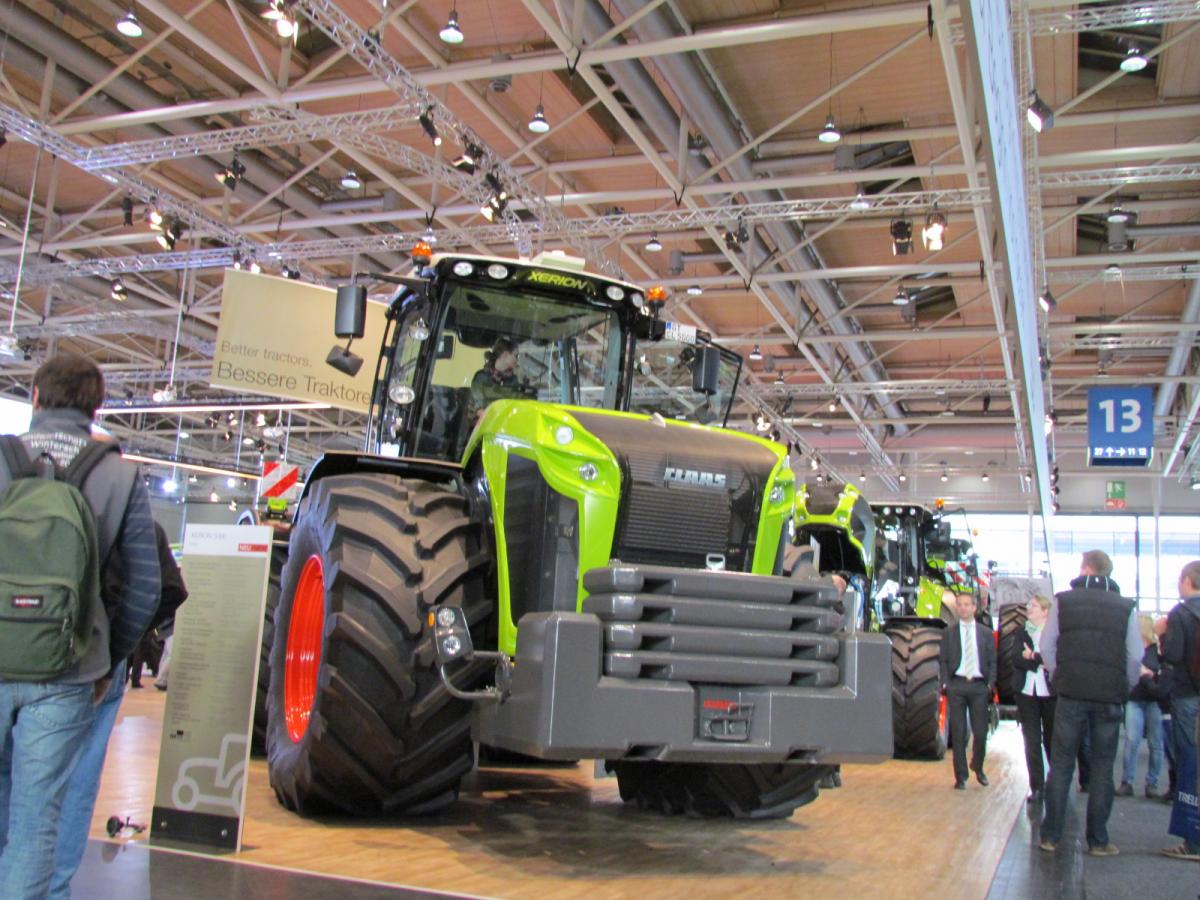 European GNSS is an essential component of precision farming. Satellite systems such as EGNOS and Galileo are highly effective for agricultural management. Geo-referenced yield data is key to optimising cultivation strategies when using precision farming. Whether seeding, fertilising or harvesting, the essential connection between cultivation planning and the field is precise positioning.
Concrete examples of this approach were available amongst equipment manufacturers throughout the Agritechnica trade fair. For example, fertiliser spreaders use the most advanced spreading hardware to interlink field navigation, job management and automatic tramline guidance for precision fertilizing.
Similarly, systems that use satellite navigation signals to automate the slide control on fertilizer spreaders to optimise application while turning and working wedge-shaped or other complex field shapes. This technique can save 4 – 8% on fertilizer use.
The vast majority of producers and distributors are using EGNOS for smart farming applications, and are eager for Galileo to push high performance in the global agricultural market.
Future-orientated
Dr Reinhard Grandke, CEO of DLG, gave an optimistic overview of the state of agriculture in Europe. With increasing demands from a growing global population, there is a need to produce greater yields with fewer resources. He sees precision agriculture as the way forward, giving farmers better use of their equipment and the land. “Farming is a future-orientated sector,” he concluded.
Dr Bernd Scherer, Marketing Director of the German Farm Machinery Manufacturers Association (VDMA), said the business climate in Europe for agriculture machinery remains favourable, with double digit growth expected in 2013. “Success factors for EU manufacturers include innovation leadership, and technically orientated customers also provided impetus to suppliers,” he said.
The next edition of Agritechnica will be held from 10 to 14 November 2015 at the Exhibition Grounds in Hanover.
EGNOS for precision agriculture
The GSA, together with the European Commission, is working to accelerate the adoption of the European Geostationary Navigation Overlay Service (EGNOS) by European farmers by demonstrating its tangible benefits and creating awareness of its added value. The high-profile presence of EGNOS at Agritechnica is an essential part of this strategy.
EGNOS is Europe's ‘pre-GALILEO' system, delivering services based on GPS signals and augmenting them for increased accuracy. This enables path-to-path accuracy of 15-13cm or better, opening the way to precision agriculture.
This highly effective farming strategy allows farmers to better allocate inputs, such as seeds and fertilisers, to increase productivity while lowering costs and minimising environmental impact. Traditionally, the main obstacle to wide scale application of precision agriculture has been the substantial investment required. Now, the EGNOS Open Service is fundamentally changing the equation by offering high precision at low cost.
In the same terms of EGNOS Open Service, the GSA, together with EC, is developing the EDAS service, which provides the same augmentation data as EGNOS OS, except that are distributed through the Internet. This is helpful where the direct line of vision with EGNOS satellites is interrupted by obstacles (such as trees or mountains) or even in high latitudes where the line of sight is closer to the horizon.
The main advantages of satellite technologies in agriculture include high accuracy and repeatability of the same action year on year. These two fundamental advantages lead to such valuable benefits as reduced waste through over-application of fertilisers and herbicides, reduced seed consumption, savings in fuel and time, lower fatigue, extended equipment life, and optimisation of crop yields.
Media note: This feature can be republished without charge provided the European GNSS Agency (GSA) is acknowledged as the source at the top or the bottom of the story. You must request permission before you use any of the photographs on the site. If you do republish, we would be grateful if you could link back to the GSA website.