
EGNOS Success Story: Area Measurement under CAP
Disclaimer
This page has been archived and is provided for historical reference purposes only. The content and links are no longer maintained and may now be outdated.
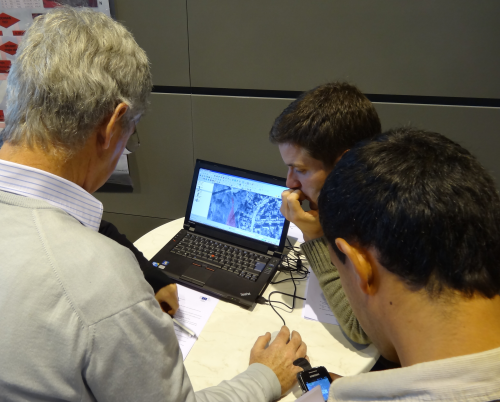
The 2013 Area Measurement Workshop, held 5 – 7 November in Berlin, confirmed that EGNOS enabled receivers satisfy the measurement accuracy requirements of CAP and opened the door for the forthcoming Galileo constellation.
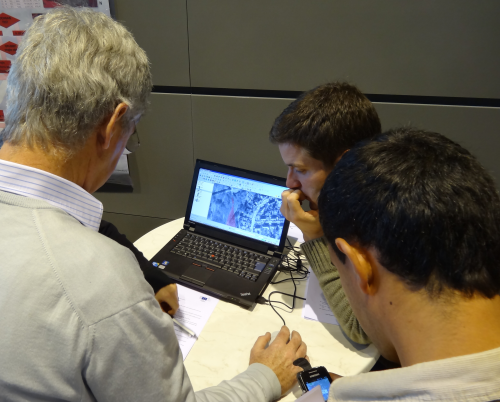 GNSS devices and ortho imagery have been used for area measurements for numerous years. In fact, European Commission regulation (11/2009) requires the use of tools ‘of a proven quality’ for the measurement of agricultural parcels being claimed for subsides under the Common Agricultural Policy (CAP). To provide sufficient evaluation of the reliability and accuracy of GNSS receivers and ortho-images, the Joint Research Centre (JRC) issued a validation protocol for area measurements based on the ISO 5275 norm.
In addition, the new CAP regulation, which comes into effect in 2014, includes several modifications and additions impacting area measurement. In particular, the new regulation addresses the nature of elements to be measured and the methods allowed for measuring them.
The 2013 Area Measurement Workshop, organised by the MARS Unit of the JRC from the European Commission and the Federal Office for Agriculture and Food (BLE) aimed at facilitating an open discussion and exchange of best practices on the JRC protocol, along with gathering insight from Member States on the new CAP regulations. The workshop, which was attended by most Member States, the GSA (European GNSS Agency), outside EU observers, and such receiver manufacturers as Topcon, Geneq and Leica, identified specific areas where additional studies and technical guidelines will be necessary.
Proving EGNOS Accuracy
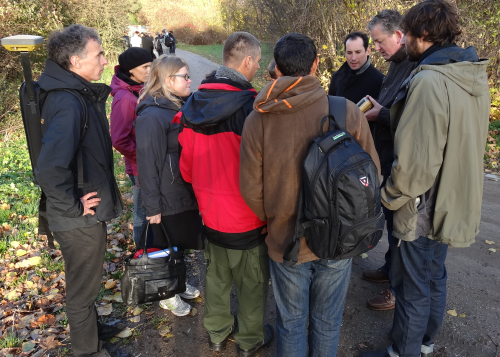
On the second day of the workshop, attendees were treated to a field visit to see first-hand how GNSS devices and ortho-images provide accurate area measurements.
Using Trimble Devices (Geo XH 3000 in standalone mode; GeoXH 6000 using EGNOS corrections), Topcon Devices (HiPer SR using Topcon’s TopNET live network corrective service), and Geneq Devices (SXBlue II, II-B and III using RTK, beacon or EGNOS corrections with different data loggers; Leica-GG03; GPS L1 receiver in standalone mode; Panasonic CF-19), the demonstration exercise identified various parcels, features and borders and measured their areas using different GNSS devices. To test the accuracy of the devices when used in different environments, the selected parcels included trees and bushes.
All devices provided comparable results – proving that EGNOS enabled receivers satisfy the measurement accuracy requirements of CAP and opening the door for the forthcoming Galileo constellation.
EGNOS and CAP
 CAP monitoring and compliance falls under the auspices of the Member States administration at national-regional level via paying agencies. Inspectors perform on-the-spot checks using validated tools for area measurement (list of validated GNSS devices).
Depending on the Member State, GNSS devices are used with or without differential corrections (EGNOS, DGPS real time or post-processing). However, as EGNOS signal corrections continue to expand and manufacturers continue to improve the implementation of corrections, the use of real time EGNOS corrections are being increasingly used within the framework of CAP controls.
Furthermore, the European Commission is currently evaluating possible areas where GNSS device usage can improve the 2020 CAP implementation. For example, the JRC is advocating that CAP recognise precision farming as a source of resource-efficient farming and advise farmers to benefit from its use via the Farm Advisory System (FAS).
FAS is the CAP system geared to helping farmers better understand and become compliant with all EU regulations on environment, public and animal health, animal welfare and agricultural/environmental conditions. The scope of the FAS is being enlarged to take into account new ‘greening’ measures (i.e. crop diversification, protection of permanent pastures and maintaining ecological focus areas of five percent of arable land) and fostering best practices for mitigating farming’s impact on the climate.