
European GNSS a Key Asset to ITS Infrastructures
Disclaimer
This page has been archived and is provided for historical reference purposes only. The content and links are no longer maintained and may now be outdated.
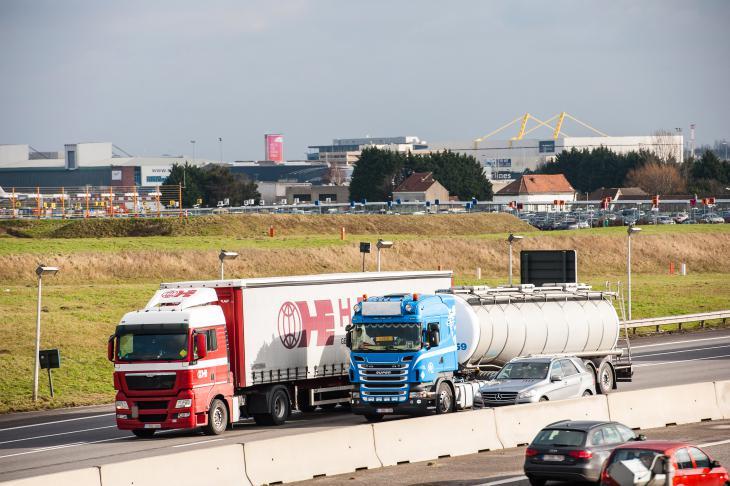
Significant advancements in satellite-based positioning have enabled GNSS receivers and services to play a large role in intelligent transport systems (ITS) in recent years. New applications for smart mobility are utilising EGNOS and Galileo, and GNSS is becoming a key asset in designing new ITS infrastructures.
Navigation is one of the most common ways GNSS can be used in road applications. For example, satellites can help provide turn-by-turn information to drivers, cyclists, and even pedestrians. More so, they can also be used in fleet management on-board units and road traffic monitoring services.
The GSA recently highlighted these benefits at the European GNSS Village, part of the ITS World Congress 2015.
Better Public Transport
When it comes to using GNSS services in public transport, Kordis JMK, the operator of public transport in the South Moravian Region of the Czech Republic, is a successful example. Encompassing national and regional passenger trains, regional buses, city trolleybuses and trams, the project tracks vehicles using GNSS to guarantee passenger connections for those changing between different transport modes.
Using GNSS surveillance, the positions and real-time routes of all vehicles can be monitored, and drivers can be instructed to wait at stops until the connecting vehicle reaches the destination. This also helps ease congestion, as the public transport controller can be advised to take a detour in cases of congested areas.
Also Read: European GNSS Brings Added Value to ITS
Also working in public transport, Voxelia Simulate uses a multi-agent system model to simulate vehicles in order to evaluate practical situations. “Real-time simulations and studies of transportation systems are very important for us,” says Renan Zeo, Director General of Voxelia.
“For instance, a public transport operator needs to know precisely the reason for an irregular bus service. Without an accurate positioning system, the operator would ignore if a bus is stopped by a traffic light, for boarding passengers, or because of a traffic jam.”
Voxelia tracks buses using EGNOS in order to provide accurate answers for delays, preparing a solution for the autonomous vehicles of the future. “Unmanned cars need to communicate to avoid deadlock situations,” Zeo says.
Using research coordinated with the Technology University of Belfort-Montbeliard, Voxelia studied the positioning accuracy that vehicles could manage by themselves, as well as access to conflict zones like intersections. “Our simulation shows the feasibility of cooperative intersections according to the accuracy of positioning systems,” adds Zoe.
Geoimagine, another company using GNSS for transportation, is working to create smarter routes for taxis. Its network optimiser solution for fleet management uses mobile sensors to optimise itineraries to drive taxis towards areas with higher potential number of clients, depending on the time of the day, therefore saving time and lowering fuel consumption while increasing business. “We are understanding taxi driving behaviour in a rapid, demand-changing scenario,” says Isaac Pozo, the company’s CTO.
Important for the Future
With growing cities and increased public transport, it is clear that GNSS services will become more and more important. GNSS receivers and services have an estimated core revenue of EUR 36 billion by 2018, showing that EGNOS and Galileo-related road applications are in demand, and will assist in optimising mobility for years to come.
Media note: This feature can be republished without charge provided the European GNSS Agency (GSA) is acknowledged as the source at the top or the bottom of the story. You must request permission before you use any of the photographs on the site. If you republish, we would be grateful if you could link back to the GSA website (http://www.gsa.europa.eu).