
European Space Solutions: Benefits and Opportunities
Disclaimer
This page has been archived and is provided for historical reference purposes only. The content and links are no longer maintained and may now be outdated.
The European Space Solutions Conference 2013 was held in Munich 5 – 7 November. The conference brought together representatives of the public and private sectors, along with users and developers of space-based solutions. The theme was how space technology makes a real difference in our daily lives, with a particular focus on challenges and opportunities for European satellite technologies.
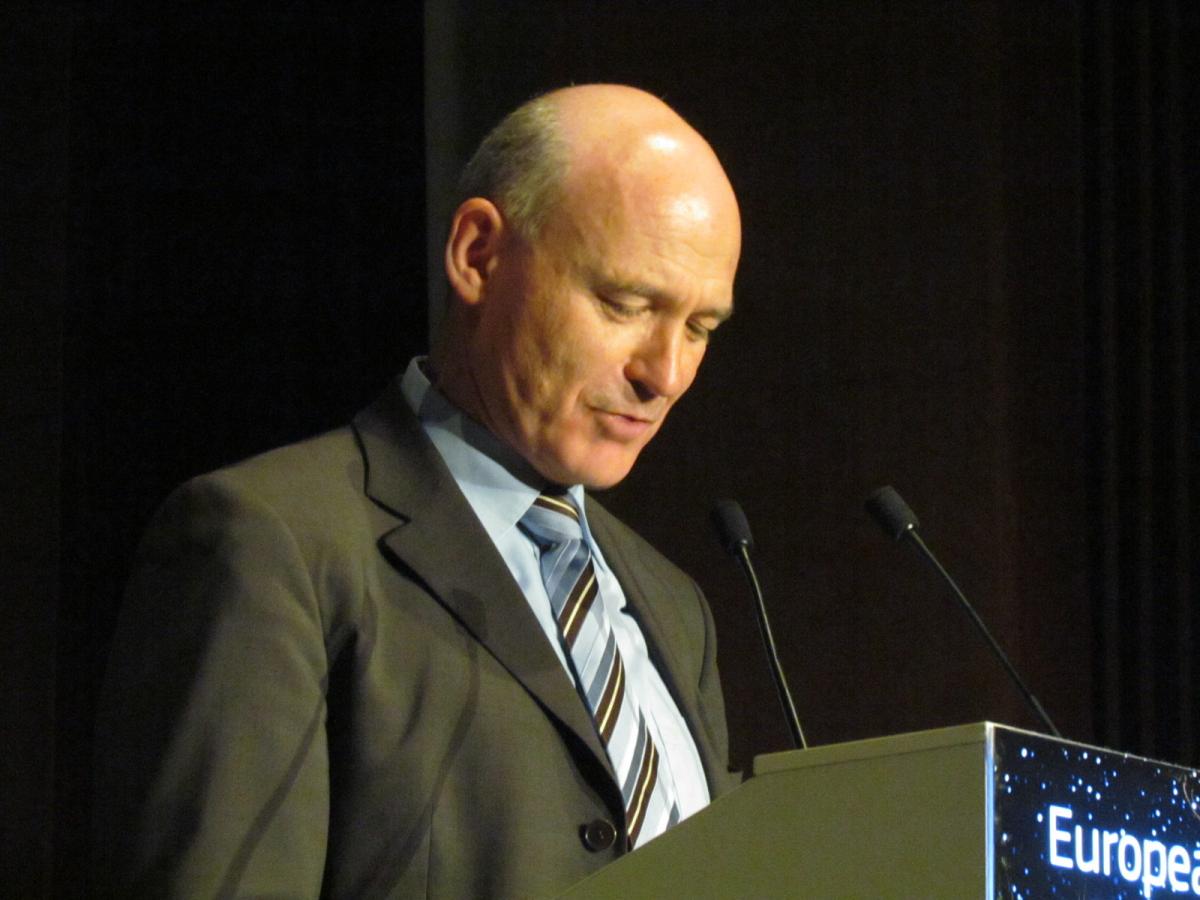 Dietmar Schneyer, Head of Division Applied Sciences and Aerospace for the Bavarian Ministry of Economic Affairs and Media, Energy and Technology opened the conference by asking “what can space do for society's challenges?” He highlighted what he sees as a paradigm shift happening in satellite technologies, moving the sector away from government projects and towards commercial applications. “As we transition towards the commercial use of satellite technology, we are also witnessing an integration of navigation and remote sensing technologies,” he said.
Government framework
“Europe can only remain competitive through innovation, but this cannot be prescribed by government,” said Franz Josef Pschierer, Bavarian Secretary of State, Ministry of Economic Affairs. He went on to explain that if Europe wants to become a leader in the digital age, it must establish a ‘data expressway’ between Earth and outer space.
Matthias Petschke, Director for EU Satellite Navigation Programmes, European Commission DG Enterprise and Industry, further emphasised this point, saying: “We rely on space technology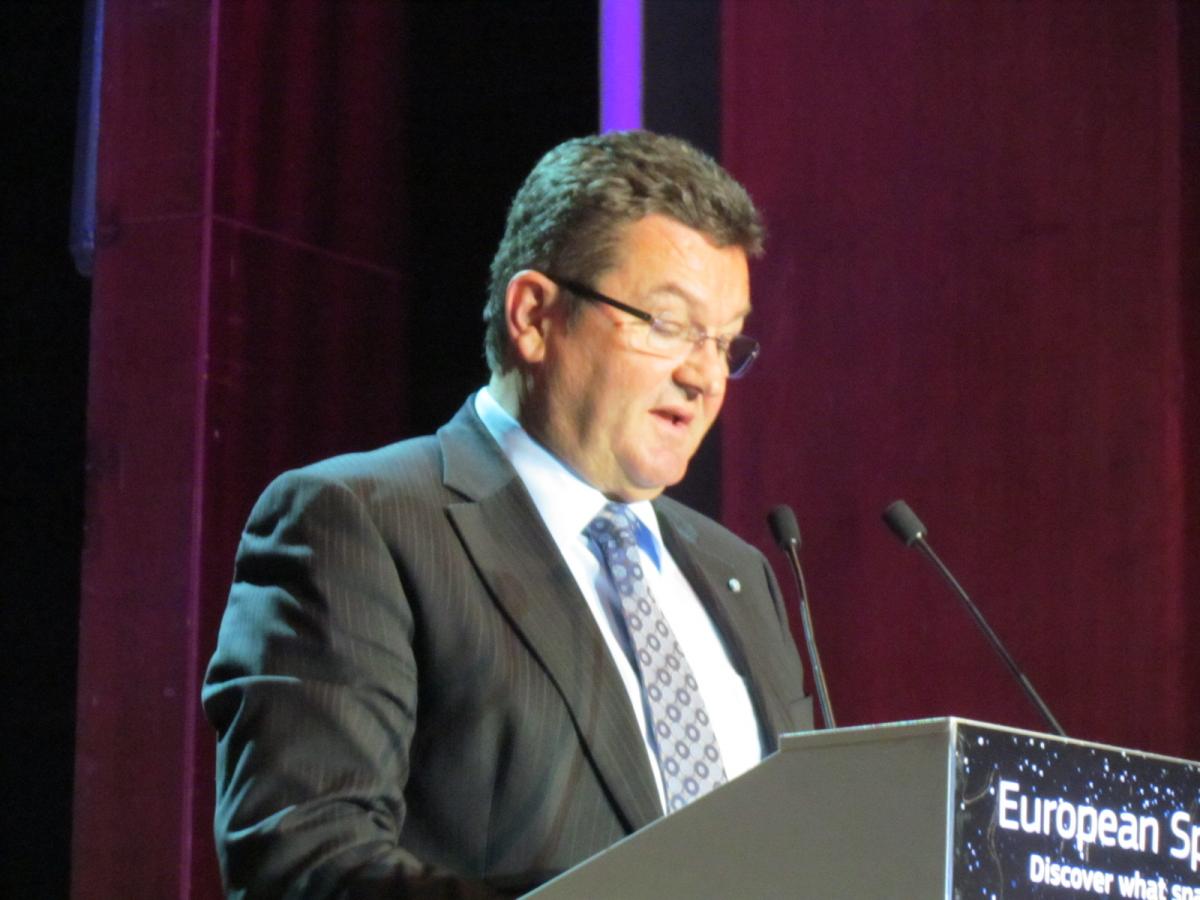 every day, it is an essential pillar of the EU’s strategy to enhance competitiveness for jobs and growth.”
The deployment of Galileo and Copernicus will be catalysts for this needed growth in industry and innovation. Some 7% of EU industry already relies on GNSS, but the investment will only make sense if the systems are used. “The recent GNSS market report from the GSA clearly shows the amazing business opportunities to be seized,” he said.
Mr Petschke confirmed that the EGNOS service would be operated and maintained by the European GNSS Agency (GSA) while Galileo is built up. 70% of current satellite navigation receivers are already EGNOS enabled, meaning the challenge is to ensure that new services are brought to market.
Initial services by Galileo are expected to launch by the end of 2014, along with the operational phase for Copernicus. Copernicus is already delivering benefits in its pre-operational phase, with the full value of the service through 2030 estimated at EUR 30 billion.
Enabling technologies
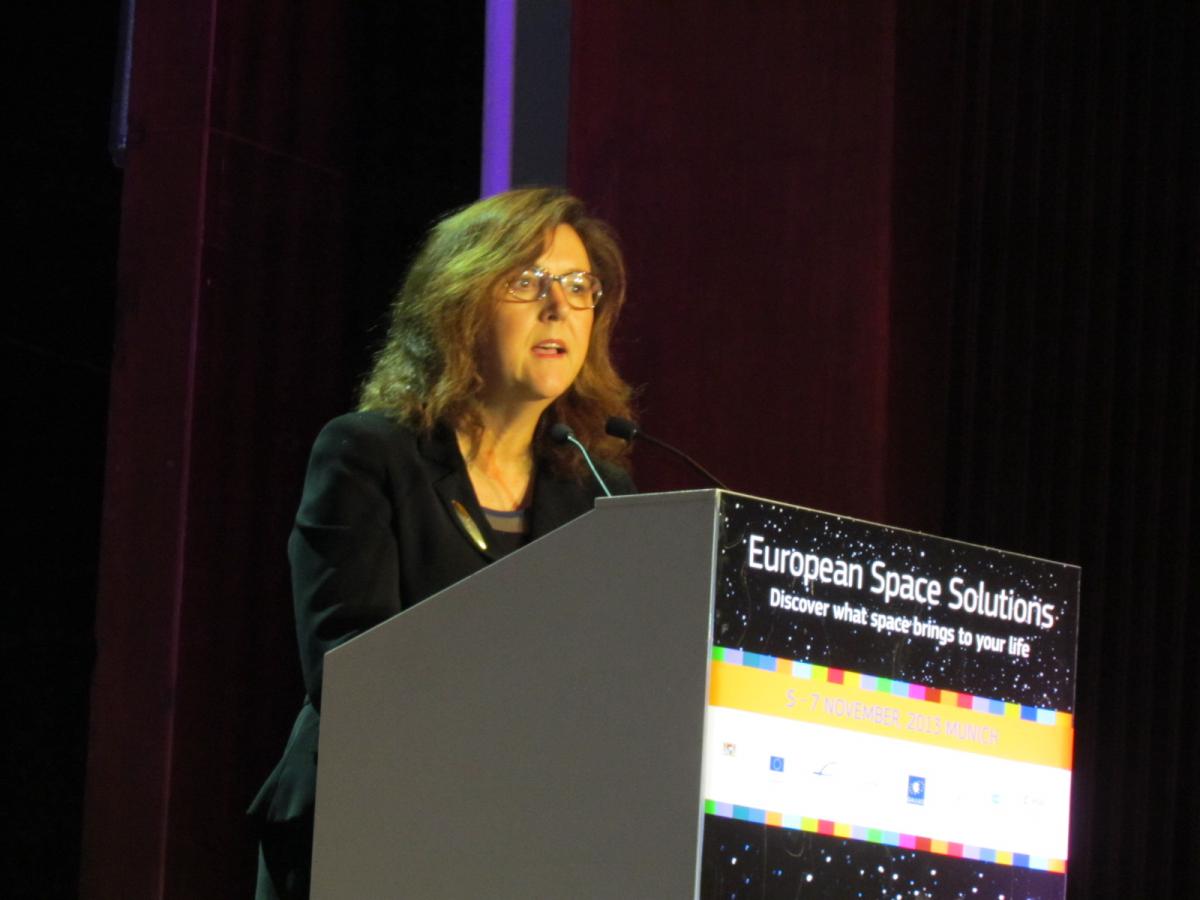 Brigitta Worringen, State Secretary at the Federal Ministry of Transport, Building and Urban Development, outlined the crucial role that satellite data plays in society, particularly in supporting mobility infrastructure.
“More and wider highways are not the solution,” she said. “We must make better use of existing infrastructure, and space-based solutions are key enabling technologies for accomplishing this.”
According to Volker Liebig, Director of Earth Observation at the European Space Research Institute (ESRIN), one of the biggest areas of impact for space is in the business sector. For example, although the EU spent four times less than the US per capita on space, it has 40% of the market. “The emergence of Galileo and Copernicus services will only provide further opportunities for EU industry, jobs and growth,” he said.
In the final address of the opening session, Prof Dr Johann-Dietrich Woerner, Chairman of the Executive Board, German Aerospace Centre (DLR), emphasised the need for a seamless innovation chain stretching from research and development to the market for space-based solutions.
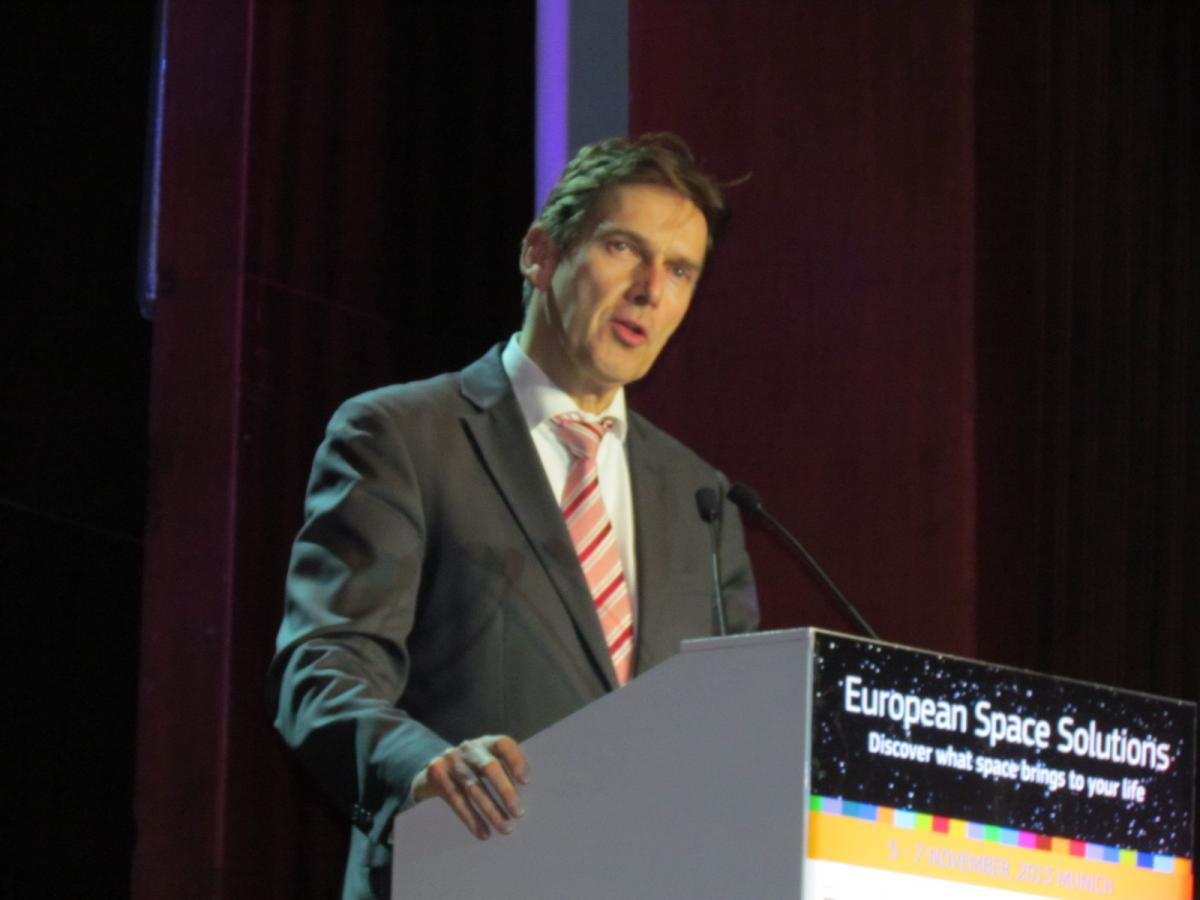 “The fusion of data from Galileo and Copernicus offers more opportunities for the future,” he said. “The knowledge generated has multiple applications on Earth, from transport safety to precision agriculture and making the best use of renewable energy sources.”
Business roundtable
The opening session also included a roundtable discussion on the potential synergies in the value chain of E-GNSS (Galileo and EGNOS) and Copernicus. The session was moderated by Mauro Facchini of the Copernicus Services Unit at the European Commission.
Panel members included: Marc Pollina, President of M3 Systems; Markus Lennartz from T-Systems International GmbH; Jouni Kamarainen, Chairman of the In-Location Alliance; Giovanni Sylos Labini, CEO of Planetek; and Uli W. Fricke of the Triangle Venture Capital Group Management GmbH.
The debate covered many aspects, including:
•  The need for closer integration of technologies, hardware and software
• The need for data generated by such satellite services as Copernicus to be freely available
• How to fund research and development in small companies
• How to achieve global scale
• The role of standards in promoting update and success
• The challenge of providing indoor location-based services
Summarising the Opening Plenary, Carlo des Dorides, Executive Director of the GSA, emphasised that GNSS and Copernicus are both becoming a tangible reality. “EGNOS has been fully operational for three years, and Galileo early service provision will be available soon,” he said. “The lessons learnt from the deployment of EGNOS and development of Galileo could be applied to Copernicus.”
“The EU space programmes are a clear priority for Europe,” he continued. “Satellite-enabled services provide high-quality jobs and bring beneficial spill-over effects to the rest of the economy. We have only just glimpsed the huge opportunity that will be available when Galileo and Copernicus are fully available.”
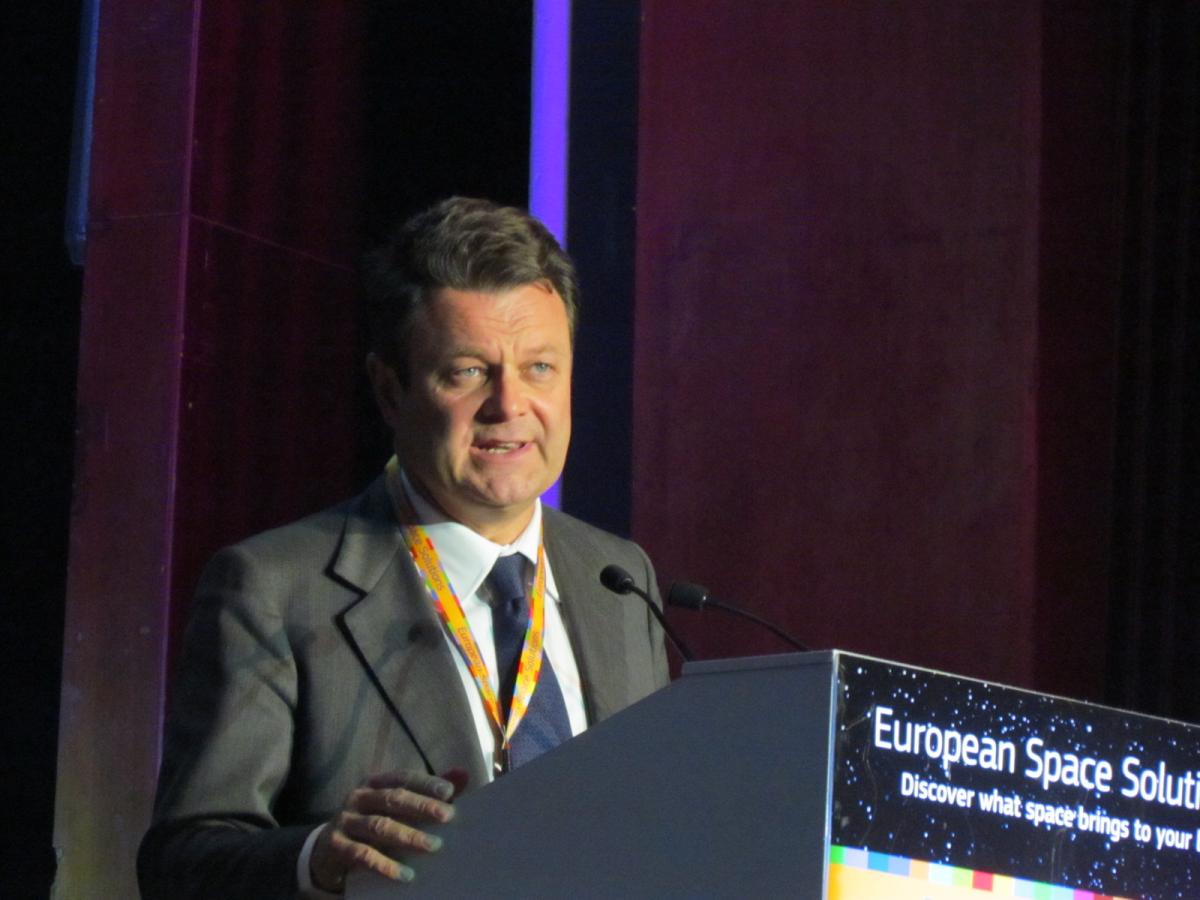 He further noted that industry must be well-positioned to take advantage of this opportunity, which requires private and public interests to work together. To achieve this, he called on delegates to intensify their collaborative efforts over the course of the conference, with a particular emphasis on making plans to harness the huge potential of Galileo and Copernicus for business in Europe.
Media note: This feature can be republished without charge provided the European GNSS Agency (GSA) is acknowledged as the source at the top or the bottom of the story. You must request permission before you use any of the photographs on the site. If you do republish, we would be grateful if you could link back to the GSA website.