
First Master's degree course in GNSS starts in September
Disclaimer
This page has been archived and is provided for historical reference purposes only. The content and links are no longer maintained and may now be outdated.
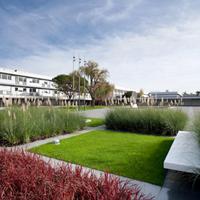
Global Navigation Satellite Systems (GNSS) are finding ever-more applications in many industries and areas of life. To react to the growing interest and demand in the field, the Ecole Nationale de l’Aviation Civile (ENAC) and the Institut Supérieur de l’Aéronautique et de l’Espace (ISAE), both based in Toulouse, France, are launching a new Master of Science (MSc) in GNSS programme.
 ENAC campus in Toulouse. ©ENAC
The first classes in this two-year graduate programme will begin in September 2011.
Two additional universities, the University of Federal Armed Forces in Munich, Germany, and the Politecnico di Torino in Italy, will contribute by teaching and providing links to industry. The course has been developed in collaboration by all four universities with the support of the European Commission and the European GNSS Agency (GSA).
Meeting growing demand
The GSA’s market monitoring expects the global market for satellite-based navigation products and services to grow to €250 billion by 2030. Galileo, the EU’s GNSS system, is forecast to increase the overall value of the market by about €14 billion from 2010 to 2027.
Meanwhile, activities and developments vis-à-vis the Glonass system in Russia, China’s Compass system, IRNSS and Gagan in India, as well as QZSS and MSAS in Japan, and GPS in the USA are also driving the need for graduate students to fill open positions in the field.
A new qualification
The new two-year MSc in GNSS aims at providing advanced education in satellite-based positioning and its applications, as well as in telecommunications. It also includes a six-month internship in industry. The qualification has been recognised by the French Ministry of Higher Education.
Applications are open to students with a completed bachelor's degree (BSc or BEng) in electrical engineering, aerospace engineering, mathematics, physics or equivalent.
The course, based in Toulouse, is taught in English. Some of the topics covered in the programme are: navigation and positioning techniques taking into account different GNSS applications; alternative positioning techniques; signal processing and design; space and mobile telecommunications; network architecture and systems engineering; project management and intellectual property; and telecommunications and GNSS businesses.