GEMCO takes off in Tunis
Disclaimer
This page has been archived and is provided for historical reference purposes only. The content and links are no longer maintained and may now be outdated.
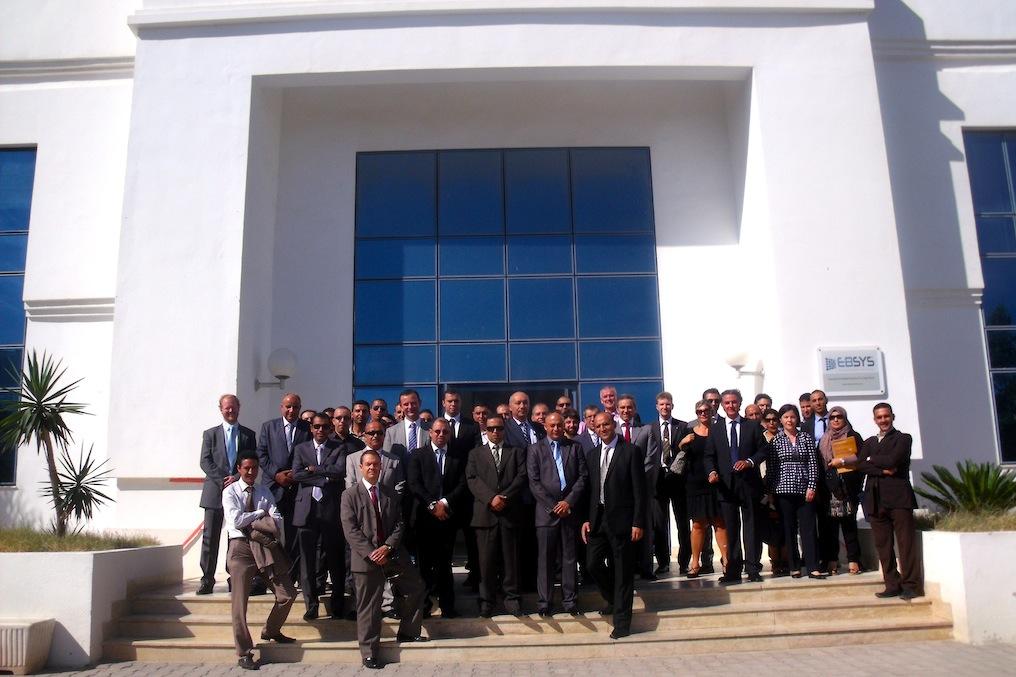
With the opening of the Galileo EuroMed Cooperation Office (GEMCO) in Tunis earlier this year, efforts to promote awareness of EGNOS and Galileo around the southern and eastern Mediterranean region are getting a major boost. Activities coordinated by GEMCO help countries in the region embrace and adopt these satellite technologies – especially as applied to the transport sector.
 Funded by the European Commission, the Galileo EuroMed Cooperation Office (GEMCO) is a joint effort between the Euromed GNSS II project MEDUSA (MEDiterranean follow-Up for EGNOS Adoption) and Elgazala Technopark in Tunis.
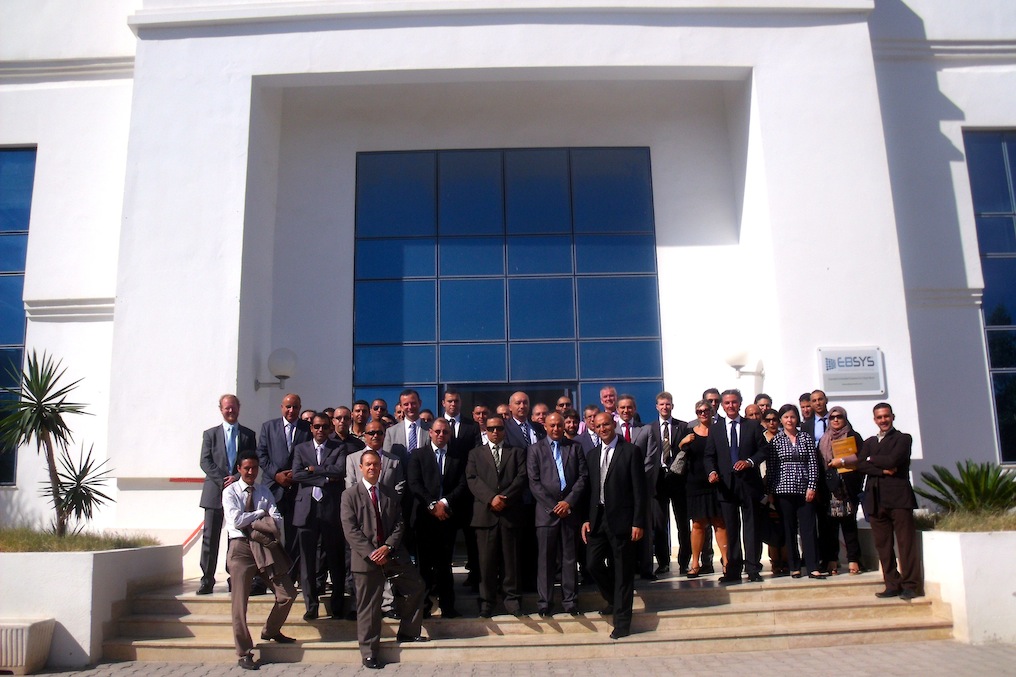
GEMCO was inaugurated on 23 October by representatives of Tunisian institutions and the European Commission during a one-day meeting on European Global Navigation Satellite Systems (GNSS). The event, which welcomed delegates from six Euromed countries, included speeches from the Tunisian Ministry of Transport and the European Commission, who both reaffirmed Tunisia’s interest in EGNOS and Galileo.
The workshop focused on sharing the European experience of using EGNOS in civilian applications, along with discussing forthcoming GEMCO activities. In addition, Euromed members introduced several proposals for using GNSS in their countries.
Reference point
Led by Telespazio, MEDUSA is part of the Euromed GNSS framework, itself a component of the Euromed Transport programme. Its objective is to extend the use of European GNSS across the Euromed countries of Algeria, Egypt, Israel, Jordan, Lebanon, Libya, Morocco, Palestine, Syria, Tunisia and Turkey.
 GEMCO constitutes a new point of reference for these Euromed countries and will act as an incubator for the successful development of regional initiatives related to EGNOS and Galileo.
GEMCO will promote awareness of the European GNSS, facilitate links between stakeholders in the Euromed countries and the European Union, foster new initiatives and provide appropriate assistance to ensure the successful participation of the region.
Letter of intent
As part of these activities, on 12 November GEMCO signed a letter of intent with the Arab Science and Technology Foundation (ASTF). The letter was signed during the Arab ICT Incubators Workshop and Arab Technoparks meeting organised by the International Telecommunication Union regional office and Elgazala Technopark.
Building on a shared vision to foster the exploitation of GNSS, the letter strengthens the bilateral relationship between GEMCO and ASTF. The letter outlines a plan of joint activities to support and develop innovation linked to European GNSS developments and the promotion of research, education and commercial cooperation.
The agreement represents a solid first step for GEMCO in building cooperation with other organisations in the Euromed area.
MEDUSA support
MEDUSA is supporting Euromed countries in exploiting and adopting relevant services provided by EGNOS today - and in the future Galileo - in civil aviation and other transport and non-transport domains.
In particular, as the EGNOS service is being extended to cover North African countries, MEDUSA is implementing two service demonstrations. One demonstration is focused on EGNOS for civil aviation in Tunisia, and the other focused on EGNOS for freight transport in Jordan. In parallel, MEDUSA organizes national and regional workshops and training sessions on these two priority application markets, along with implementing technical assistance actions to aid countries in their decision-making process as it regards the operational introduction of EGNOS.
Media note: This feature can be republished without charge provided the European GNSS Agency (GSA) is acknowledged as the source at the top or the bottom of the story. You must request permission before you use any of the photographs on the site. If you republish, we would be grateful if you could link back to the GSA website (http://www.gsa.europa.eu).