
GSA receives keys to GRC at ceremony in the Netherlands
Disclaimer
This page has been archived and is provided for historical reference purposes only. The content and links are no longer maintained and may now be outdated.
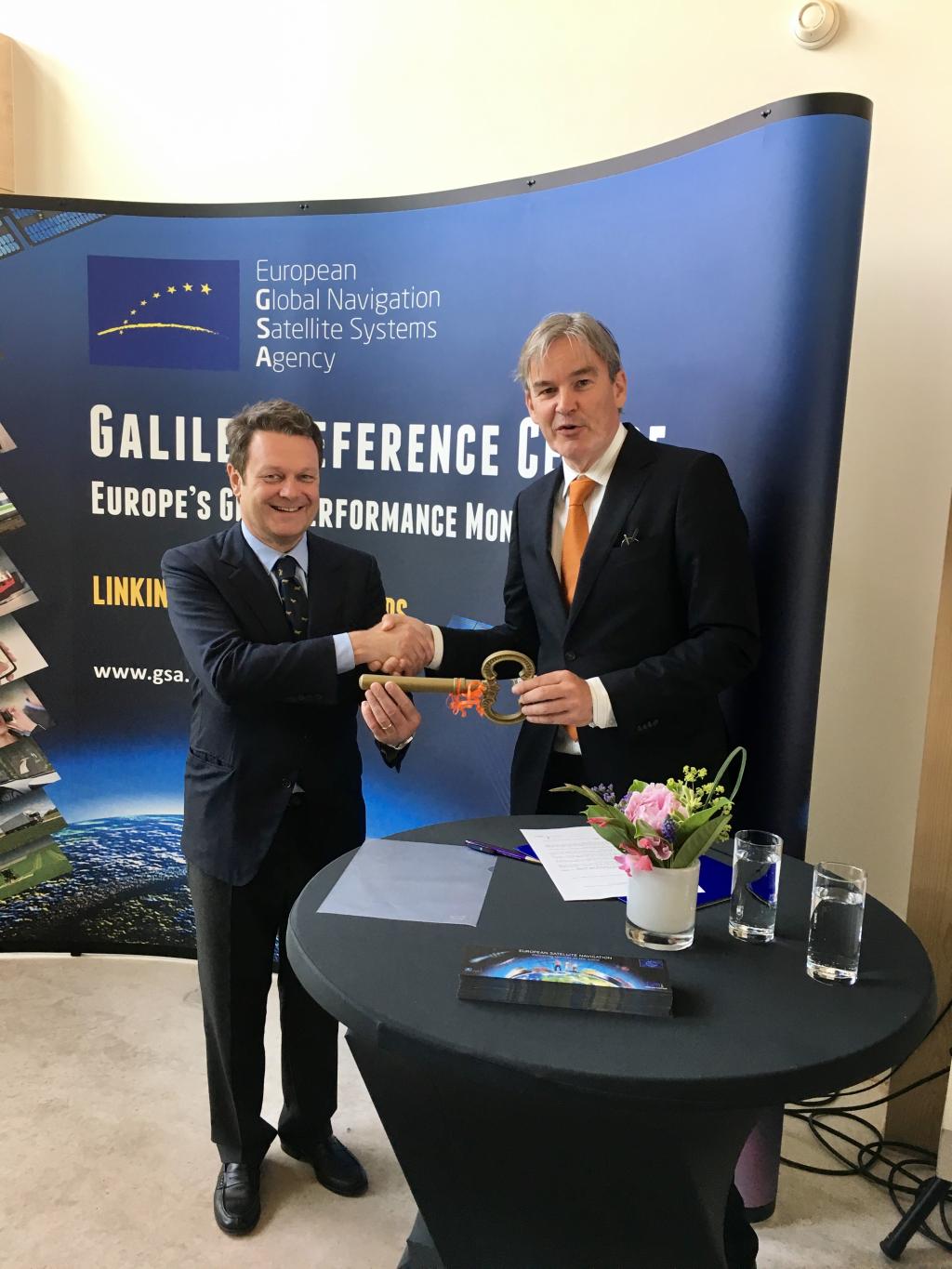
The European GNSS Agency (GSA) formally received the keys to the Galileo Reference Centre (GRC) from the Dutch government at a handover ceremony in Noordwijk, the Netherlands, on 12 June.
As part of the ceremony, a key declaration document was signed by GSA Executive Director Carlo des Dorides and Bart van Bolhuis, Director of International Affairs at the Dutch Ministry of Infrastructure and the Environment. The signing ceremony was followed by a presentation on Galileo and the role of the GRC in the Galileo architecture.
This largely ceremonial event means that the GSA now formally has access to the GRC building to install equipment and prepare the facilities for operations. The full right of use of the GRC will be granted to the GSA upon final acceptance of the building by the European Commission and the GSA.
Speaking at the ceremony, des Dorides said that the GSA appreciates the efforts made by the Netherlands to ensure that the GRC building will be of high quality, well prepared to handle the tasks entrusted to it now and in the future.
Watch This: GSA ready for Initial Services
“With the GRC in Noordwijk, the GSA will have a state of the art facility next to the European Space Research and Technology Centre (ESTEC), stimulating both agencies to work more closely together, which is exactly the reason why this location for the GRC was selected,” des Dorides said.
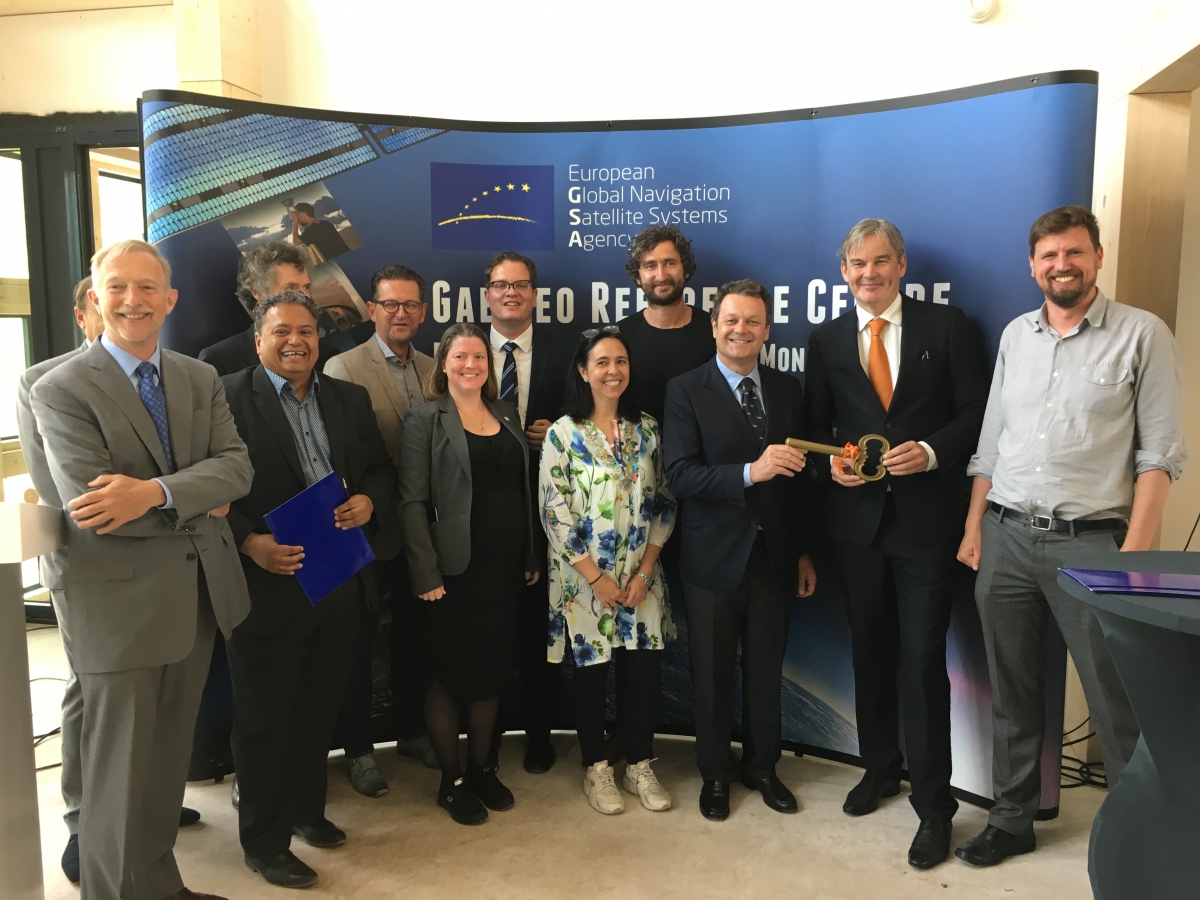
With the GRC, the GSA will have a state of the art facility next to ESTEC
In his speech at the event, van Bolhuis highlighted the effectiveness of cooperation so far. “Thanks to excellent cooperation by all parties we are able to stand here only eight months after the first brick to hand over the key for this future center of excellence of the GSA,” he said.
Pivotal role
Following the declaration of Galileo Initial Services in December, the GRC will play a pivotal role in the provision of Galileo services, providing the GSA with independent monitoring of and reporting on Galileo’s performance. In doing so, it will help ensure the provision of high-quality satellite data so users can better rely on and benefit from Galileo.
The GRC in Brief
|
Media note: This feature can be republished without charge provided the European GNSS Agency (GSA) is acknowledged as the source at the top or the bottom of the story. You must request permission before you use any of the photographs on the site. If you republish, we would be grateful if you could link back to the GSA website (http://www.gsa.europa.eu).