
It’s all about the timing
Disclaimer
This page has been archived and is provided for historical reference purposes only. The content and links are no longer maintained and may now be outdated.
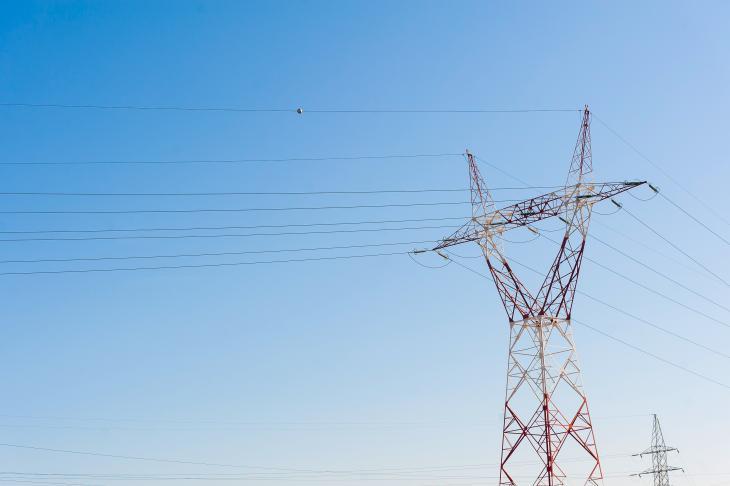
At the 13th Munich Satellite Navigation Summit, the European GNSS Agency (GSA joined in to debate three of the hottest issues: GNSS timing services, Galileo’s unique Public Regulated Service (PRS) and GNSS for autonomous vehicles.
The timing services supplied by GNSS are an increasingly important, but often unrecognised, part of today’s modern infrastructure. This is because the vital role of space-based timing is only exposed when it fails. To shed some light on just how important these services are, this year the Munich Satellite Summit’s legal session focused on the timing aspects of GNSS.
“Many sophisticated timing applications rely on GNSS signals,” said BHO legal partner Dr Oliver Heinrich. “However, they tend to be taken for granted and are only noticed when things go wrong, such as what happened on 26 January when a software upload to GPS satellites induced a 13 millisecond misalignment – a small difference that had a big global impact.”
Also read: EGNOS protects GNSS timing
According to Meinberg Funkuhren GmbH & Co.’s managing director Heiko Gerstung, this glitch caused Global Positioning System (GPS) receivers to exhibit different and unwanted behaviour that led to a loss of synchronisation across a number of systems, including power grids and financial markets. Although the issue was quickly detected and resolved in a few hours, it nonetheless had a real global impact, with numerous digital TV and radio networks failing and some financial customers reporting issues. “Trust is good, reality checks and consistency checks are better,” said Gerstung. “Back-up reference sources are important for [these] highly critical systems.”
The Directorate-General for Internal Market, Industry, Entrepreneurship and SMEs (DG Growth) Deputy Head of Unit, Galileo and EGNOS – Applications and Security, Christoph Kautz, noted a number of other events that demonstrate the critical nature of Global Navigation Satellite System (GNSS) timing. “Reliance on GNSS timing will only increase as smarter power grids are developed and more sophisticated mobile communication networks, such as 5G, are deployed in support of the Internet of Things and other sensor networks,” he said. “All of these will require more and better synchronisation.”
As part of the new Space Strategy for Europe, a Galileo roadmap will identify possible measures to support market uptake by the EU economy in all areas, including timing. “This will be a strategic approach based on a set of technical, sector-based initiatives that are selected for maximum impact,” said Kautz.
Diamond service?
Another area where Galileo is likely to have maximum impact is the Public Regulated Service (PRS). The PRS will provide a robust and encrypted positioning and timing capability restricted to governmental authorised users. Speaking at the event, DG Growth Head of Unit, Galileo Directorate Philippe Jean described the service and the access control mechanisms that will minimise interfering threats and so offer continuity of service in times of crisis. “The PRS signal structure has better resilience to jamming and interference,” he said. Jean also said that the Member States and the Commission are considering how to allow secure access to PRS by third-party countries.
Read also: 2016 – the Year of Galileo
“Active contributions from all the different stakeholders involved in PRS is required to ensure delivery of service to authorised users,” added GSA PRS Officer Marco Detratti. “Competent PRS authorities (CPAs) are being established at the national level, but to build trust, the system and equipment must deliver a truly robust service that grants unlimited and uninterrupted access worldwide.”
Every Member State that uses PRS must establish a CPA. According to French Competent PRS Authority Colonel Philippe Bertrand, the French CPA is part of an inter-ministerial department for defence and security. The legal decree to regulate PRS in France is in development, and he believes there is no doubt that the PRS community will come when PRS is available. “PRS is a diamond – a beautiful object – when it meets performances continuously and worldwide,” he concluded.
The German perspective came from Kai Herrmann from the German CPA, who agreed that PRS is a key technology for the digital society. He noted that Germany was collaborating with Sweden to prepare an area to demonstrate PRS. Salvatore Viviano of the Agenzia Spaziale Italiana added that Italy is committed to providing PRS users with effective access control and a high level of service continuity. He also promised manufacturers support for production and export of receivers and other equipment.
Perhaps the most enthusiastic promoter of PRS at the Summit was UK Space Agency Head of Galileo Policy Imogen Ormerod. “PRS is unique: the ability to have confidence in the signal is ground breaking,” she said. “If done right, PRS has unique and unchallenged potential and the opportunity to be the jewel in Galileo’s crown.” She further noted that although the future market will be extensive as there is no real competition, the provision of timely initial services will be key.
GNSS driving autonomy?
Speaking at a session completely dedicated to autonomous vehicles, GSA Head of Market Development Gian-Gherardo Calini said that accurate and reliable positioning information is a clear enabler for autonomous vehicles. “With its dual frequencies, better reliability and ability to cope with multi-path characteristics in urban environments, Galileo could be a big differentiator in this potentially huge market,” he said.
However, implementing the technologies is challenging. For example, according to Centro Ricerche Fiat Programme Manager Luisa Andreone, the higher you moved up the automation levels in vehicles, the more accurate the positioning requirements are. Other key elements are signal availability, integrity, affordability and regulations. Furthermore, complementary techniques for positioning are also important. According to the ISMB Head of Research Area, Multi-Layer Wireless Solutions, Dr Riccardo Scopigno, more precise, absolute and authenticated position data is needed at higher levels of automation. He is confident, however, that this can be obtained using Galileo signals in an intelligent data fusion with information from other sensor systems.
BASELABS GmbH project specialist and GNSS researcher Marcus Obst agreed, saying that integration of data reduced ambiguities and allowed the definition of robust and safe autonomous processes. Magneti Marelli S.p.A. professional expert Evaldo Bruci added that precise positioning must work hand-in-hand with image processing and also with accurate maps. He estimated that to achieve reliable and safe autonomous driving, a minimum of 20-centimetre position accuracy was needed. In addition, technical solutions for mass-market implementation must not significantly add to the current cost of a vehicle.
Media note: This feature can be republished without charge provided the European GNSS Agency (GSA) is acknowledged as the source at the top or the bottom of the story. You must request permission before you use any of the photographs on the site. If you republish, we would be grateful if you could link back to the GSA website (http://www.gsa.europa.eu).