
The Law of Space
Disclaimer
This page has been archived and is provided for historical reference purposes only. The content and links are no longer maintained and may now be outdated.
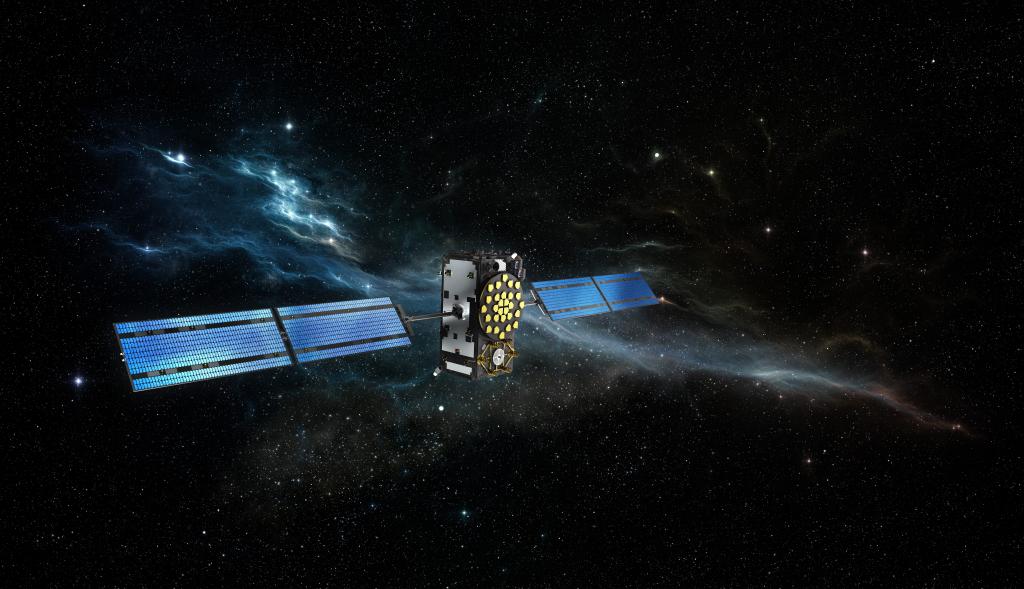
As European Space Policy – and EU satellite navigation systems in particular – shift from technology and systems development to services and applications, the need for an appropriate regulatory and legal framework is clear.
There are many questions to be explored in the interaction between space policy, the promotion of space services and applications and the law. For example:
- Should national legislation for licensing commercial space activities be more streamlined?
- Can open data policies stimulate downstream markets, or could they even have adverse effects on existing service providers?
- Are Service Level Agreements the right tool for guaranteeing performance of space services?
- How can liability risks from space services be covered by the insurance market?
These questions and others were addressed earlier this year at the first International Legal Symposium in Tutzing, Germany. The event brought together policy, legal and economic experts from the European GNSS Agency (GSA), EU institutions, national space agencies, industry associations and academia. It provided a platform for analysing the suitability of existing statutes and the need for future laws and regulations governing the provision of space services and applications in Europe.
“Europe’s flagship projects, including Galileo, are designed to provide services to a broad range of users and to increase the competitiveness of European industry and economic growth,” said BHO Legal Partner Ingo Baumann, setting the stage during an opening address. “However, the successful introduction of new space services and applications requires an adequate and reliable legal and regulatory framework.”
Galileo Legal Applications
The GSA presented its strategy for supporting the use of European GNSS in diverse market segments. In particular, the Agency highlighted the role of Galileo’s authentication signal in facilitating the use of GNSS positioning across a range of applications, including the enforcement of public laws and supporting policy initiatives.
Galileo will provide a portfolio of different services with varying levels of robustness and authentication. The Public Regulated Service (PRS), for example, will be the most robust and secure, but is reserved for governmental use. However, work is ongoing to offer Commercial Service (E6) authentication, and a basic level of authentication available via the free Open Service is also being considered.
“Potential applications of these signals with legal relevance could be in maritime and fisheries for monitoring restricted fishing areas, along with surveying,” said GSA Head of Market Development Gian Gherardo Calini. “In the future, location-based services could provide verifiable digital identity information or verify digital rights management issues.”
One application could be the next generation of digital tachograph. Tachographs are used to enforce driving time regulations for heavy goods vehicles and other commercial road vehicles in Europe. Amended EU legislation, which comes into force in 2018, proposes a new generation of GNSS enabled digital tachograph.
“GNSS signals will be used to register at least the start and end times and locations for journeys, enabling enhanced regulatory oversight,” added Calini. “This requires a GNSS signal that is robust and trusted in a legal sense, and an authenticated GNSS signal could be an ideal, low-cost and secure solution.”
Ensuring eCall’s data protection and privacy
Another significant GNSS application with clear legal implications is the eCall emergency response service. From 31 March 2018, all manufacturers of cars to be sold in Europe will be required to equip their new models with an in-vehicle GNSS-based eCall device. The wireless system will automatically trigger a distress signal to the 112-based eCall interoperable service in the event of an accident, using EGNOS and GALILEO to indicate the precise location of the incident.
Also read: eCall closer to providing Europe with more efficient emergency services
Taking into account public concerns about privacy and data protection, vehicles equipped with the system will not be subject to constant tracking, and data on the location of the vehicle will be continuously erased. The eCall system remains dormant until either manually activated or automatically activated following a serious accident, therefore no tracking or transmission of data takes place during the normal operation of the system. Nor will any data be communicated to third parties without the specific consent of the vehicle owner.
Media note: This feature can be republished without charge provided the European GNSS Agency (GSA) is acknowledged as the source at the top or the bottom of the story. You must request permission before you use any of the photographs on the site. If you republish, we would be grateful if you could link back to the GSA website (http://www.gsa.europa.eu).