
Two more Galileo satellites pass in-orbit testing
Disclaimer
This page has been archived and is provided for historical reference purposes only. The content and links are no longer maintained and may now be outdated.
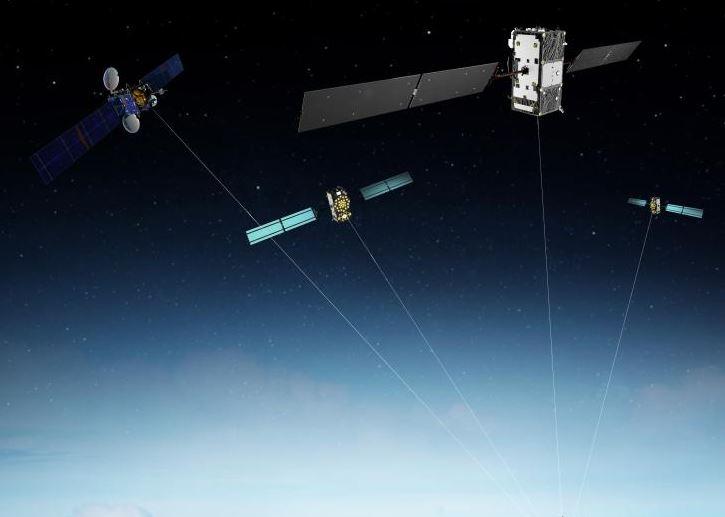
The European GNSS Agency (GSA), along with the European GNSS Service Centre (GSC), announce the commissioning of two additional Galileo satellites, increasing the total number of signals available for testing as the programme moves towards Galileo Initial Services.
Today, the European GNSS Agency (GSA), along with the European GNSS Service Centre (GSC), announce that the latest two Galileo satellites launched have successfully completed a four month long in-orbit testing campaign. Galileo satellites 11 (GSAT0208) and 12 (GSAT0209) are now officially commissioned for use in the Galileo constellation.
The two satellites were launched from Europe’s Spaceport in French Guiana on 17 December 2015. Following extensive testing campaigns by European Space Agency, the GSA and GSC confirm that both are performing as planned and are successfully integrated with the Galileo ground network.
This milestone, along with the deployment of the next two satellites scheduled for launch in May, helps pave the way for the declaration of Galileo Initial Services later this year. The May launch will be followed by an additional launch of four satellites in the autumn – the first launch to use a single customised Ariane-5 launcher.
About Galileo
Galileo is Europe's civilian global satellite navigation system. Galileo will allow users worldwide to know their exact position in time and space with great precision and reliability. Once complete, the Galileo system will consist of 30 satellites and the necessary ground infrastructure to enable the provision of positioning, navigation and timing services.
The Galileo programme is funded and owned by the European Union. The European Commission has the overall responsibility for the Galileo programme, it manages and oversees the implementation of all programme activities.
Galileo's deployment, the design and development of the new generation of systems and the technical development of infrastructure are entrusted to the European Space Agency. The definition, development and in-orbit validation phases of the Galileo programme were carried out by ESA, and co-funded by ESA and the European Commission.
The European GNSS Agency (GSA) is ensuring the uptake and security of Galileo. From 2017 Galileo operations and provision of Galileo services will be entrusted to the GSA.
Media note: This feature can be republished without charge provided the European GNSS Agency (GSA) is acknowledged as the source at the top or the bottom of the story. You must request permission before you use any of the photographs on the site. If you republish, we would be grateful if you could link back to the GSA website (http://www.gsa.europa.eu).