
Ways the Czech Republic benefits from the EU Space Programme
Disclaimer
This page has been archived and is provided for historical reference purposes only. The content and links are no longer maintained and may now be outdated.
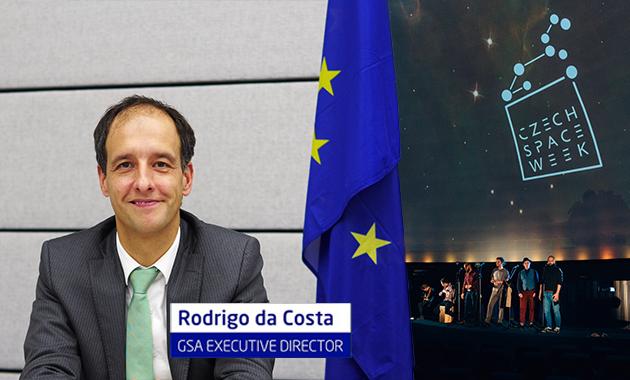
The GSA Executive Director, Rodrigo da Costa, joined the Czech Space Week to welcome the participants attending this year’s online edition. The Czech Republic is an active member of the EU Space community, and with EU Space technologies growing at an unprecedented pace, the future looks bright.
The Czech Space Week 2020 celebrates space science and technology attracting young professionals, students and space enthusiasts supported by aerospace companies, schools, museums, planetaria across the country.
The contribution of the Czech Republic to Europe’s space achievements is well-known. From Europe’s first cosmonaut -Vladimir Remek- orbiting the Earth, to becoming the hosting country of the European GNSS Agency in 2012, the Czech Republic has a long-standing history in space, leveraging #EUSpace technology to improve infrastructure, stimulate innovation, create jobs and ensure the well-being of citizens.
On the occasion of the Czech Space Week, it is worthwhile to focus on four ways, out of many, the Czech Republic is making great use of Galileo and EGNOS:
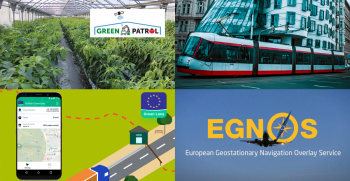
- Equipping Prague trams with state-of-the-art Galileo receivers: As part of the modernization of the city´s tram fleet, by the end of 2020, Prague trams will be benefiting from Galileo’s additional accuracy to increase network efficiency and improve user experience.
- Easing the flow of goods across EU borders: Thanks to their expertise, Czech companies have contributed to the development of the ‘’Galileo Green Lane App’’, the mobile application that facilitates the flow of freight and critical goods across the EU borders during COVID.
- Boosting innovation among the youth: Aspiring young students from the Mendel University in Brno, have joined forces with professionals from other EU countries to help develop the H2020 funded GreenPatrol project, which uses Galileo’s robust signals to perform pest detection in crops.
- Rolling out safer and cleaner forms of air travel: Six Czech airports -including Prague Vaclav Havel Airport- are more accessible even under challenging weather conditions thanks to EGNOS, the EU regional satellite navigation system. Accurate guidance by EGNOS satellites reduces the number of go-arounds (aborted landings) resulting in less noise and less emissions.
‘’The GSA’s core mission is to ensure that European citizens make the most of the European Union Space Programme. By having users in the driver seat, the agency has been able to deliver state of the art, secure satellite-based services to respond to user needs’’ says Rodrigo da Costa, GSA Executive Director.
‘’2021 will mark an important evolution for the EU Space Programme with the transformation of the GSA into the European Union Space Programme Agency, bringing new opportunities. I am sure the Czech Republic will continue to fly the EU Space Programme flag high.’’ da Costa concludes.
You can read here the czech version of the news.
Českou verzi článku si můžete přečíst zde.
If you are keen on satellite navigation, Earth Observation, governmental satellite communications or simply are working in a market that can benefit from the EU Space Programme, join the European Space Week 2020. This year, the top EU space event is brought to your screens from 7th until the 11th December 2020.
Media note: This feature can be republished without charge provided the European GNSS Agency (GSA) is acknowledged as the source at the top or the bottom of the story. You must request permission before you use any of the photographs on the site. If you republish, we would be grateful if you could link back to the GSA website (http://www.gsa.europa.eu).