
Copernicus security enhanced
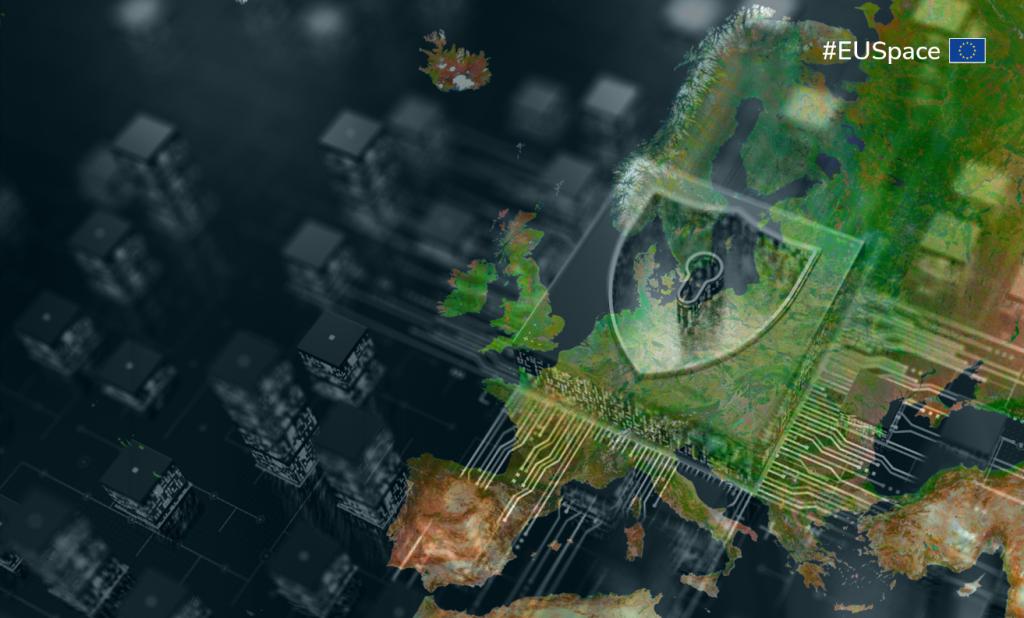
On 20–21 January, the European Union Agency for the Space Programme (EUSPA) hosted a two-day workshop dedicated to the implementation of the General Security Requirements (GSR) for Copernicus, aiming at strengthening the security of the Union Space Programme.
The workshop, organised and led by EUSPA, brought together all Copernicus Entrusted Entities (ECMWF, Mercator Ocean International, EMSA, FRONTEX, EEA) the European Commission including the Joint Research Centre (JRC), together with ESA and EUMETSAT, to support a coordinated and practical approach to reducing and minimising security risks across Copernicus space components. By fostering a common risk-management framework, EUSPA aims to ensure a consistent level of security across all Copernicus services.
EUSPA has played a key role in supporting the European Commission throughout the development of the Copernicus General Security Requirements, including close cooperation with the Security Accreditation Board. These efforts led to the adoption of the Commission Implementing Decision of 7 July 2025 (C(2025) 4417 final), which formally establishes the security requirements applicable to the Copernicus component of the Union Space Programme, in line with Regulation (EU) 2021/696.
“EUSPA turns security requirements into operational reality, ensuring the implementation of the Copernicus General Security Requirements adopted by the Commission on 7 July 2025. By guiding stakeholders through the implementation of the General Security Requirements, we are ensuring that Copernicus remains a secure, resilient and trusted programme serving Europe’s strategic interests”, said EUSPA Executive Director, Rodrigo da Costa.
To support implementation, EUSPA has developed a multi-year workplan covering the next three years, mobilising several specialised teams within the Agency. This workplan provides a structured pathway for Entrusted Entities to implement the GSR in a harmonised and measurable manner.
During the workshop, in-depth discussion went on the 17 security domains and 58 individual requirements that make up the Copernicus GSR. Particular emphasis was placed on practical implementation aspects, timelines and responsibilities.
Participants were also introduced to the electronic Statement of Compliance, a dedicated tool developed by EUSPA to support Entrusted Entities in demonstrating compliance. The tool enables a standardised assessment of security maturity levels, enhancing transparency, comparability and continuous improvement across the programme.
The workshop further served as a platform for EUSPA to collect operational feedback from Entrusted Entities, which will feed into the next phases of GSR implementation and future Copernicus security activities.
Through this initiative, EUSPA confirms its role as a key actor in the security governance of Copernicus, ensuring the programme continues to deliver secure and reliable Earth observation services to the European Union and its citizens.
Media note: This feature can be republished without charge provided the European Union Agency for the Space Programme (EUSPA) is acknowledged as the source at the top or the bottom of the story. You must request permission before you use any of the photographs on the site. If you republish, we would be grateful if you could link back to the EUSPA website.