
The future of space is female

The space industry has a gender problem. According to UN statistics, as of 2021, only 1 in 5 space industry workers were female. Perhaps even more concerning is that this ratio has remained relatively unchanged for the past three decades.
Not only are these statistics problematic from a diversity and inclusion standpoint, they also have a significant impact on the EU Space industry’s ability to innovate, solve problems and compete.
“The space sector is in the business of solving complex global challenges, and to do so effectively, we need different perspectives, experiences and ways of thinking,” says Candela Sancho, CEO and co-Founder of Detektia, an Earth Observation company that combines satellite radar data and artificial intelligence to monitor ground and infrastructure movements with millimetre accuracy.
As Sancho explains, because innovation thrives when different perspectives interact, teams composed of people with diverse backgrounds tend to deliver more robust and creative solutions. “Diversity strengthens teams because it encourages more creative problem-solving and helps us avoid blind spots,” she says. “When teams are diverse, they tend to explore alternative solutions, which is essential for innovation in highly technical fields like Earth Observation.”
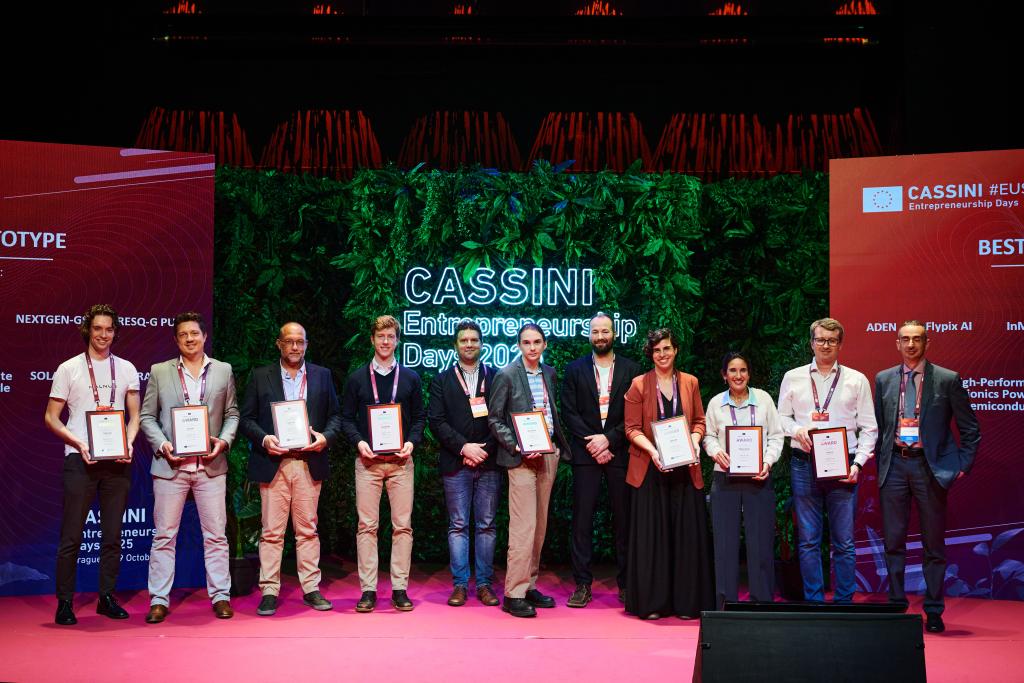
“Innovation comes from challenging assumptions, and diverse teams do that better because they don’t all think alike, study alike or approach risks in the same way,” adds Laura Moreno, CEO and founder of EarthPulse, a company focused on turning satellite data into practical tools that help businesses make better decisions around risks, sustainability and resilience. “In the space sector, where we are developing new applications, new services and new business models, this is critical.”
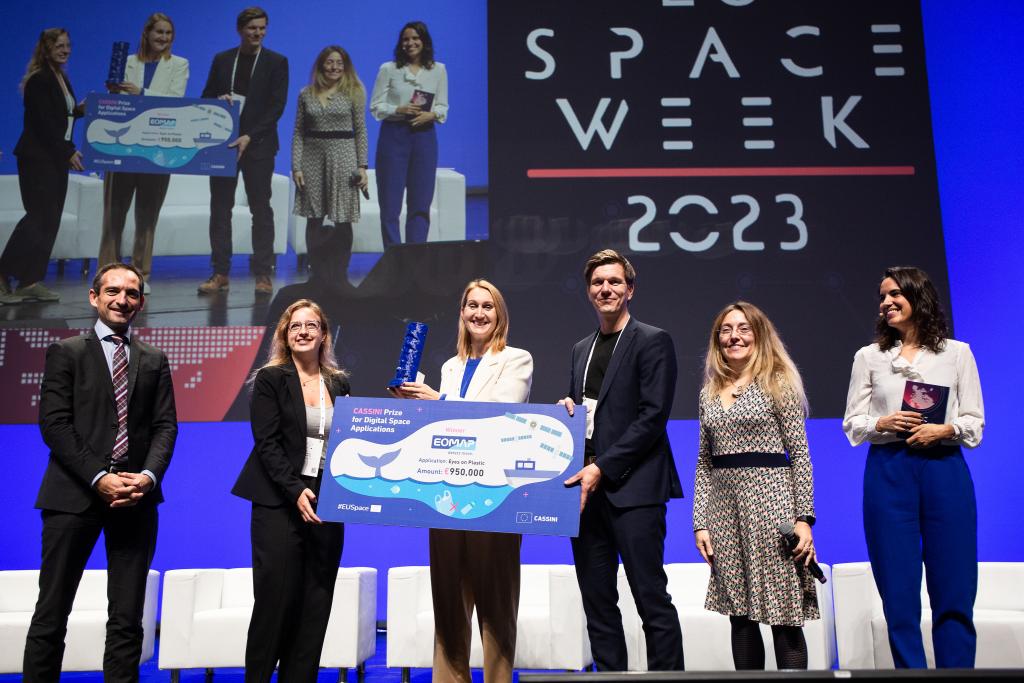
Eva Haas, Head of Strategic Accounts Europe at EOMAP, agrees, noting how women bring a different perspective to an often very technical sector. “While excelling in technical topics, women can also bring a unique ability to connect with people to the table.”
EOMAP is a German company that uses Earth Observation data to deliver actionable insights into coastal and inland areas worldwide.
There’s a place in space for everyone
What can the space industry do to help close the gender gap? In addition to encouraging more females to pursue STEM careers from an early age, Sancho recommends that companies and institutions actively promote inclusive environments where diverse talent can grow into leadership roles. “Mentoring programmes, fair recruitment processes and support for career development are all key elements,” she says.
“If the industry offers attractive job opportunities with flexible working hours and career paths, diversity can be further increased,” remarks Haas.
It’s also critical that the space industry communicate the real impact space technologies have on society. “When young women see how space can solve real-world problems, they are more likely to see themselves contributing to this field,” says Sancho.
“We need to do a better job of highlighting how space is not only about exploration, but also about understanding our planet better and using that knowledge to solve concrete problems,” adds Moreno.
Moreno herself was inspired by the idea that advanced technology can be turned into something useful for society. “Space needs talent, discipline, creativity and persistence and there is absolutely a place for every female in this sector,” she says.
Career advice from women role models
Beyond seeing how space solves real-world problems, women pursuing careers in space also need visible, female role models and mentors like the three women featured in this article. “Surround yourself with people who inspire and support you,” says Sancho.
Sancho’s advice for anyone considering a career in space is to follow your curiosity and don’t limit yourself based on stereotypes. “The space sector needs people with many different skills – from physics and engineering to data science, environmental science and entrepreneurship,” she says.
“I suggest getting as much experience as you can in different fields, from academia to institutions and industry, as this knowledge and insight will help you to gain a holistic picture of our amazing sector,” adds Haas.
Haas’ own career path is a case in point. Before landing at EOMAP, she studied geography and Earth Observation at Ludwig Maximilian University of Munich. She then carried out a PhD in EO with a focus on hydrology and big data at the European Commission’s Joint Research Centre in Italy. Since then, she has led and managed projects and teams at international institutions, universities and private sector companies working to bring satellite-derived services to the market.
Diversity as a solution
As the global space sector rapidly grows, the demand for highly skilled professionals grows too. Meeting this demand requires that Europe tap into its full potential workforce – a workforce that is 51% female.
“The industry cannot complain about a talent shortage while overlooking half of the talent pool,” notes Moreno.
In other words, diversity is not separate from the talent challenge. It is part of the solution. “Encouraging women and underrepresented groups to enter the space sector is not only a matter of fairness but also a strategic necessity for the future of our industry,” says Sancho.
“It’s time to move from talking about diversity to building it deliberately,” concludes Moreno. “That means better access to STEM education, more visible female role models, fair hiring and promotion processes, work environments where people can actually grow and lead and making sure diversity is present at the decision-making level.”
“While increasing women’s participation remains essential, diversity goes far beyond gender balance,” noted Martina Vondraskova, EUSPA Head of HR. “It is about building a workforce that reflects a wide range of backgrounds, perspectives and talents, which are all critical to innovation and long-term success.”
With a workforce that is 30% female and that includes women in leadership positions, EUSPA remains committed to building an even more diverse and inclusive talent pool and providing equal opportunities for anyone looking to pursue a career in space.
Learn more about working at EUSPA
Diversity is not only about gender balance though. You can learn more during the DIVERIS Annual Meeting organised by the European Commission. It will bring together stakeholders from the European space and defence sectors to exchange practices and identify concrete actions to advance diversity and inclusion. The event held in hybrid mode will highlight that diversity goes beyond gender balance, encompassing a broader range of perspectives and backgrounds that are essential for innovation, resilience, and Europe’s strategic autonomy.
Media note: This feature can be republished without charge provided the European Union Agency for the Space Programme (EUSPA) is acknowledged as the source at the top or the bottom of the story. You must request permission before you use any of the photographs on the site. If you republish, we would be grateful if you could link back to the EUSPA website.