

EU Space for critical infrastructure protection
-
EU Space protects critical infrastructure

-
Galileo’s role

-
Copernicus’ role

-
GOVSATCOM's role

-
Did you know?

EU Space protects critical infrastructure
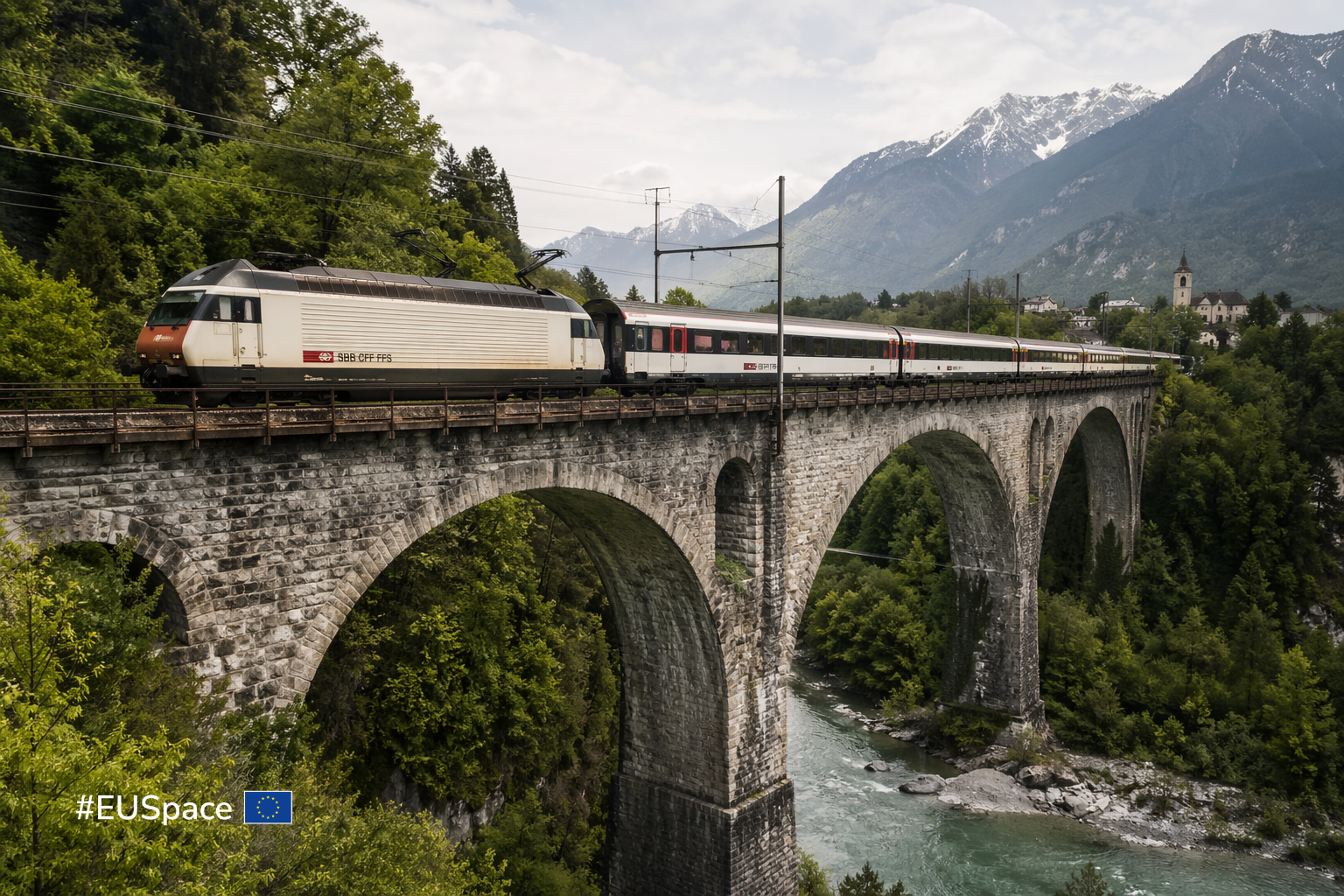
EU Space plays an increasingly important role in protecting Europe’s critical infrastructure, including:
- Buildings
- Bridges
- Roads
- Railways
- Dams
- Factories
- Power plants
- Telecommunication networks
- Data centres
Galileo’s role

Autonomous devices like drones use GNSS positioning to navigate infrastructure and perform accurate and cost-effective inspections and maintenance tasks.

For data centres and cloud services, state-of-the-art dual-frequency receivers and authenticated GNSS signals such as the Galileo OSNMA can form a first line of defence against GNSS- spoofing.

The accurate and secure timing information provided by Galileo also plays a crucial role for a range of critical infrastructures, like telecommunication networks, energy distribution grids and financial markets.
Copernicus’ role
Copernicus provides long time series of Earth Observation data that helps model the evolution of climate conditions (e.g., average temperatures, water level) and quantify a site’s exposure to natural hazards.
Asset owners, investors and risk managers can use this information to take pre-emptive measures to protect the infrastructure.
EUSPA is responsible for promoting the uptake of Copernicus data and services and the commercialisation of Copernicus-derived downstream products and services.
GOVSATCOM's role
GOVSATCOM protects infrastructure by providing secure, resilient satellite communication to governmental authorities for managing and monitoring critical assets.
It ensures connectivity for infrastructure like dams, power plants, air traffic control and bridges, especially in remote areas or during emergencies when ground-based systems are compromised.
EUSPA is responsible for the GOVSATCOM Hub, the programme’s pool of SatCom suppliers and authorised government users.

Did you know?
The number of jamming and spoofing cases is increasing, with Poland reporting 2,732 cases in January 2025 and Lithuania recording over 1,000 incidents in a single month.
Overhead power line contact is a leading cause of workplace electrical fatalities worldwide, with significant risks during inspection and maintenance. Using GNSS-enabled devices like drones and Copernicus data help reduce this risk.