European Global Navigation Satellite Systems: From Invention to Market
Disclaimer
This page has been archived and is provided for historical reference purposes only. The content and links are no longer maintained and may now be outdated.
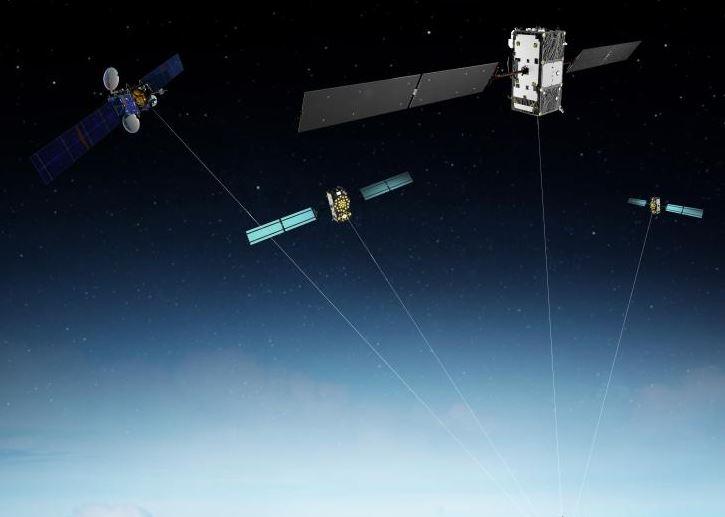
During the Satellite Masters Conference, the European GNSS Agency (GSA) held a special session dedicated to innovative E-GNSS applications and research and development results.
As part of the Satellite Masters Conference in Berlin, the GSA organised a full-day session on European Global Navigation Satellite Systems (E-GNSS) research and development results, as well as implementation activities. The innovative projects showcased during the event are all helping to accelerate the development of a European market for satellite navigation applications and create new opportunities for European industry.
Projects from both the European Commission’s Seventh Framework Programme for Research and Technological Development (FP7) and the current Horizon 2020 Framework Programme for Research and Innovation (H2020), were on display.
“These GSA-funded programmes have done very exceptional work,” said the European Commission’s Christoph Kautz. He noted two reasons for this success. First, applicants had to provide a business plan – a unique concept under FP7 that has now been adopted across all research areas for H2020. Second, the GSA has followed all the projects in a detailed, personal way.
Funding for E-GNSS research has been doubled for H2020, and with Galileo initial services on course for next year, Kautz said this should be a game changer. However, he noted two issues that need to be considered. The so-called ‘valley of death’ needs to be tackled to facilitate the movement of successful research ideas into products and services available on the market, and synergies between Galileo and Copernicus need to be identified and built on.
GSA Head of Market Development Gian Gherardo Calini gave an overview of FP7 results. He said the GSA’s mission is “to achieve the highest return on investment in terms of benefit to users and economic growth.” The GSA is building on a solid base of tangible results. Under the
FP7 programme, 13 patents were filed and 45 commercial products and services launched. Forty percent of GSA funding has gone to SMEs (compared to the average of 15% across the whole of FP7) and the GSA programme also provided valuable business coaching for many start-up companies and SMEs.
The Project Portfolio
According to Tim Just of Innovate UK, innovation can be defined as “invention x market.” He said there is a need for both elements to achieve true success – a belief that was substantiated by all the presented FP7 success stories.
For example, in the area of mobility, Jürgen Seybold from TeleConsult Austria described MODIS, a mobile safety and emergency response system. The augmented EGNOS/Galileo handheld device targets people with reduced mobility. The underlying IEGLO technology was adapted for emergency call applications under the SAWOS brand in 2012, and MODIS is being used extensively in India as an effective monitoring solution in large factories, hospitals and schools.
On the topic of professional applications and transport, Klaus-Herbert Rolf from 365 FarmNet presented GEOPAL. This successful field route optimisation application was integrated as an on-vehicle platform tool for farmers, and also as a planning tool. The product has been on the market for four years and has proven easy and reliable in delivering real benefits.
Another success story in the area of transportation is TAXISAT. Dr Oihana Otaegui from Vicomtech-IK4 outlined the work done to develop a driverless GNSS vehicle able to operate safely and with high-reliability within private sites. The TAXISAT concept is now being commercialised.
Otaegui said the hybrid sensors from TAXISAT could be used to enable cloud based enhancement of maps in real time, and this area of research represents a huge opportunity for GNSS.
Horizon 2020
Moving to the current Horizon 2020 funding programme, the GSA’s Marta Krywanis-Brzostowska outlined the GSA’s recent calls. The first two calls awarded funding of €65.2m for 40 successful projects.
The GHOST project, described by Srdjan Tadic of Bitgear Wireless, looks at how Galileo can enhance services in Smart Cities. The project combines Galileo signals and video images in an intelligent system mounted on public vehicles (buses, waste lorries etc.) to monitor services such as parking enforcement (including disabled badge detection) and pothole and lighting outage detection.
Also Read: 13 H2020 projects focused on EGNSS applications development selected for funding
Another innovative project is COREGAL, which is developing a GNSS receiver that can be used to estimate biomass. Pedro Freire da Silva of Deimos Engenharia S.A. said that forest management requires accurate knowledge of the quantity of living, above-ground vegetation, and that knowledge has high economic and scientific value. COREGAL uses the Galileo E5 signal in an airborne receiver monitoring both direct and reflected signals to accurately estimate biomass.
The spyGLASS project also uses reflected signals in its Galileo-based Passive Radar System for Maritime Surveillance. Claudio Calisti from ASTER S.p.A. said the system uses fixed coastal receivers to analyse the reflected signal. The concept was low cost and preliminary trials have demonstrated the feasibility of project. Applications range from anti-piracy operations and environmental protection to maritime traffic safety.
Last but not least, the GEO VISION application demonstrated the opportunities that lie at the interface of Galileo and Copernicus. Dr Harald Skinnemoen from AnsuR Technologies said the project can provide visual situational awareness capability anywhere in the world, with the aim of enabling “observation to action” within one minute worldwide. There are two main markets: humanitarian and financial. The project is releasing products and applications to the market and they are already being used by the UN to map the effects of the earthquake in Nepal and help prioritise operations there.
Just Do It!
The day concluded with an extended panel discussion on space entrepreneurship and finance. Gregor Novak from the European Commission’s Executive Agency for SMEs (EASME) described the agency’s SME financing instrument as a perfect example of connecting and leveraging public and private investment. Reinhard Blasi of the GSA agreed on the importance of this instrument, highlighting the GSA’s interpretation of FP7 towards innovation that had helped some projects get to market, and said the key is to ensure projects have the momentum to continue to market.
“Now is the right time – there has never been a better time to invest in space,” said Blasi. “With so many means on the table, entrepreneurs should just do it!”
Media note: This feature can be republished without charge provided the European GNSS Agency (GSA) is acknowledged as the source at the top or the bottom of the story. You must request permission before you use any of the photographs on the site. If you republish, we would be grateful if you could link back to the GSA website (http://www.gsa.europa.eu).