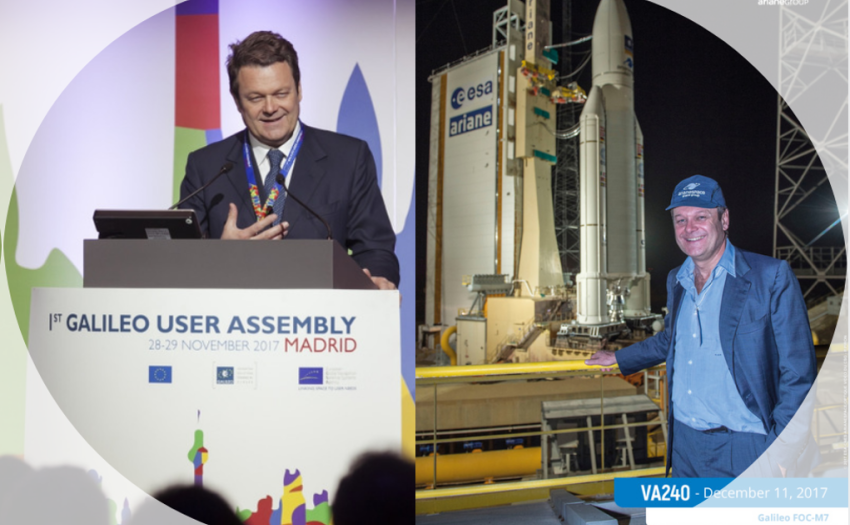
European GNSS Agency (GSA) Executive Director Carlo des Dorides is recognised, along with Member of the European Parliament Marian-Jean Marinescu, at the 2017 European Business Aviation Awards in Geneva.
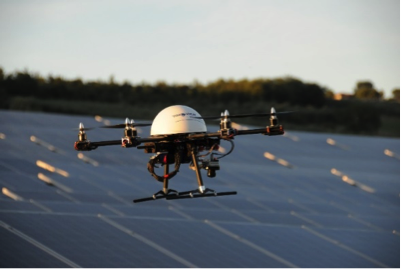
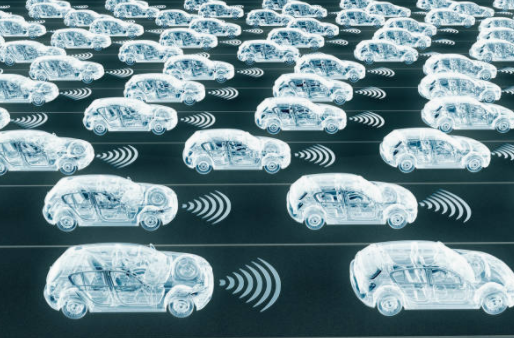
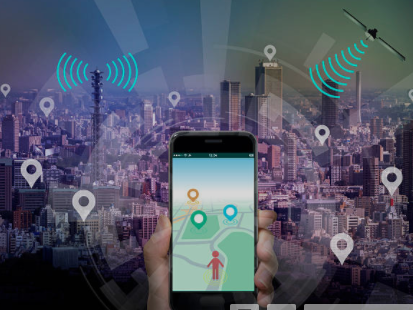
Global Navigation Satellite Systems (GNSS), including Galileo, play a key role in the Internet of Things. Information on positioning, velocity and timing is driving growth in a wide array of context-aware applications, from drones and driverless cars, to asset tracking.
The potential for synergies between the Copernicus and E-GNSS (Galileo and EGNOS) programmes was explored at a Copernicus Training and Information Session, hosted by the European GNSS Agency (GSA) at its Prague headquarters on 24 May.
The Council of European Geodetic Surveyors (CLGE) has launched the sixth edition of its Young Surveyors Prize, in which the European GNSS Agency (GSA) is again sponsoring a special prize dedicated to Galileo, EGNOS and Copernicus.
The GSA chaired a unique session at this year's infoShare in Gdansk, focusing on the importance of accurate and verifiable positioning for tomorrow's smartphone apps, and getting the views of some key industry leaders.
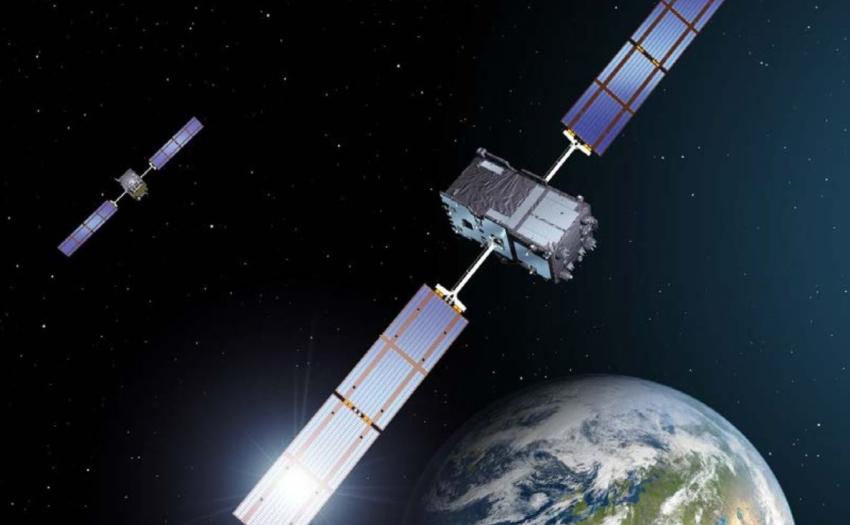
The European GNSS Agency (GSA), along with the European GNSS Service Centre (GSC), announce the commissioning of two additional Galileo satellites, increasing the total number of satellites available for service provision to 16.
GSA Executive Director Carlo des Dorides provides an update on the status of E-GNSS at the 2017 European Navigation Conference (ENC) in Lausanne, Switzerland, on 10 May.
This year's Galileo Hackathon in Gdynia, Poland, brought together students, graduates, entrepreneurs and a handful of helpful high-level GNSS experts to develop innovative LBS applications exploiting the new level of accuracy made possible by Galileo.