
Copernicus strengthening deforestation and biogenic carbon reporting
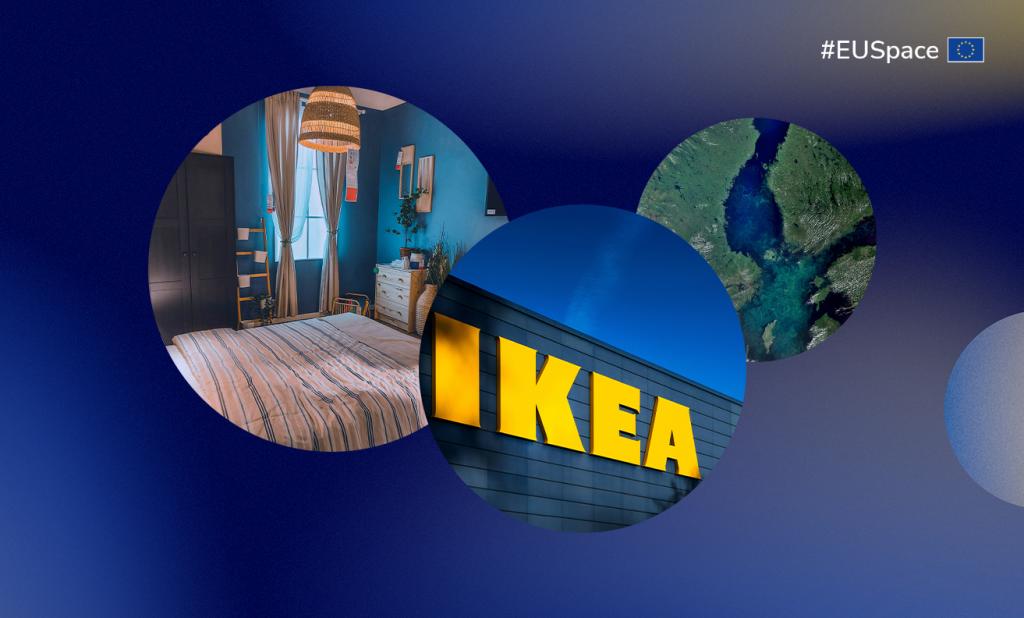
As global expectations for transparency and accountability in sourcing rise, industry leaders like Inter IKEA Group are taking proactive steps to stay ahead. The global furniture company – which sources materials such as wood and cocoa for their products – is going beyond compliance to build transparent and sustainable supply chains.
To explore the full potential of satellite-based Earth Observation (EO), Inter IKEA Group partnered with the European Union Agency for the Space Programme (EUSPA). Through applied EO trials, the company tested how Copernicus data can help identify regional deforestation risks, quantify carbon stored in forests and soils, and improve visibility across sourcing regions.
Guided by EUSPA’s technical expertise and strategic matchmaking, Inter IKEA Group partnered with European EO service providers – including NGIS (for deforestation monitoring), and Föra and Sylva (for carbon accounting) - to assess practical solutions tailored to its needs. Using Copernicus(-derived) open-access data, the teams developed tools to identify forest change in cocoa-growing regions, estimate above-ground biomass in timber supply chains, and track key sustainability indicators such as soil organic carbon. These trials demonstrated that satellite data can offer data-driven, accurate & scalable environmental insights even in remote or under-reported areas — insights that are increasingly critical for supply chain assurance and emissions tracking.
More importantly, the projects provided Inter IKEA Group with a clearer view of the possibilities Copernicus can unlock. It can provide the company with additional tools to benchmark supplier practices, inform procurement decisions, and build consistent, verifiable carbon metrics across sourcing regions. The trials also laid the groundwork for more in-depth in-house development and collaboration with EO service providers.
EUSPA played a pivotal role in enabling this journey — not only by helping Inter IKEA Group access Copernicus data and derived products, but also by providing insights to understand the capabilities and limits of Copernicus and connecting the company with Europe’s leading EO innovators. This support empowered Inter IKEA Group to move quickly from exploration to application. Building on this foundation, Inter IKEA Group plans to expand EO integration across operations and deepen collaboration with European providers.
This experience shows that EO is no longer a mere opportunity for the future — it’s a strategic asset in today’s climate economy. For companies managing land-intensive supply chains, Copernicus data offers a clear path to responsible sourcing, biogenic removals and emissions transparency, and sustainable growth. With EUSPA as a partner, Inter IKEA Group is helping define how the private sector leads on climate, compliance, and global sustainability goals.
Media note: This feature can be republished without charge provided the European Union Agency for the Space Programme (EUSPA) is acknowledged as the source at the top or the bottom of the story. You must request permission before you use any of the photographs on the site. If you republish, we would be grateful if you could link back to the EUSPA website.