
Galileo achieves first-ever civil authenticated GNSS position using Signal Authentication Service (SAS)
On 16 September, Galileo achieved a major milestone in satellite navigation resilience by demonstrating the first-ever civil GNSS position authenticated through both navigation data and ranging information. The demonstration used the Galileo Signal Authentication Service (SAS) concept, with five Galileo satellites transmitting encrypted signal components over Europe. Receivers on the ground successfully processed these signals to compute an authenticated position fix, demonstrating a new level of protection for civil satellite navigation.
First authenticated position with Galileo satellites
On 16 September, between 14:00 and 16:00 UTC, five Galileo satellites—E06, E21, E23, E34 and E36—encrypted one of their signal components, the E6-C signal at 1278.75 MHz, normally transmitted in the clear. Several Galileo SAS receivers deployed at different locations successfully processed these signals in combination with Galileo Open Service Navigation Message Authentication (OSNMA). For the first time, a civil GNSS receiver was able to process authenticated navigation data and ranging measurements from at least four satellites simultaneously and compute an authenticated position fix.
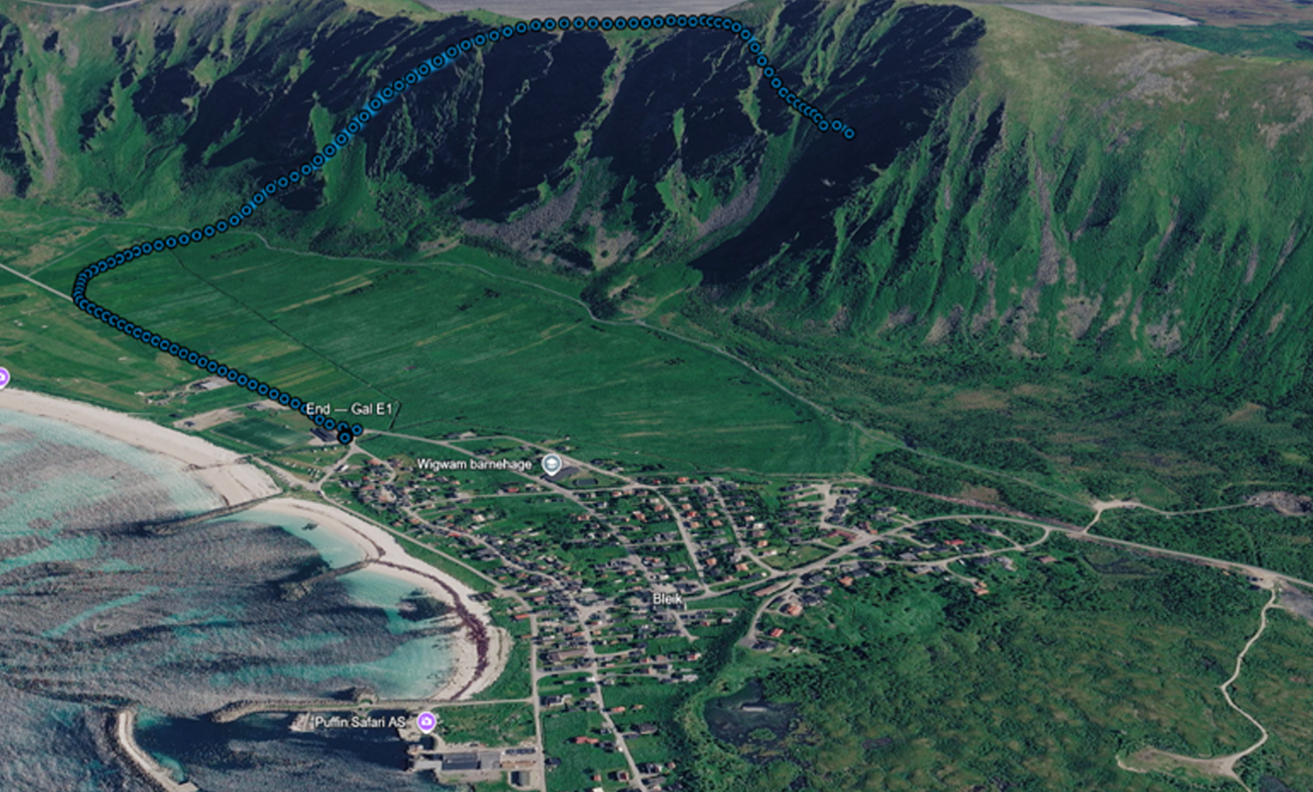
A significant part of the demonstration took place during Jammertest on the island of Andøya, Norway, where controlled GNSS jamming and spoofing tests are conducted using real over-the-air signals. This provided a unique opportunity to evaluate Galileo SAS under both nominal conditions and many types of spoofing.
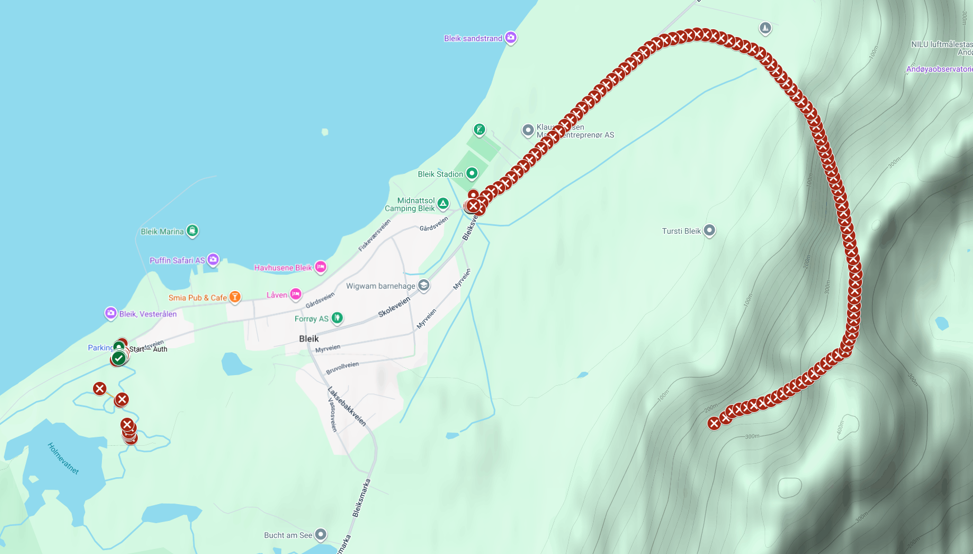
During the spoofing tests, conventional receivers were deceived and reported false positions, while the Galileo SAS receiver detected the attack and maintained a trusted position solution based on authenticated Galileo signals.
Strengthening GNSS against spoofing
Spoofing is the transmission of counterfeit GNSS signals designed to mislead a receiver about its position or time. It is a significant threat to satellite navigation, with incidents affecting sectors such as aviation and maritime transport.
Historically, civil GNSS receivers have had limited means to verify that the signals they use genuinely originate from navigation satellites. Galileo addressed part of this vulnerability through OSNMA, declared operational in 2025, which authenticates the navigation data transmitted by Galileo satellites. SAS complements OSNMA by protecting the other fundamental source of information used to compute a GNSS position: the ranging measurements.
“This demonstration is an important milestone for trusted satellite navigation. By combining navigation message authentication with authenticated ranging measurements, Galileo is further strengthening resilience against spoofing and confidence in the positioning information provided to users,” declared Guerric Pont, EUSPA Head of PNT.
What is the Galileo Signal Authentication Service?
Galileo SAS enables civil users to authenticate ranging signals without requiring receivers to be continuously assisted through a ground communication channel or to store secret cryptographic keys, as is typically necessary in traditional military-grade GNSS solutions.
For each position fix, a SAS receiver records digital samples of the encrypted E6-C signal. A few seconds later, once the corresponding Galileo OSNMA key is disclosed through the signal-in-space, the receiver uses it together with previously retrieved authentication information to verify the recorded signal and compute a position using authenticated ranging measurements.
Together, OSNMA and SAS provide complementary protection: OSNMA authenticates the navigation message, while SAS authenticates the ranging information. This combination enables receivers to detect and reject a wide range of spoofing attacks, increasing trust in the resulting positioning, navigation and timing (PNT) solution.
A collaborative European effort
This achievement was made possible through a close collaborative effort across the European Galileo ecosystem. The European Commission's Directorate-General for Defence Industry and Space (DG DEFIS), with the support of the Joint Research Centre (JRC), has played a central role as Galileo programme manager and SAS design lead. EUSPA, as the Galileo service provider, oversaw the testing operations with GSOp, the Galileo operator, and is developing SAS operationally. The European Space Agency (ESA), as developer of Galileo's core space and ground infrastructure, among others, also played a key role, including support to SAS testing in the field.
Cooperation with the Jammertest organisers and industrial and academic partners was also key.
Next steps
Galileo SAS testing will continue, involving the Launch 3 (L3) satellites E14 and E18 as well as other satellites across the Galileo constellation, paving the way for the Galileo SAS Initial Service declaration in 2027.
Building on the Galileo High Accuracy Service (HAS) Initial Service in 2023 and Galileo OSNMA in 2025, SAS represents another important milestone in Galileo's evolution, further strengthening its role as a key contributor to accurate, trusted and resilient positioning, navigation and timing (PNT).
About Galileo
Galileo, the EU´s Global Navigation Satellite System (GNSS), provides improved navigation, positioning and timing information. More than 4.5 billion users are already benefiting from Galileo.
The Galileo Programme is owned by the EU. The European Commission, as the Programme Manager, oversees the implementation of all activities. EUSPA is responsible for the operational management of Galileo services, ensuring their availability, continuity and performance, and for the procurement of launch services required for the deployment and replenishment of the constellation. Galileo's system design and system evolution are entrusted by EUSPA to ESA.
Media note: This feature can be republished without charge provided the European Union Agency for the Space Programme (EUSPA) is acknowledged as the source at the top or the bottom of the story. You must request permission before you use any of the photographs on the site. If you republish, we would be grateful if you could link back to the EUSPA website.