News archive

Filters

Filters

Industry sectors
  • Image
    The webinar will cover everything EGNSS has to offer for geomatics.
    Date

    Many promising geomatics applications benefit from the European navigation programmes Galileo and EGNOS. Land, marine and mine surveying, infrastructure monitoring and mapping and GIS applications that require high precision GNSS are all enabled by both the EU satellite navigation systems. The European GNSS Agency (GSA), together with Geospatial Media, invites you to participate in a free webinar - EGNSS for Geomatics – where you can learn about everything that EGNSS has to offer for geomatics.

  • Image
    EGNSS-enabled drone flying in the urban environment of Villacarrillo, Spain
    Date

    A recent project funded by the European Commission has carried out technical and financial studies aiming at supporting the standardisation process for EGNSS in drones (also known as UAS or RPAS), in line with the Space Strategy for Europe regarding fostering the use of EGNSS in aviation.

  • Image
    Users are at the centre of Galileo and EGNOS service provision.
    Date

    With the declaration of Galileo Initial Services in December 2016, Galileo officially moved to the provision of live services and EGNOS has been operating successfully since 2009, European Global Navigation Satellite Systems (EGNSS) services are now experiencing an unprecedented acceleration in market uptake. During EU Space Week 2019 in Helsinki the European GNSS Agency (GSA) presented the latest developments for both services, and sought feedback from users of position, navigation and time (PNT) solutions and the organisations and institutions involved in the management, service provision and security of EGNSS, to build better services.

  • Image
    Space Week brought space innovators together with investors and potential partners.
    Date

    A major theme running through EU Space Week 2019 in Helsinki was the wealth of innovative space-based applications, products and services being created in Europe. The ‘New Space’ sector is full of bright ideas and creative people, but turning a brilliant concept into a profitable enterprise is not easy. Fortunately, Space Week provided a wide range of opportunities for space innovators to develop ideas, meet investors and network with partners. One session allowed entrepreneurs to pitch their ideas to business angels, venture capitalists and other sources of public and private investment.

  • Image
    What integrity concept for the rail sector based on EGNSS would enable rationalising the current rail signalling infrastructure?
    Date

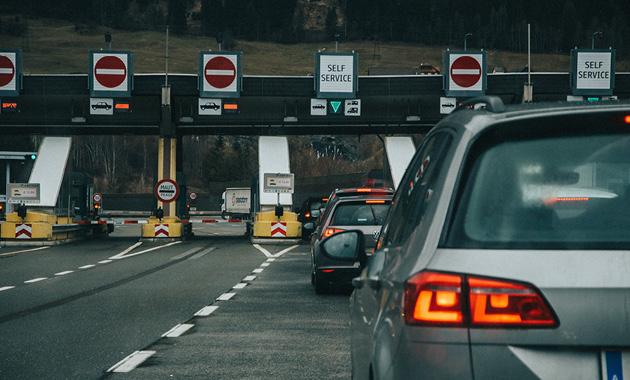
    The European Commission’s Directorate-General for Internal Market, Industry, Entrepreneurship and SMEs (DG GROW) has issued an Invitation to Tender (ITT) for a planned call for a new service contract to assess the feasibility of an EGNSS-based safety service for the rail sector beyond 2022 which would enable the rationalisation of rail signalling infrastructure.

  • Image
    The materials identify blocking points to a wider uptake of EGNOS-based procedures in general aviation
    Date

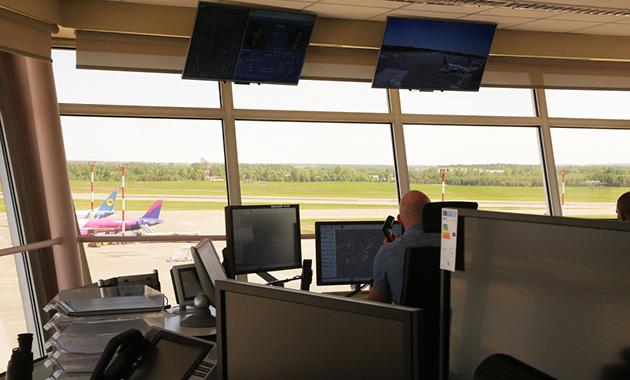
    Even though the General Aviation (GA) community undertakes millions of flights on aircraft equipped with GNSS-receivers, it is not taking full advantage of the technology. It is a priority of the European GNSS Agency (GSA) to support GA by facilitating instrument procedures with EGNOS. As a first step the GSA has identified enablers and blocking points along with aviation stakeholders and the European Aviation Safety Agency (EASA).

  • Image
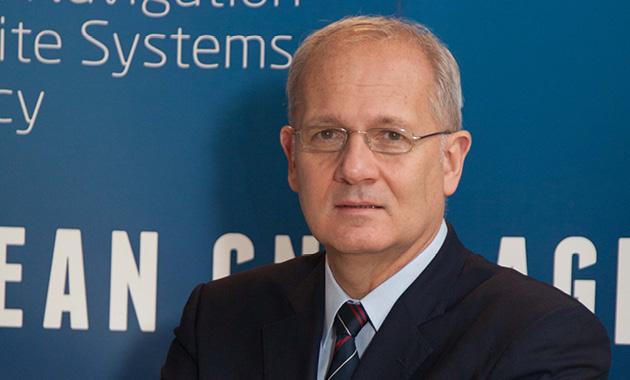
    Carlo des Dorides, GSA Executive Director
    Date

    This has been a year of tremendous growth for the GSA, Galileo, EGNOS and the European Space Programme as a whole. We hit the ground running in 2019, buoyed by a wave of optimism following the successful European Space Week, held in in Marseille last December.

  • Image
    GNSS supports precision agriculture and a more efficient implementation of the CAP
    Date

    GNSS is a key enabler of precision agriculture, allowing farmers to drive their tractors along parallel lines, avoid overlaps and gaps in field cultivation, and reduce their fatigue thanks to satellite-enabled autopilot. GNSS also helps to reduce agriculture’s ecological footprint – a win-win situation for society as a whole. Thanks to Galileo´s dual frequency and authentication capability, it can also help farmers and authorities in the frame of the Common Agricultural Policy (CAP).