News archive

Filters

Filters

Industry sectors
  • Image
    Supporting ongoing operations, security and staff health are priorities for the GSA.
    Date

    The coronavirus pandemic has had an impact on organisations, businesses, individuals and their families. As one of the few European Agencies delivering services 24/7, and with centres spread across Europe, the European GNSS Agency (GSA) has put various measures into place to ensure continuity of services and the security of EGNSS infrastructure, while at the same time prioritising the health and safety of staff and contractors.

  • Image
    The Galileo Masters has been rewarding the best EGNSS-based innovation since 2004.
    Date

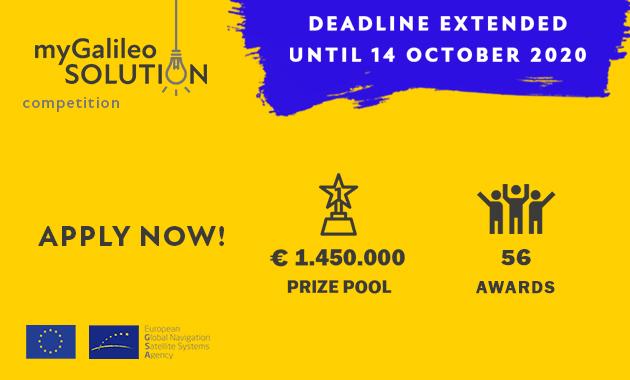
    The 2020 edition of the Galileo Masters opened for submissions on April 1st, seeking to award applications, services and new ideas that use Galileo and EGNOS also in synergy with other space programmes to respond to pressing needs facing business and society.
    The 2020 competition has three GSA challenges under the theme Space for Future Generations

  • Image
    Apps leveraging GNSS positioning can be used to effectively monitor and map the spread of the virus.
    Date

    Location is a key requirement when attempting to monitor and map the spread of a disease and GNSS is one of the main tools supporting this. Galileo, currently embedded in over 1.3 billion smartphones and devices worldwide, is helping to increase GNSS accuracy and availability, especially in urban areas. Since the outbreak of the coronavirus earlier this year, many apps have been developed that use GNSS location to monitor the global spread of the virus and to map outbreaks of the COVID-19 disease. GNSS-apps are also proving their usefulness by helping people to implement social distancing in queues and other public spaces.

  • Image
    Raw Galileo targeted the use of GNSS raw measurements and high accuracy to produce innovative solutions.
    Date

    Hackers came together online at the Raw Galileo 24-hour hackathon over the weekend to develop innovative solutions that leverage Galileo raw measurements for use on Android-based mobile devices. Organized by the University of Nottingham and the European GNSS Agency (GSA) as a part of the FLAMINGO project, the hackathon challenged the participants to develop solutions addressing two key challenges, enticing them with a prize pot of EUR 6000.

  • Image
    Users in the geomatics community are already very aware of the benefits that EGNSS offers.
    Date

    The European GNSS Agency (GSA) joins the 2020 Global Surveyors Day, to celebrate the men and women of the surveying profession and their valuable work across a wide range of geomatics applications including land surveying (cadastral, construction, mapping and GIS, mining and infrastructure monitoring) and offshore surveying. The surveying industry and community have been an early adopter of Galileo and EGNOS leveraging on the high-precision positioning to develop new services and applications.

  • Image
    Point.IoT aims to leverage Galileo to drive innovation in IoT.
    Date

    Point.IoT, an exciting new programme designed to empower innovation using Galileo and IoT technologies, is offering 10 teams of ambitious entrepreneurs the chance to tackle relevant industry challenges while showcasing the use of European positioning technologies in IoT. The winning team stands to win a cash prize of EUR 20,000. Interested? Apply now!

  • Image
    The competition aims to promote agricultural efficiency through the use of space tech.
    Date

    Registration for the 5th Farming by Satellite Prize, which aims to promote the use of EGNSS and Earth observation in European and African agriculture, will open on 16 March. If you are a young innovator with an idea for using satellite technologies to enable sustainable farming practices, improve efficiency in agriculture and reduce its environmental impact, this is your chance to win some great prizes!

  • Image
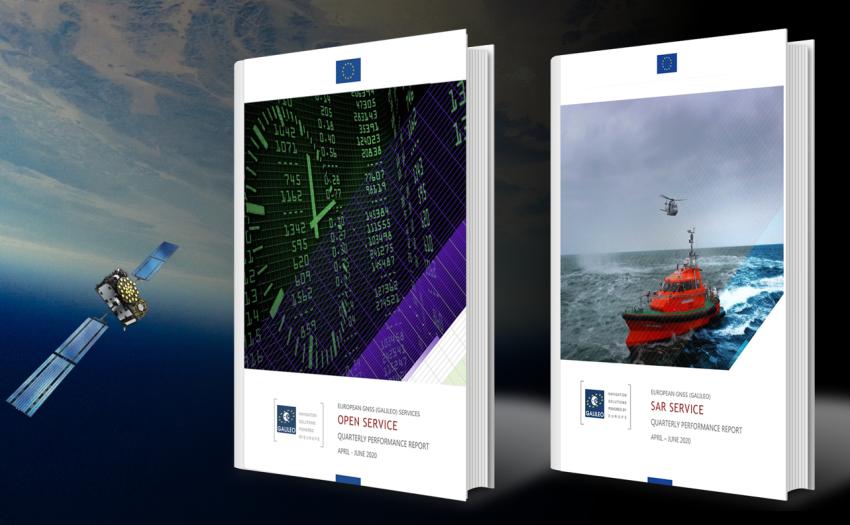
    The SAR/Galileo Forward and Return Link Services comfortably exceed set targets.
    Date

    The first performance evaluation of the Galileo Return Link Service (RLS) following its launch has revealed excellent service provision that exceeds set targets. The Galileo RLS, which allows people in distress to receive automatic acknowledgement that their signal has been received, was declared operational at the 12th European Space Conference on January 21.