
-
What is EUSPA?

-
What EUSPA offers

-
Recruitment process

-
What about traineeships?

-
Opportunities for SNEs

What is EUSPA?
At EUSPA, we connect innovation and talent to turn Europe’s space assets into real benefits for people and businesses. Joining EUSPA means contributing to the varying components of the EU Space Programme and EU’s strategic autonomy, digital transformation, and sustainability goals.
EUSPA offers two types of contracts for staff positions:
- Temporary Agents
- Contract Agents
All available vacancies are published on our Careers page.
Where is EUSPA located?
EUSPA has staff working across the European Union. In addition to our headquarters in Prague, Czech Republic, we have offices in:

What EUSPA offers
When working at EUSPA, you can expect:









Recruitment process
When applying for an EUSPA position, the recruitment process has the following steps:
Familiarise yourself with the tasks and responsibilities, and read the requirements carefully.
Create your account in the EUSPA e-recruitment tool. See whether your application suits the eligibility criteria.
* Submit your application before the deadline to ensure it’s considered.
All eligible applications are scored. In case of many applicants, there might be pre-recorded interviews.
* Applications will be assessed within 2 to 5 weeks after the deadline.
Selected candidates are invited for a written test and a live interview.
*Interviews and written tests are typically scheduled within 1 to 3 weeks after the assessment phase.
Candidates are invited for a 2nd interview with EUSPA’s Appointing Authority.
*The interview with the Appointing Authority usually takes place within 1 to 3 weeks after the previous stage.
The Appointing Authority decides on whom to offer the position, and establishes a reserve list. All candidates receive their outcome.
Disclaimer
All times are indicative and can change depending on the nature of the vacancy, availability of the selection board members, and other factors.
What about traineeships?
We provide university students, graduates and postgraduates with a hands-on experience on the EU Space Programme and the work of EU institutions.
As an EUSPA trainee, you will benefit from mentoring and connecting with fellow trainees and space professionals.
We currently offer two types of traineeships:
- Regular paid traineeships (1,500 EUR per month, up to 12 months)
- Short-term unpaid traineeship (up to three months)
Opportunities for SNEs
Staff working at other national public administrations can work at EUSPA as Seconded National Experts (SNEs).
SNEs benefit both EUSPA and their national administration:
- EUSPA benefits from the skills and knowledge SNEs bring
- The national administration is enriched by the experience the SNE gains at EUSPA

Rules of Procedure of the Administrative Board

-
What is the GOVSATCOM Hub?
-
What does it do?

-
What are its benefits?

-
EUSPA’s role
-
Facts and figures

What is the GOVSATCOM Hub?
GOVSATCOM is a component of the EU Space Programme that plays a vital role for public authorities related in particular to crisis management, surveillance and key infrastructure management, including diplomatic communication networks. It acts as a shield against a wide spectrum of threats, enabling secure satellite communications even when ground-based networks are disrupted.
At the core of GOVSATCOM is the GOVSATCOM Hub. Managed by EUSPA, the Hub functions as a smart, 24/7 one-stop-shop connecting governmental users demand with satellite communication resources. Moreover, the GOVSATCOM Hub will be the entry point for the provision of the upcoming EU multi orbit constellation IRIS2 services to governmental users.

Sectors
Infrastructure, EU border and internal security, emergency management.

Purpose
A 24/7 platform for governmental authorities and its users to request satellite communication resources.
What does it do?
The GOVSATCOM Hub can pool both commercial and governmental satellite communication capabilities, which are then shared with EU Member States. This allows governments to request secure satellite communications services for critical missions, including:

Responding to natural disasters, pandemics, or other emergencies.

Ensuring secure monitoring and situational awareness.

Maintaining communications for transport, energy, and other key sectors.
What are its benefits?
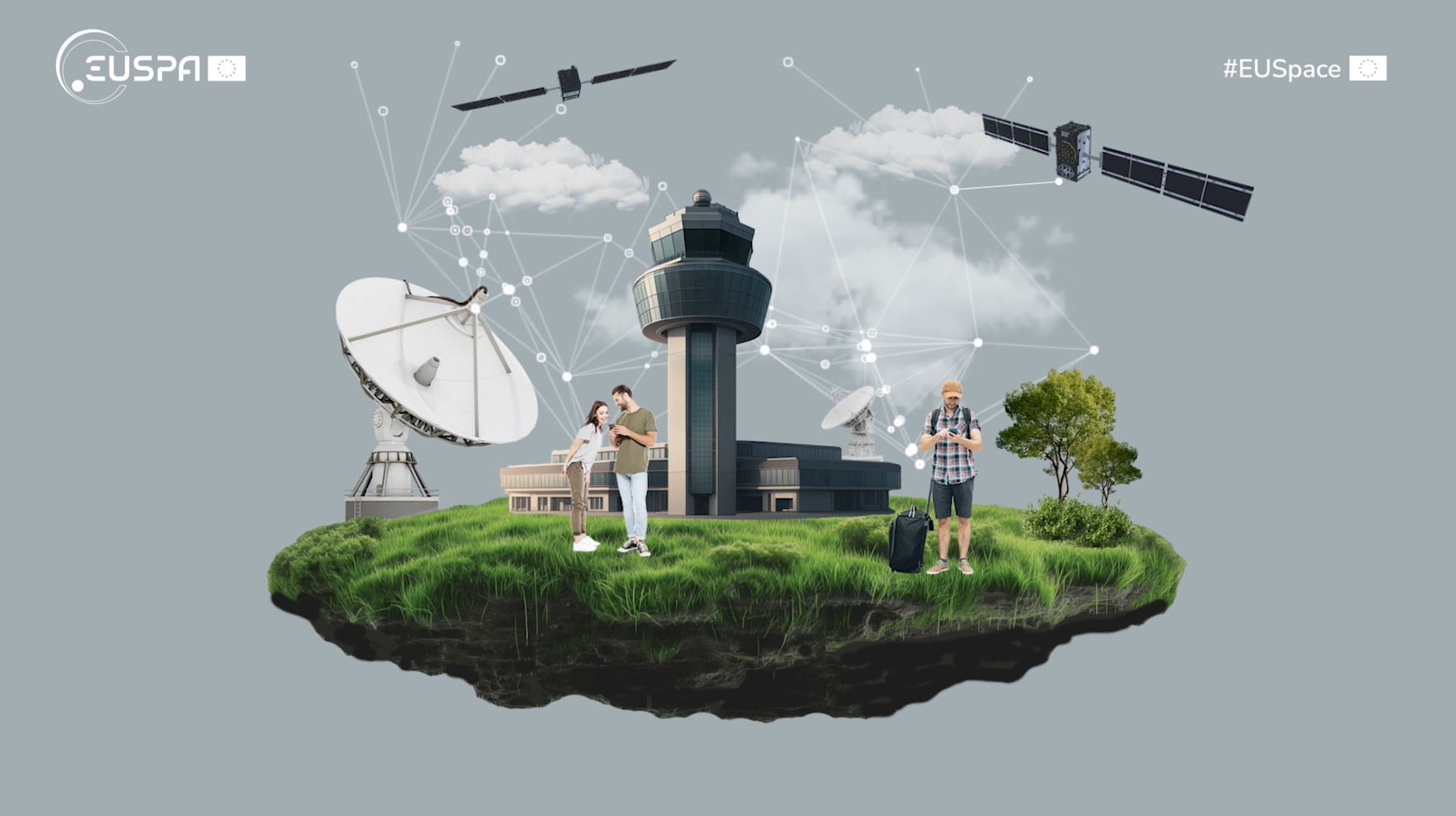
Centralised timely access
Eliminates the need for governments to launch lengthy procurement processes and coordinate directly with multiple satellite service providers.
Easiness of use
The GOVSATCOM Hub makes the selection and comparison of satellite communication services easy for the non-experienced user. On top of this it provides help-desk support to address any potential question.

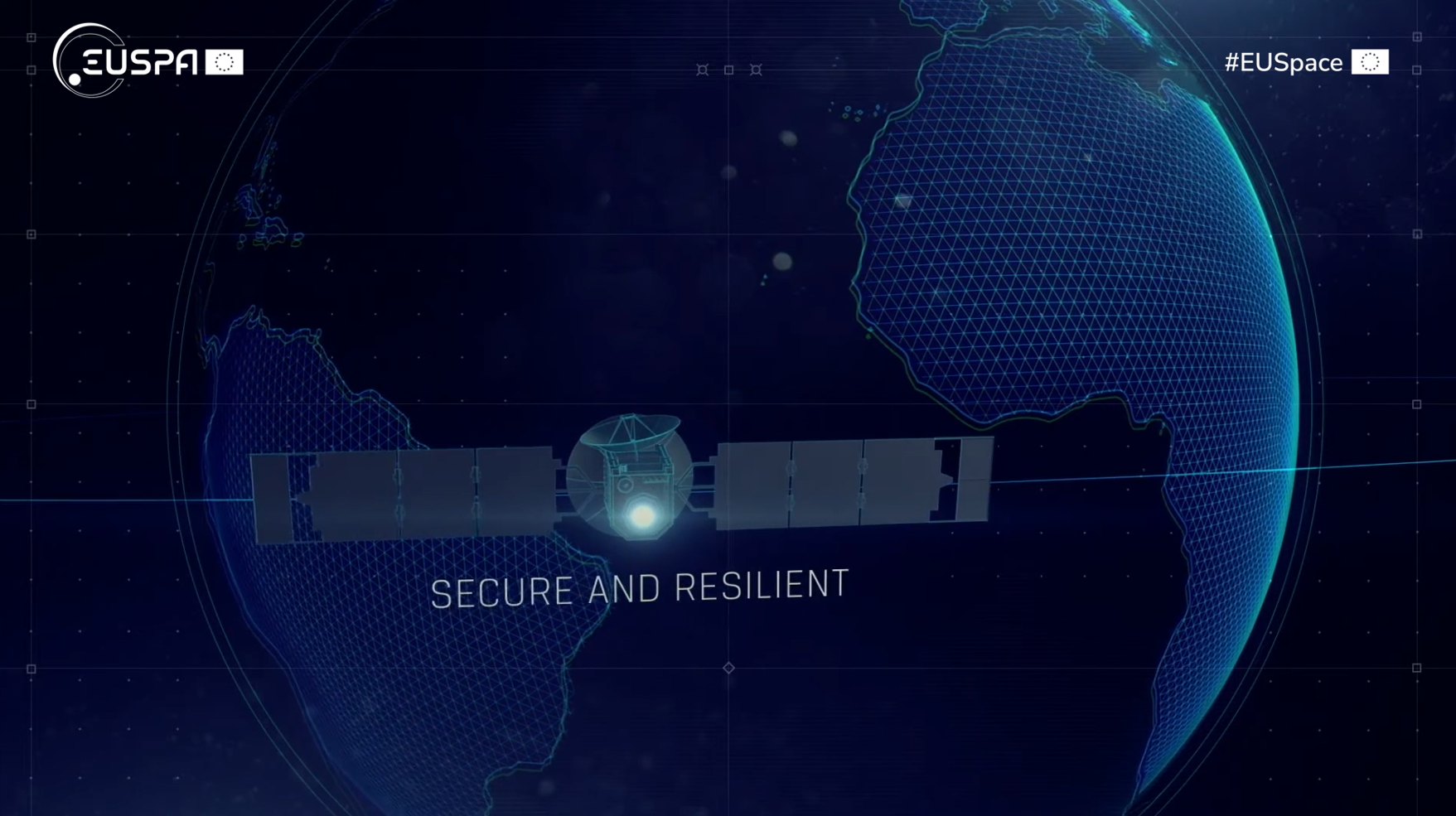
Reliability
Ensures that the most complete and updated catalogue of services in real time is always available for EU Member States.
Efficiency
Reduces procurement delays of months to a matter of a few clicks.
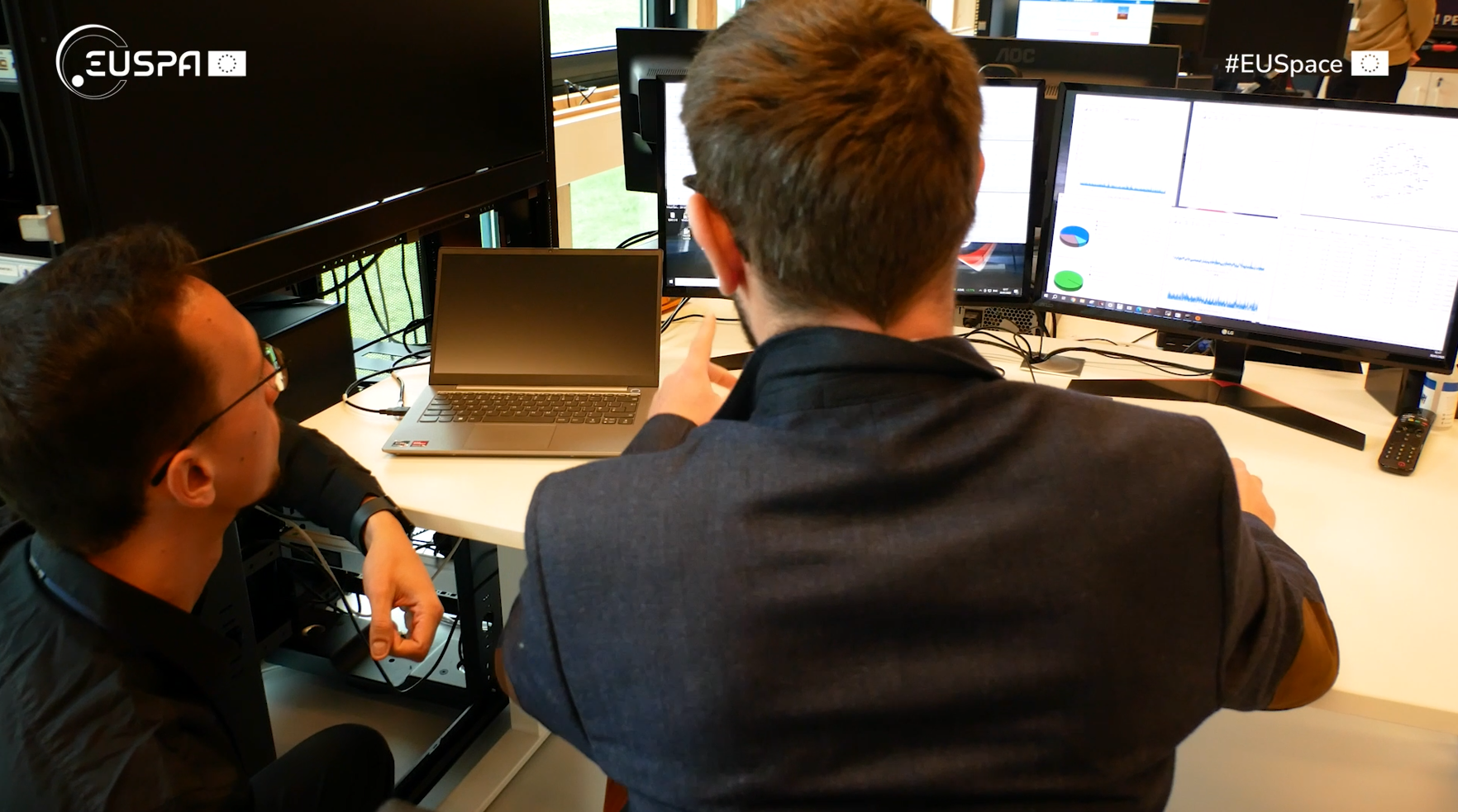

Security
Provides secure access to satellite communications services for governmental authorities and its users.
EUSPA’s role
EUSPA has been entrusted by the EC a crucial role for GOVSATCOM which includes among others:
- managing the GOVSATCOM hubs procurement, including the project management of the implementation of the hubs - two facilities working as one
- operating the GOVSATCOM hubs
- ensuring that the hubs consistently meet the needs of EU governments
- ensuring smooth operational coordination with GOVSATCOM Competent Authorities
- managing resources
- monitoring the security of the system
Facts and figures

24/7 operation
The GOVSATCOM Hub is always online, ready to allocate satellite communication resources.

Coverage
Secure satellite services are available across all EU Member States, supporting cross-border missions as well as worldwide operations.
-
What is the Galileo Open Service?

-
What does it do?

-
How does it work?

-
EUSPA’s role
-
Facts and figures
What is the Galileo Open Service?
The Galileo Open Service (OS) provides free global positioning, navigation, and timing (PNT) information and data accessible to anyone with a Galileo-enabled receiver, such as a smartphone or in-vehicle navigation system.

Launch
The Galileo OS was launched in December 2016.

Sectors
Galileo OS supports the Mobility, Consumer solutions and Environment sectors.

Purpose
To provide EU autonomy in positioning services and enhance accuracy when combined with other GNSS.
What does it do?

Free of charge
Accessible to all users at no cost.
Mass-market applications
Suitable for widespread use in consumer devices.


Global coverage
Provides worldwide positioning and timing.
Interoperability
It can be used together with other GNSS for improved accuracy.
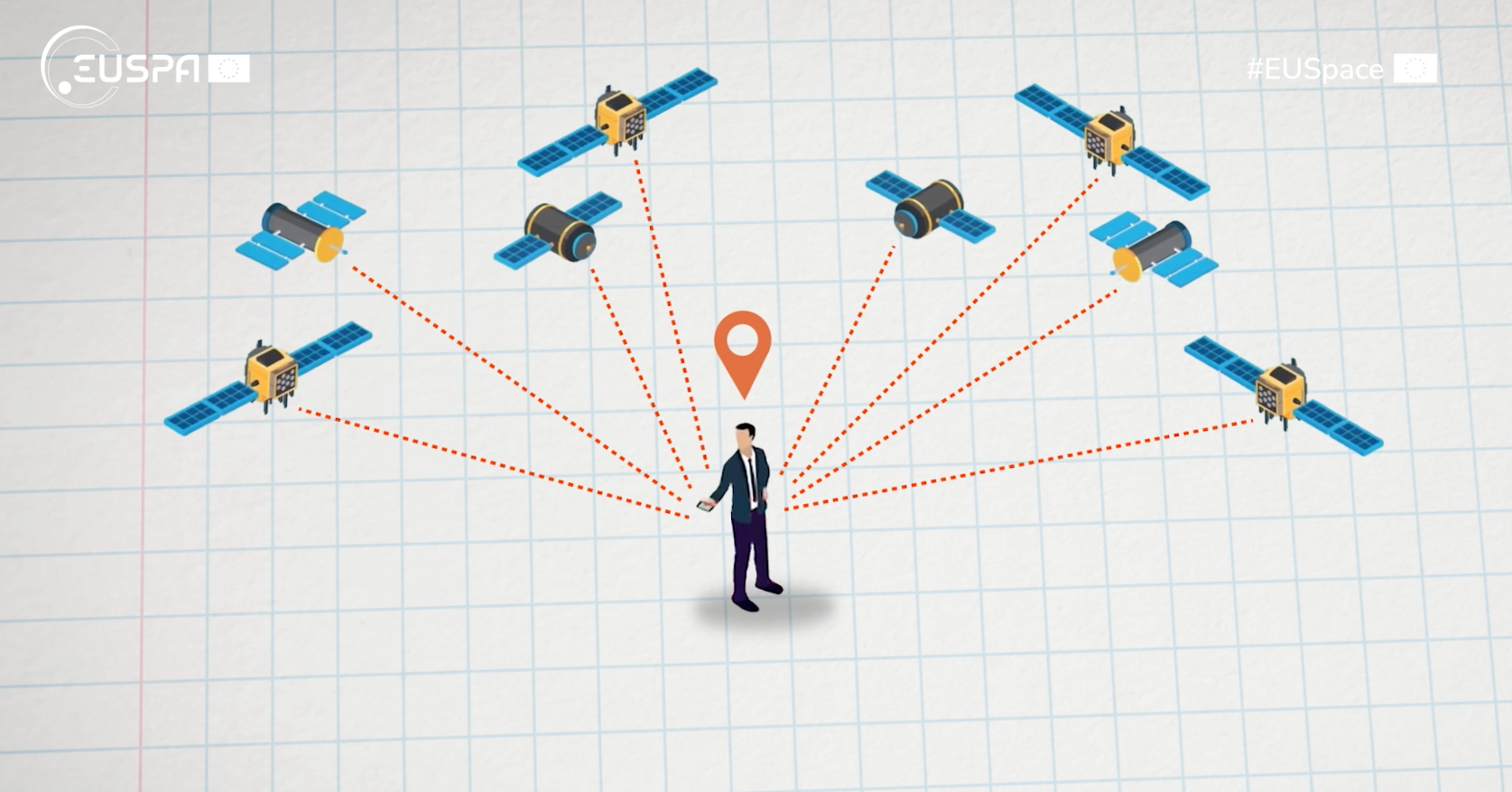
How does it work?



EUSPA’s role
EUSPA serves as the link between the Galileo OS and end users by:
- Deploying and operating the system.
- Being the service provider.
- Operating service front desks available to users.
- Maintaining the Galileo system.
- Fostering the adoption of Galileo OS across the whole space downstream value chain.
- Monitoring the market and capturing the user needs.
Facts and figures
- There are more than 4.5 billion Galileo-enabled devices in use.
- All smartphones sold in the EU are now guaranteed Galileo-enabled.
- Unmatched positioning accuracy: The OS is committed to delivering 2 metre accuracy in horizontal positioning, but it is actually between 1 and 2 metres.
- Exceptional timing accuracy: contributing to more resilient synchronisation of banking and financial transactions, telecommunication and energy distribution networks.