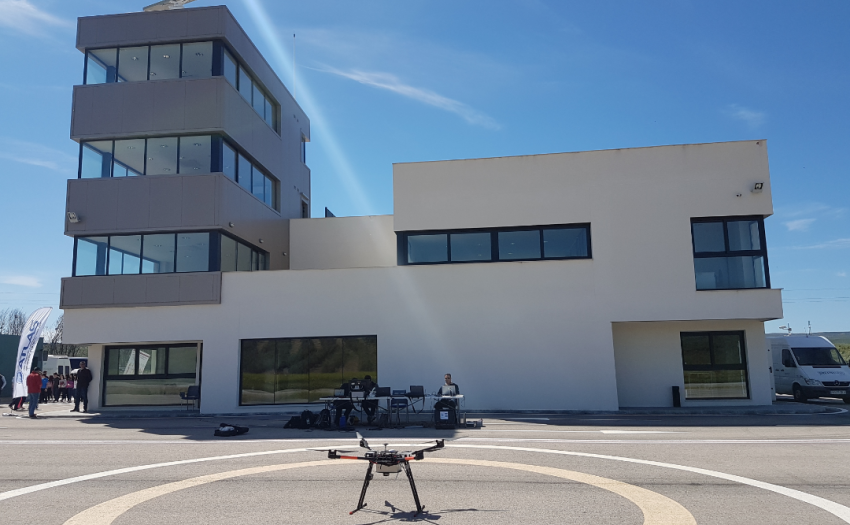
On Friday 9 February 2018, the web portal of the European GNSS Service Centre (GSC) registered its 1000th user. This is a great achievement for the broader GNSS community and for the European GNSS Programmes (EGNOS and Galileo) in particular.
To reflect the evolution in EGNOS service provision, the European Committee for Standardization (CEN) has approved and published a revision of the CWA 16390 specification for the CORE project (Consistently Optimised Resilient Secure Global Supply-Chains) - this technical specification covers the development of products and applications based on services provided by EGNOS.
Just when he thought bad weather was going to force him to turn his turboprop around and miss giving an important presentation, EGNOS saved the day. General Aviation pilot Julian Scarfe shares his experience of flying with EGNOS.
The RAIDO and AGILE solutions developed by partners in the project GEO-VISION (GNSS-driven EO and Verifiable Image and Sensor Integration for mission-critical Operational Networks) increase the situational awareness of emergency services and allow first responders to check the integrity of the GNSS signals they receive, increasing the efficiency of the emergency response and helping to save more lives.
The European GNSS Agency (GSA) discusses how using European GNSS (i.e., Galileo and EGNOS) with Copernicus, Europe’s Earth Observation programme, can help the world meet its Sustainable Development Goals as set out by the United Nations.
The second day of the Tenth Conference on European Space Policy in Brussels saw a significant contribution from GSA Executive Director Carlo des Dorides on the role of European GNSS and other EU space systems in the future of Europe, digitalisation and competitiveness. The conference, which has become Europe’s premier annual forum for space policy debate, took place on 23 and 24 January 2018 with the overall theme of ‘More Space for more Europe – stronger together’.
Six weeks ago, four new Galileo satellites were successfully launched from the European spaceport in Kourou, French Guiana. A lot has happened since then, as the satellites move towards their final orbit and prepare for the first transmission of navigation signals.